


Si prefieres ver la web siempre en español, haz click aquí.
The great summer getaway in an electric car: a quick guide to planning ahead
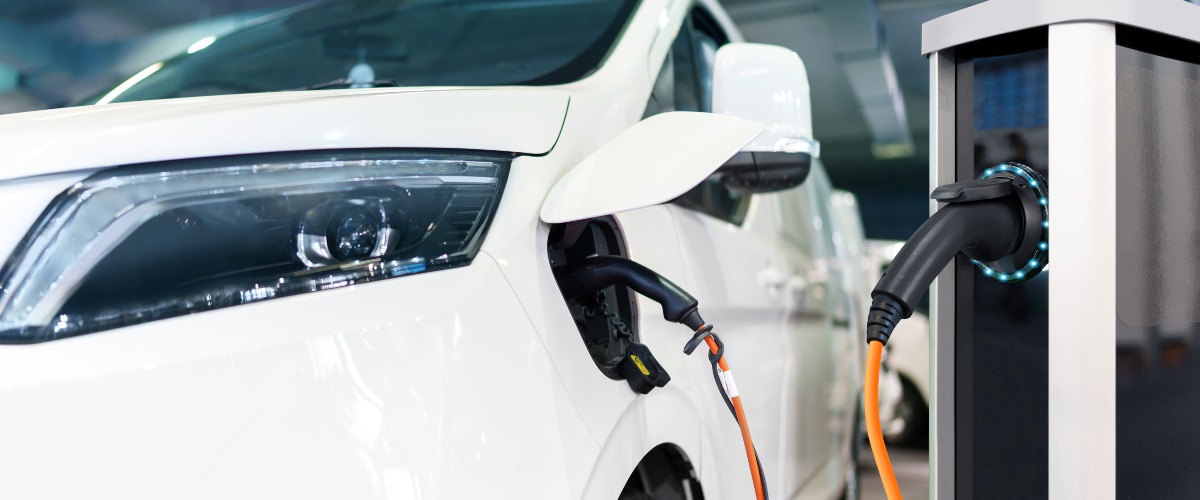
If you have an electric car, it is meant to be enjoyed. And, with the summer holiday getaway just around the corner, the best way to enjoy it without worrying about charging is to plan ahead. Here is how to do it. From preparing at home before setting off, to organising your stops, knowing your battery's real-world range, or choosing hotels with approved chargers.
{{content.phone.title}}
{{content.phone.text}}
{{content.phone.phoneText}}
{{content.form.title}}
{{content.form.text}}
{{content.form.success.title}}
Electric cars stopped being just for short or urban trips a long time ago. Today, with ranges reaching up to 800 kilometres in the most advanced models and a charging network that is constantly growing, EVs have become a clean and economical alternative for long summer trips.
To hit the road without your plans being dictated by your battery level, you just need to spend a few minutes planning your route, getting your car ready, and following a few tips that will help maximise your peace of mind and your savings.
The best charge for your trip is the one you do at home
A fact to start with: when you charge your electric car at home, you can save up to 84% on the cost per kWh compared to charging at a public charging point.
Comparing the €0.128/kWh price of Endesa's Recarga en Casa tariff with the €0.79/kWh that an ultra-fast charger at a charging station might cost, setting off on holiday with a fully charged car means saving almost €40 for a 60 kWh battery.
This financial saving is coupled with saving time on stops during your journey, greater independence to plan where and when to rest along the way, and – if you also pre-cool the car while it is still plugged in – a more efficient consumption of every kWh.
Your very own summer getaway: what to check before starting your electric car
Some people pack their bags at the last minute, we know. But if you are the type who starts enjoying your trips a few days in advance, we recommend going over this checklist before hitting the road:
1. 24 hours before:
- Check and, if necessary, correct your tyre pressure. When the pressure is low, your energy consumption per kilometre increases.
- Check that you have installed the latest vehicle software update, navigation maps, and the Endesa On Your Way app to plan and manage your charging.
2. The night before the trip:
- Plan your ideal route with your planned charging stops, and have at least one alternative route ready to activate if any unforeseen events arise during your journey.
- Leave the vehicle charging overnight so that the battery is at 100% when you are ready to set off.
3. Just before leaving:
- Pre-condition the interior in the minutes before setting off, while the car is still connected to the charger. This instantly replenishes all the energy the air conditioning is using.
- Make sure you pack the necessary cables and adapters to charge your car during your holiday.
Real-world range vs. official range in an electric car
The official or factory range of an electric car is calculated under ideal weather, driving, and road conditions. During the great summer holiday getaway, it is highly likely that none of these conditions will be met, so it is a good idea to have a clear understanding of your vehicle's real-world range.
The difference between the two can be anywhere from 15% to 25%, depending on the model, your driving style, and the age of the battery. This difference is also influenced by several common circumstances on these types of journeys:
- Traffic flow: Heavier traffic on motorways, with its speed changes, stops, sudden acceleration, and braking, makes it impossible to maintain the optimal speed for energy consumption.
- High temperatures: Heat affects the motor's performance, requiring a higher electricity output, which also increases exponentially when the cabin's air conditioning is switched on.
- Secondary routes: If you avoid congested motorways, which are the most suitable roads for stable and efficient driving, using alternative routes will affect your speed and therefore increase your electricity consumption.
- Vehicle weight: During the holiday getaway, it is common for the vehicle to be fully loaded with luggage and passengers, forcing the motor to work harder than usual.
How to plan your electric car route based on charging points
To enjoy the journey and arrive with enough energy to continue enjoying your destination, a good idea is to prepare a travel plan that aligns your rest breaks with the most strategic charging points.
To do this, it is important to consider:
- The location of charging points along your route: Are they on main roads or secondary routes? Do they coincide with peak traffic times or quieter stretches? Do they offer other services like restaurants, shops, and toilets for a longer stop?
- The power capacity offered by the charging points: Consider whether you want to make a quick stop using ultra-fast charging, or if you prefer to take a break and save money with a slower charging speed.
- Your vehicle's connector types: Confirm that the connectors you have in the car are compatible with the charging stations where you plan to recharge.
- Service availability: Check that the service stations you plan to use are open at the time you intend to charge, or if there is any issue that might force you to change your plans.
- Payment methods: Although most charging points accept all standard payment methods, ensure you can pay with the ones you normally use, including payment via the On Your Way app to take advantage of its benefits.
The best plan for the holiday getaway: having a plan B
According to data from the Business Association for the Development and Promotion of Electric Mobility (AEDIVE), at the end of 2025 there were over 850,000 electric and plug-in hybrid vehicles in Spain.
That is a lot. And although there were already over 56,000 public charging points as of June 2026, any major holiday getaway can put one of two things to the test: your patience or your planning skills.
For plans to go well, it pays to have more than one. Mark at least two alternatives to your ideal charging points on your itinerary. Why two?
The first, located before your main choice, will allow you to charge safely if you encounter long traffic jams along the way that drain your battery earlier than expected.
The second, located after your ideal charging point, will serve as the closest backup solution if your first choice is too congested with charging cars or is out of service at the time.
An app that makes the summer getaway easier in an electric car
With an electric car, more information means greater convenience. Having that information with you on your smartphone, through apps like Endesa's On Your Way, makes everything easier before, during, and after every getaway. From the app you can:
- Locate all available charging points in real time.
- Compare power capacities, connector types, prices, and the status of each point.
- Configure and manage your Waybox home charger.
- Reserve charging points in advance where this service is offered.
- Control the entire charging process remotely.
- Pay from your mobile, keeping your charging history, costs, and consumption always at hand.
- Combine it with the savings, discounts, and benefits of the Recarga en Casa tariff, the Endesa Drive plan, and the Endesa PARA TI points programme.
Accommodation with an electric charger: what to know before booking
Travelling in an electric car can be an invitation to discover places that, equipped with public chargers, replace the rush with opportunities to enjoy your getaways even more. Well-equipped recreational and rest areas, shopping centres with local products, hotels, restaurants, apartments, and rural houses are the new charging points that help you remember the most important thing of all: you are on holiday.
Among these, many hotels and tourist accommodations stand out for including this service in their offering, allowing you to take advantage of your night's rest to start the car the next day with a full battery.
If you are considering any of them, here are some key questions to ask to stay well informed before booking:
- What charging capacities do they provide?
- What connectors are required?
- What is the cost of the service if it is not included in the accommodation price?
- Do you need to reserve the charging point?
- Do they have enough chargers to handle tourist occupancy during the holidays?
- Are they compatible with your charging management app?
A quick review: the most important things for hitting the road in an electric car this summer
To summarise, we propose 10 very simple steps to help you travel your next few hundred kilometres with complete peace of mind. They will help ensure you have a summer getaway with everything ready and, above all, one that is much more economical:
- Carry out a maintenance check on your vehicle.
- Calculate your car's real consumption with a full boot.
- Plan your ideal route and possible alternatives in advance.
- Confirm whether your destination accommodation has compatible charging points.
- Keep your navigation and charging apps up to date.
- Charge the battery to 100% using your home charger or Waybox.
- Pre-cool the car before it finishes charging at home.
- Make sure you pack the necessary cables and adapters.
- Choose ultra-fast charging for short stops and fast charging for longer breaks.
- On the road, only charge up to 80% (charging slows down for the final 20%).
FAQs
Which regions have the most chargers?
The regions with the most chargers currently are, in order, Catalonia, Madrid, Andalusia, and the Valencia region.
How much battery should I leave home with?
It is best to leave with 100% and, ideally, with the cabin already cooled.
What battery margin should I maintain during the trip?
During holiday getaways, due to possible traffic delays, try to always keep the battery above 20%.
Is it better to charge to 80% or 100% during the trip?
At public chargers, it is better to charge up to 80%. To go from 80% to 100%, the charging time is considerably slower.
What should I do if the charger is occupied or out of order?
Locate the charging point in your On Your Way app and report the fault. If the charger is very busy or the fault cannot be resolved, head to the nearest alternative points in your plan B.
What is the difference between fast and ultra-fast charging?
The difference lies in the power supplied and, therefore, the charging speed. With fast charging, you can take your battery from 20% to 80% in 20 to 40 minutes, whereas with ultra-fast charging you will need between 10 and 20 minutes, or even less, depending on the vehicle model and the charger.
Is it cheaper to charge at home or on the road?
Charging at home can be up to 84% cheaper than ultra-fast charging on the road. You can increase these savings even further with specific plans for electric cars, like Endesa's Recarga en Casa tariff.
Take a minute to find the product that best suits you:
{{firstStep.title}}
Take a minute to find the product that best suits you:
{{title}}
{{content.phone.title}}
{{content.phone.text}}
{{content.phone.phoneText}}
{{content.form.title}}
{{content.form.text}}
{{content.form.success.title}}
You don't need to adapt to Endesa's tariffs because they adapt to you. If you go to our catalogue you can compare the different tariffs for yourself. Or if you prefer, you can answer a few questions and we will take care of comparing all the different electricity and gas tariffs and then make a customised recommendation.
Take a minute to find the product that best suits you:
{{title}}
{{content.phone.title}}
{{content.phone.text}}
{{content.phone.phoneText}}
{{content.form.title}}
{{content.form.text}}
{{content.form.success.title}}
You don't need to adapt to Endesa's tariffs because they adapt to you. If you go to our catalogue you can compare the different tariffs for yourself. Or if you prefer, you can answer a few questions and we will take care of comparing all the different electricity and gas tariffs and then make a customised recommendation.
Comparison of Electricity and Gas Tariffs
You don't need to adapt to Endesa's tariffs because they adapt to you. If you go to our catalogue you can compare the different tariffs for yourself. Or if you prefer, you can answer a few questions and we will take care of comparing all the different electricity and gas tariffs and then make a customised recommendation.
Do you want to see all our offers?
Spend a minute to find the product which best adapts to you:
{{firstStep.title}}
Spend a minute to find the product which best adapts to you:
{{title}}
{{content.phone.title}}
{{content.phone.text}}
{{content.phone.phoneText}}
{{content.form.title}}
{{content.form.text}}
{{content.form.success.title}}
Spend a minute to find the product which best adapts to you:
{{title}}
{{content.phone.title}}
{{content.phone.text}}
{{content.phone.phoneText}}
{{content.form.title}}
{{content.form.text}}