


If you prefer to always view the website in English, please click here.
{{content.phone.title}}
{{content.phone.text}}
{{content.phone.phoneText}}
{{content.form.title}}
{{content.form.text}}
{{content.form.success.title}}
Air source heat pumps in summer: how they work in cooling mode and how much they cost
Air source heat pumps have become one of the most popular options for efficiently regulating a home's temperature. However, when temperatures start to rise, many people ask the same question: Can air source heat pumps also be used for cooling?
The answer is yes. The same installation that provides heating in winter can help you maintain a comfortable temperature at home during the summer.
That being said, not all installations cool in the same way or offer the same level of comfort. The system chosen to distribute the cold air, the insulation of the property, and usage habits can all influence both the energy consumption and the final result.
If you are considering this technology or want to get more out of your current setup, we explain how an air source heat pump works in summer, how much it can consume, and what you should keep in mind.
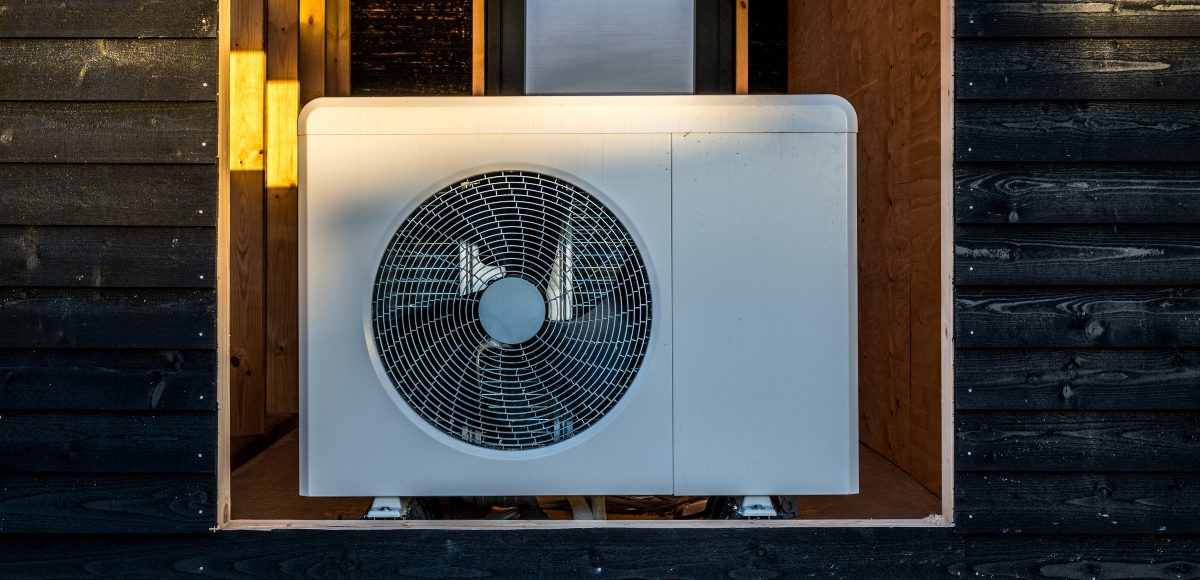
Yes, air source heat pumps can also cool in summer
When talking about air source heat pumps, people usually think of heating. However, one of the features most valued by those who already own this system is that it can also be used to cool the home when temperatures soar.
This is possible thanks to the reversible heat pump included in most modern units. In winter, it captures energy from the outside air to heat the home, and in summer, it reverses the process to help lower the indoor temperature.
This ability to adapt to different seasons largely explains why air source heat pumps have gained so much prominence in recent years.
If you want to learn more about the basics, you can read our article on what an air source heat pump is and how it works.
How air source heat pumps work in cooling mode
Although it may seem like a complex process from the outside, the logic is quite simple.
When the system operates in cooling mode, it stops supplying heat to the home and begins extracting it from the interior to expel it outside. The goal is to progressively lower the temperature of the rooms and maintain a stable sense of comfort.
The principle is similar to that of conventional air conditioning, although with one major difference: an air source heat pump can work with various emission systems and cool the entire home through a single installation.
If you want to delve deeper into how this works, you can discover how a reversible heat pump operates.
Not all installations cool equally: underfloor cooling, fan coils, or splits
When it comes to cooling with an air source heat pump, not everything depends on the machine. The way the cold is distributed throughout the home also affects the level of comfort we perceive.
Because of this, an installation with an underfloor cooling system does not offer the same experience as one equipped with fan coils or splits. Each system has its own characteristics and responds differently when outdoor temperatures begin to rise.
|
System |
Does it cool? |
Comfort |
Cooling speed |
|---|---|---|---|
|
Underfloor cooling |
Yes |
Very high |
Gradual |
|
Fan coils |
Yes |
High |
Fast |
|
Compatible splits |
Yes |
Very high |
Very fast |
|
Conventional radiators |
Limited |
Low |
Very slow |
When choosing an installation, it is advisable to consider not only the heat pump unit itself but also how the cold will be distributed within the home.
And if your house doesn't have underfloor heating, don't worry: there are alternatives for using an air source heat pump without underfloor heating.
Can an air source heat pump with radiators be used for cooling?
If you already have radiators installed, it is logical to wonder if they can also help cool the house during the summer.
Although an air source heat pump can produce cold water, conventional radiators are not designed to operate in cooling mode. Their primary function is to transmit heat, and when used for cooling, their performance is usually quite limited.
This doesn't mean they can't provide some cooling effect, but the result is usually far from the comfort offered by systems specifically designed to work with cold, such as fan coils or underfloor cooling.
Underfloor cooling: gentle comfort, not freezing air
Underfloor cooling often surprises people for a very simple reason: the home is cool, but you don't feel any cold air.
The system circulates water at a low temperature through a network of pipes installed under the floor. Thanks to this, the temperature is reduced gradually and evenly throughout the home.
The feeling is different from traditional air conditioning. There are no draughts or sudden temperature changes between rooms, but rather a constant coolness that is particularly pleasant on a day-to-day basis.
Fan coils: the closest option to air conditioning
For those looking for a faster response to the heat, fan coils are often one of the most interesting options.
These units use cold water from the air source heat pump system and combine it with a fan to cool rooms in less time.
This is why they are often compared to conventional air conditioning: they can quickly cool a room while maintaining the benefits of a heat pump system.
How much electricity does an air source heat pump consume in summer?
When considering installing an air source heat pump, a question usually arises sooner or later: How much will I notice this on my bill during the summer?
The answer depends on many factors. A well-insulated home does not consume the same amount of energy as one exposed to the sun for most of the day. Nor will an 80 m² house behave the same as a 180 m² one.
That's why it is difficult to give a universal figure. As a rule of thumb, an installation can consume between 200 and 600 kWh per month during the hottest months, although the actual consumption will depend on the characteristics of each home and usage habits.
Before taking the plunge, it is also advisable to check what electrical power capacity you need at home to ensure the installation is correctly sized.
How much it costs to use an air source heat pump in summer: three scenarios
Once you know your consumption, the next question is usually quite direct: How much does it cost to keep the house cool during the summer?
To make a simple estimate, just use this formula:
Cost = Consumption (kWh) × Price of electricity (€/kWh)
Before doing the maths, it is a good idea to check the price of electricity, as the final result will depend on your contracted tariff.
Using a reference price of €0.15/kWh:
Moderate use (80 m² home)
- Estimated consumption: 200 kWh/month
- Approximate cost: €30/month
Average use (120 m² home)
- Estimated consumption: 350 kWh/month
- Approximate cost: €52.50/month
Intensive use (180 m² home)
- Estimated consumption: 600 kWh/month
- Approximate cost: €90/month
These are indicative figures, but they give a fairly accurate idea of how much it costs to cool a home with a heat pump during the hottest months.
Why insulation can affect your bill more than the unit itself
Two homes with the same air source heat pump installation can record very different energy consumption levels in summer. And in many cases, the machine isn't the reason.
A well-insulated home retains the cool air better and requires less energy to maintain a comfortable temperature. On the other hand, if heat easily enters through windows, enclosures, or roofs, the system will have to work longer to achieve the same result.
Therefore, in addition to choosing an efficient unit, it is also worth paying attention to measures that help improve insulation against the heat.
And if you want to go a step further, you can combine different strategies to reduce the demand for cooling in summer and learn how to efficiently heat and cool your home.
Air source heat pumps vs air conditioning in summer
This is a common comparison. At the end of the day, both systems aim for the same thing: to maintain a pleasant temperature at home when the heat arrives.
The difference is that they are based on different approaches. While air conditioning is designed exclusively for cooling, an air source heat pump can also handle heating and domestic hot water (DHW) production.
|
Aspect |
Air source heat pump |
Aire aconditioning |
|---|---|---|
|
Initial investment |
Higher |
Lower |
|
Energy consumption |
Very efficient |
Efficient |
|
Cooling speed |
Medium-high |
Very high |
|
Thermal comfort |
Very high |
High |
|
Heating and DHW |
Yes |
No |
|
Single system for the whole year |
Yes |
No |
If you only need to cool one room or are looking for a lower initial investment, air conditioning may be a sufficient solution. But if you want to heat and cool your home all year round with a single system, an air source heat pump offers a much more comprehensive solution.
What temperature to set your air source heat pump to in summer
When the heat arrives, it's tempting to turn the thermostat down as low as possible to cool the house quickly. However, this isn't always the best option.
To enjoy a pleasant temperature without unnecessarily increasing your energy consumption, it is recommended to keep your air source heat pump between 24°C and 26°C. In most homes, this range allows for a good level of comfort even on the hottest days.
Furthermore, the smaller the difference between the indoor and outdoor temperatures, the easier it will be to maintain a sense of wellbeing when entering and leaving the house. This helps to avoid sudden temperature contrasts and allows the system to work more efficiently.
Ultimately, rather than seeking an intense feeling of cold, the key is to achieve a stable and comfortable temperature throughout the day.
Is it worth installing an air source heat pump just for the summer?
It all depends on what you expect from the system.
If you are just looking for a way to cool your home for a few weeks a year, there are alternatives with a lower initial investment. However, most people who opt for air source heat pumps do so for a different reason: they are looking for a solution capable of meeting the home's climate control needs all year round.
With a single installation, it is possible to have heating in winter, cooling in summer, and domestic hot water every day of the year.
Moreover, the potential for savings can increase if you decide to combine your air source heat pump with solar panels or choose one of the best electricity tariffs based on your consumption habits.
If you are considering a renovation or a new build, you may also be interested to know how much it costs to install an air source heat pump in a flat.
More than a solution designed solely for summer, an air source heat pump stands out for offering year-round comfort with a single system.
Take a minute to find the product that best suits you:
{{firstStep.title}}
Take a minute to find the product that best suits you:
{{title}}
{{content.phone.title}}
{{content.phone.text}}
{{content.phone.phoneText}}
{{content.form.title}}
{{content.form.text}}
{{content.form.success.title}}
You don't need to adapt to Endesa's tariffs because they adapt to you. If you go to our catalogue you can compare the different tariffs for yourself. Or if you prefer, you can answer a few questions and we will take care of comparing all the different electricity and gas tariffs and then make a customised recommendation.
Take a minute to find the product that best suits you:
{{title}}
{{content.phone.title}}
{{content.phone.text}}
{{content.phone.phoneText}}
{{content.form.title}}
{{content.form.text}}
{{content.form.success.title}}
You don't need to adapt to Endesa's tariffs because they adapt to you. If you go to our catalogue you can compare the different tariffs for yourself. Or if you prefer, you can answer a few questions and we will take care of comparing all the different electricity and gas tariffs and then make a customised recommendation.
Comparison of Electricity and Gas Tariffs
You don't need to adapt to Endesa's tariffs because they adapt to you. If you go to our catalogue you can compare the different tariffs for yourself. Or if you prefer, you can answer a few questions and we will take care of comparing all the different electricity and gas tariffs and then make a customised recommendation.
Do you want to see all our offers?
Spend a minute to find the product which best adapts to you:
{{firstStep.title}}
Spend a minute to find the product which best adapts to you:
{{title}}
{{content.phone.title}}
{{content.phone.text}}
{{content.phone.phoneText}}
{{content.form.title}}
{{content.form.text}}
{{content.form.success.title}}
Spend a minute to find the product which best adapts to you:
{{title}}
{{content.phone.title}}
{{content.phone.text}}
{{content.phone.phoneText}}
{{content.form.title}}
{{content.form.text}}