


If you prefer to always view the website in English, please click here.
Quiz: test your knowledge of household appliances
Your electricity bill includes figures that can go up or down depending on how you use your appliances, since they account for more than half of your household electricity consumption. Often, a simple lack of awareness about how household technology really works is what separates an energy-efficient home from one that simply burns through energy. In fact, 55% of the electricity consumed in a typical Spanish household comes directly from appliances. The following quiz is designed to bridge that gap, turning energy savings from a matter of luck into a deliberate choice.
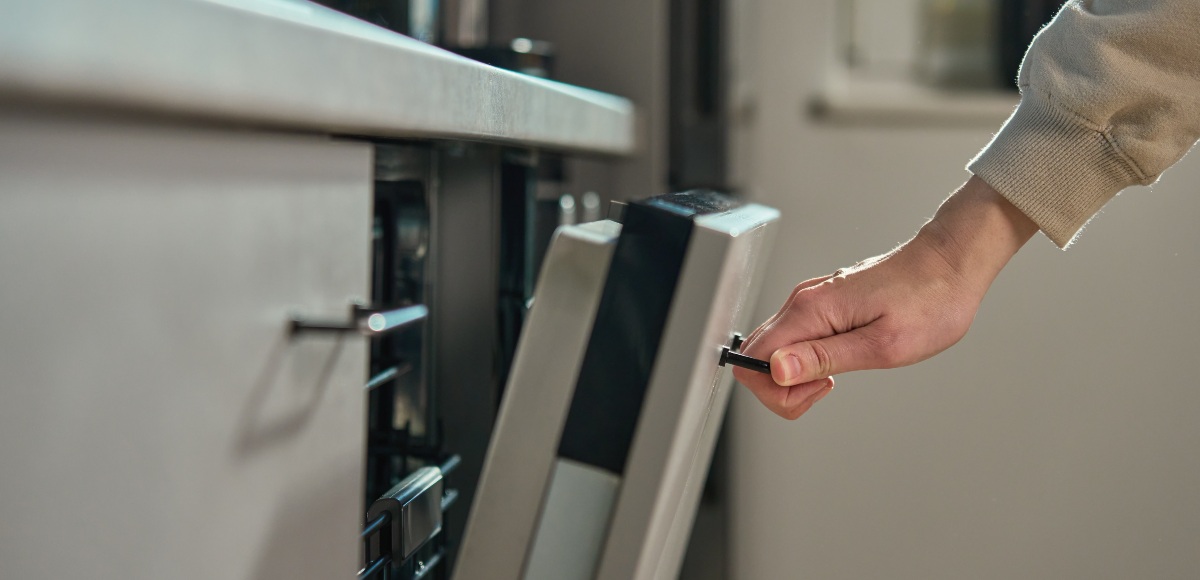
How much do you know about your appliances?
Understanding how the appliances around us work is the first step towards managing our household budget more effectively. We often choose these devices based on price, design, screen size, or image quality, forgetting that the upfront cost is only the beginning: if we ignore their energy efficiency rating, we’ll end up paying far more over their lifespan. Answer these 10 questions and find out whether you really understand how much energy your appliances consume.
How the quiz works
This quiz has been designed to test your awareness of actual energy consumption at home. It consists of 10 key questions covering everything from energy labels to everyday usage habits. Choose the answer you think is correct, and just below it you will find a brief technical explanation with practical advice to help you improve your energy efficiency starting today.
What you will learn by the end
Write down your answers. By the end of this quiz, you won't just get a score, but also a clearer understanding of some of the most common misconceptions about household energy use. For example, you will learn why ECO mode doesn’t just ‘use more energy’ even though it runs for longer, understand that the energy efficiency scale has changed and no longer includes the old A+, A++, and A+++ ratings, and discover that an appliance's power rating does not always mean higher energy consumption.
How long will it take?
It won’t take more than 5 minutes. That is a small investment compared to the potential savings you could achieve by applying what you learn. Energy efficiency starts with information, and this short quiz is your starting point for using both your energy and your money more efficiently.
Take the quiz
Put your energy-saving instincts to the test and discover what is really happening behind every plug socket.
1. Which household appliance typically uses the most electricity at home?
A) The washing machine.
B) The dishwasher.
C) The fridge.
Answer: C. The fridge, without a doubt. Because it is essential and runs 24 hours a day, 365 days a year, it accounts for up to 30.6% of a household's total appliance energy consumption. For more information, check out our post: Which domestic appliances use more electricity in the home?
2. What does the energy label actually indicate?
A) Only how much noise the appliance makes.
B) How efficiently it uses energy and other resources, such as water.
C) The recommended power rating.
Answer: B. The energy label provides information on how efficiently an appliance uses electricity (in kWh) and water, along with other data such as load capacity and noise levels in decibels. It is essential for identifying the most efficient models before making a purchase. Find out all the details about the current system here: New labelling of household appliances.
3. Does ECO mode use less energy, even though it runs for longer?
A) No. Since it runs longer, it uses more electricity.
B) Yes, it significantly reduces both energy and water consumption.
C) They use exactly the same amount.
Answer: B. Although ECO cycles run for an average of 39 minutes longer, they can reduce electricity consumption by 33% and water consumption by 36%. The savings come from using water at lower temperatures, which is where these appliances use most of their energy. Learn more about how to save using this programme: Is the eco-friendly mode of your washing machine really effective?
4. What washing temperature typically helps save the most energy?
A) 60°C, to make sure clothes are thoroughly clean.
B) Cold water or 30°C.
C) 90°C on short cycles.
Answer: B. Choosing a 30°C cycle instead of 60°C can save up to 40% in energy. Around 85–90% of the energy used by a washing machine goes solely towards heating the water via the electric heating element. Find out more about how much this appliance uses: How much energy does a washing machine use?
5. What simple habit helps reduce fridge energy use the most?
A) Cleaning the back of the unit and not putting hot food inside.
B) Switching it off for a few hours every three months.
C) Setting it to the lowest possible temperature (1°C).
Answer: A. Keeping the condenser clean (the rear grille) and avoiding putting hot food inside reduces the strain on the motor. Placing warm dishes in the fridge forces the compressor to work harder to offset the rise in internal temperature. Specific tips to optimise your fridge: How to reduce your fridge's electricity usage in summer.
6. Does running the dishwasher half full save energy?
A) Yes, it uses half the electricity.
B) No, it is more efficient to run it fully loaded.
C) Load size does not matter as long as you use a short cycle.
Answer: B. Two half-load cycles use far more energy and water than one full load. Around 85% of a dishwasher’s electricity consumption goes towards heating the water, regardless of how many dishes you load into the appliance. Improve your dishwasher’s efficiency with: Tips to help you save electricity and water with the dishwasher.
7. Do power and electricity consumption mean the same thing?
A) Yes, they are interchangeable terms.
B) No, power means capacity and consumption is how much of that power is used over time.
C) It depends on the appliance.
Answer: B. Power (watts) is the amount of energy an appliance needs to operate, while consumption is that power multiplied by the time it is used (kWh). A high-powered appliance used for a short period of time may use less energy than a lower-powered one that stays on all day.
8. What piece of information is the most helpful when comparing appliances?
A) The colour and design.
B) The QR code and the A-to-G scale on the energy label.
C) The weight of the appliance.
Answer: B. Modern energy labels have removed the old A+, A++, and A+++ ratings to avoid confusion, replacing them with a clearer A-to-G scale. The QR code provides access to a database with detailed technical specifications for each model. Get a better understanding of what each letter means: Energy efficiency labels: what they are and what each one means.
9. Does standby mode actually count?
A) No, if the appliance is ‘off’, it consumes no energy.
B) It depends on the appliance.
C) Yes, it can still represent a significant expense, especially in TVs and computers.
Answer: C. Vampire power, or standby power, is real. A television in standby mode can consume nearly as much as a computer running at full performance. This type of consumption is now factored into modern efficiency tests to better reflect real-world use.
10. How can you find out exactly how much each appliance is costing you?
A) By dividing your electricity bill by the number of plug sockets.
B) It depends on the material the appliance is made from.
C) By using tools such as InfoEnergía or an energy consumption meter.
Answer: C. Services such as InfoEnergía can show you which appliances use the most energy in your home and simulate how much you could save by replacing them with more efficient models. You can also use smart plugs to measure wattage in real time.
Quiz results
Add up your correct answers and find out your expert level:
0–3 correct answers: you need a refresh
Your energy bills are probably higher than they need to be because of habits based on common myths. Don’t worry, this is where most users start. The good news is that you have huge saving potential if you start applying basic tips, such as using cold water in the washing machine or avoiding standby mode.
4–7 correct answers: you’re on the right track, but there is still room to save more
You have a solid foundation, but you may still be missing some technical details about the new A-to-G energy labels or preventive maintenance. Making sure your filters are clean or repositioning your fridge can help you optimise the 55% of household energy consumption driven by appliances.
8–10 correct answers: appliance expert level
Congratulations! You have an advanced understanding of energy efficiency. You understand that saving energy is not about ‘using less’, but about using energy more intelligently. Your next step could be finding an electricity tariff that matches your peak usage times to maximise your financial savings.
What to check at home after the quiz
Now that you are familiar with the theory, it is time to put it into practice. These are the key points you should check at home today:
Appliance age and energy labels
An appliance that is more than a decade old will often use twice as much electricity as a modern one. Technology has advanced so much that an efficient A-rated fridge can save you around €1,000 over its lifespan compared to an older model.
Washing machine, dishwasher, and fridge
These three appliances have the biggest impact on your electricity bill.
- Washing machine: Check whether you can consistently wash at 30°C to save up to 40% of energy.
- Dishwasher: Make sure you always run it fully loaded, as two half-loads always use more than one full cycle.
- Fridge: Check that the door seals are airtight. Leaks allow cold air to escape, forcing the motor to work overtime.
Tools to better understand your energy consumption
Digital tools such as InfoEnergía allow you to compare your consumption with similar households and receive personalised advice based on the appliances you actually use. You can also install smart plugs to detect unexpected spikes in energy consumption from specific devices.
FAQ
Does this quiz help me understand whether my appliances use too much energy?
This quiz is designed to assess your knowledge and habits. If you missed questions about maintenance or ECO programmes, there is a good chance your appliances are using more energy than they should because of inefficient use.
Which appliance should I check first?
Without a doubt, the fridge. Since it accounts for 30.6% of total appliance electricity consumption, any improvement in its maintenance or efficiency will have a direct and noticeable impact on your monthly bill.
How do I know if an efficient appliance is actually worth it?
Although the purchase price may be higher, the long-term savings are substantial. For example, an A+++ fridge (now rated A or B) uses significantly fewer kWh per year, which helps offset the upfront investment through lower energy bills.
Where can I compare my energy use with other households?
Through InfoEnergía, you can compare your energy use with similar households. This helps you identify whether your home is above average in terms of consumption.
How can I calculate how much I could save by replacing an appliance?
You can use savings calculators that analyse the consumption difference between your current appliance and a new high-efficiency model. These tools give you an estimate of how much money you could save each year.
Take a minute to find the product that best suits you:
{{firstStep.title}}
Take a minute to find the product that best suits you:
{{title}}
{{content.phone.title}}
{{content.phone.text}}
{{content.phone.phoneText}}
{{content.form.title}}
{{content.form.text}}
{{content.form.success.title}}
You don't need to adapt to Endesa's tariffs because they adapt to you. If you go to our catalogue you can compare the different tariffs for yourself. Or if you prefer, you can answer a few questions and we will take care of comparing all the different electricity and gas tariffs and then make a customised recommendation.
Take a minute to find the product that best suits you:
{{title}}
{{content.phone.title}}
{{content.phone.text}}
{{content.phone.phoneText}}
{{content.form.title}}
{{content.form.text}}
{{content.form.success.title}}
You don't need to adapt to Endesa's tariffs because they adapt to you. If you go to our catalogue you can compare the different tariffs for yourself. Or if you prefer, you can answer a few questions and we will take care of comparing all the different electricity and gas tariffs and then make a customised recommendation.
Comparison of Electricity and Gas Tariffs
You don't need to adapt to Endesa's tariffs because they adapt to you. If you go to our catalogue you can compare the different tariffs for yourself. Or if you prefer, you can answer a few questions and we will take care of comparing all the different electricity and gas tariffs and then make a customised recommendation.
Do you want to see all our offers?
Spend a minute to find the product which best adapts to you:
{{firstStep.title}}
Spend a minute to find the product which best adapts to you:
{{title}}
{{content.phone.title}}
{{content.phone.text}}
{{content.phone.phoneText}}
{{content.form.title}}
{{content.form.text}}
{{content.form.success.title}}
Spend a minute to find the product which best adapts to you:
{{title}}
{{content.phone.title}}
{{content.phone.text}}
{{content.phone.phoneText}}
{{content.form.title}}
{{content.form.text}}