If you prefer to always view the website in English, please click here.
How will the solar eclipse on 12 August 2026 affect electricity generation in Spain?
On 12 August 2026, a total solar eclipse will be visible in Spain, crossing the peninsula from Galicia to the Balearic Islands. This is the first time the country will have seen a total eclipse since 1912. Faced with such an unusual event, some people may wonder whether it could be a problem for the Spanish energy system, but nothing could be further from the truth.

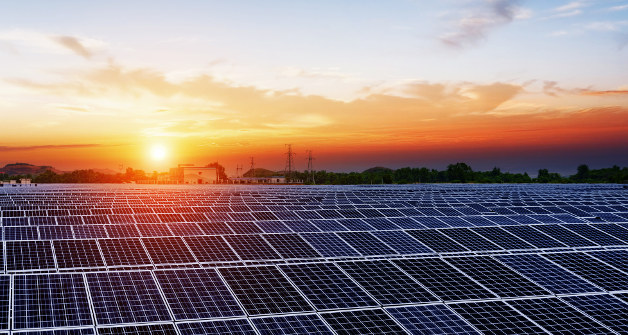
On the day, the electricity supply should not vary to any great extent as a result of the eclipse. Although photovoltaic production is expected to drop temporarily while the Sun is obscured, Red Eléctrica already takes this type of scenario into account in its planning. In fact, our closest reference, the 2015 eclipse in Europe, was managed without any major incidents.
First things first: prepare for the big eclipse. Tips for enjoying the spectacle safely
Now that the big event is approaching, and before we delve into how the eclipse will affect the electricity grid, if you are planning to head out to see it, we want to give you a few tips to ensure the experience is perfect and completely risk-free:
- Look after your eyes: As tempting as it may be, never look directly at the Sun or use makeshift solutions like X-rays, CDs or standard sunglasses; they offer no protection whatsoever and your retinas could be severely damaged. The safest option is to use certified eclipse glasses (ISO 12312-2) in good condition, or to rely on indirect projection methods.
- Be careful with telescopes and cameras: Do not observe the eclipse through any optical device unless it is fitted with a professional solar filter on the lens. Using your eclipse glasses behind the eyepiece is also a mistake, as the concentrated heat could damage the filter and harm your eyesight.
- Protect yourself from the heat and the sun: Even though the eclipse is the star of the day, don't forget that it is still summer. Wear sun cream and a hat, and drink plenty of water – even if you don't feel thirsty – to avoid heatstroke.
- Plan ahead: Roads are expected to be busy and mobile networks could become saturated, so it is best to try to watch it from your own local area to avoid traffic jams. If you do travel, we recommend taking some food and water with you, and making sure you have a full tank of fuel.
- Protect yourself and the environment: If you head to the countryside, wear clothing that covers your skin and use insect repellent to avoid mosquito or tick bites. Remember not to park on dry vegetation and take extra precautions to prevent fires.
To make sure you don't miss a thing, we recommend taking a look at the Government's guidelines on how to enjoy the eclipse safely. You can also use the National Geographic Institute's viewer tool to find the best spot to watch it, and check the AEMET weather forecast in the days leading up to the event to make sure you head somewhere with clear skies.
You can find further information on the Ministry of Science, Innovation and Universities' website, trioeclipses.es/en
Understanding the eclipse and when Spain will go dark: a quick city-by-city snapshot
A total solar eclipse is an astronomical phenomenon that occurs when the Moon completely blocks the Sun as seen from Earth.
The solar eclipse in Spain will take place on 12 August at sunset, between approximately 19:30 and 21:30. However, the peak of the event will last only a few seconds. Because of this, the Government has set up a website where you can find information city by city: In the table below, we detail some of the approximate times for the main cities:
|
City |
Start of partial eclipse |
Duration of total eclipse |
Maximum eclipse |
End of partial eclipse |
|---|---|---|---|---|
|
La Coruña |
19:30:50 h |
20:27:35 - 20:28:50 h |
20:28:13 h |
21:21:54 h |
|
Bilbao |
19:31:40 h |
20:27:18 - 20:27:43 h |
20:27:30 h |
21:19:07 h |
|
León |
19:32:38 h |
20:28:14 - 20:29:59 h |
20:29:07 h |
21:22:01 h |
|
Burgos |
19:33:17 h |
20:28:20 - 20:30:03 h |
20:29:12 h |
21:20:10 h |
|
Zaragoza |
19:34:34 h |
20:28:56 - 20:30:20 h |
20:29:38 h |
21:07:40 h |
|
Castellón de la Plana |
19:37:27 h |
20:31:10 - 20:32:45 h |
20:31:58 h |
20:59:45 h |
|
Valencia |
19:38:19 h |
20:32:24 - 20:33:24 h |
20:32:54 h |
21:01:13 h |
|
Palma |
19:38:15 h |
20:31:13 - 20:32:49 h |
20:32:01 h |
20:48:32 h |
In cities like Madrid and Barcelona, we will be able to see an almost complete partial eclipse (between 80% and 90%), but they will not experience total darkness.
How much solar power does Spain generate during an August evening?
Because of its geographical location and abundant sunshine, Spain is one of Europe's leading solar power producers. According to data from Red Eléctrica, August 2025 was one of the best months of the year for solar energy generation, second only to June and July, with a total of 5,822 GWh, accounting for 24.8% of the electricity mix.
On a typical August evening, when the sun is already low in the sky, photovoltaic generation can still be significant, but it drops rapidly to zero in a short period of time, especially after sunset.
Because of this, the total solar eclipse on 12 August will have a limited effect on the electricity system, as it will occur when photovoltaic generation is already in decline. Its impact will therefore be less than that of an eclipse occurring in the middle of the day.
What happened to the grid during the 2015 eclipse in Europe: the precedent that explains it all
This won't be the first time an astronomical phenomenon like this has put our electricity grid to the test. On 20 March 2015, a partial eclipse darkened the skies over much of Europe, including the Iberian Peninsula, between 09:00 and 12:00.
During that time, photovoltaic generation across the continent fell by around 35,000 MW, a volume equivalent to dozens of conventional power stations. This incident required an immediate, coordinated response to maintain the balance between supply and demand in a highly interconnected electricity system.
European transmission system operators (TSOs), coordinated through ENTSO-E, successfully managed the event thanks to prior planning and cross-border cooperation. This episode is therefore seen as a clear example of the European electricity system’s ability to cope with sharp variations in renewable generation.
How Red Eléctrica manages this drop in electricity generation: the hidden planning behind the scenes
Red Eléctrica acts as the “control tower,” ensuring a constant balance between generation and consumption. It can predict a potential fall in electricity generation using a series of mathematical algorithms that forecast demand based on weather, economic factors, and working patterns.
International interconnections are also crucial. By being connected to networks such as those in France and Portugal, if a generator fails unexpectedly, our European neighbours can supply energy to make up for the loss, preventing users from noticing any disruption.
In addition, the Electricity Control Centre (Cecoel) monitors the system 24 hours a day, in real time. Red Eléctrica can also ask large industrial consumers to reduce their consumption to quickly stabilise the grid in critical situations.
Thanks to all these processes, electricity reaches our homes safely and continuously – eclipse or no eclipse.
So, will it affect your supply at home? The short answer
In summary, the solar eclipse should not affect your home electricity supply. Whether you are in the path of totality or outside it, you should not notice any change in your power.
If you have solar panels at home: what will happen that day
If you use solar panels, it is normal to wonder what will happen to your self-consumption on 12 August 2026:
- 19:30–20:00: electricity generation will gradually decrease. If you have a monitoring app open at that time, you will see the curve start to fall.
- 20:27–20:33: if you are in the path of totality, electricity generation will drop to almost zero watts for the duration of the eclipse.
- 20:34–21:30: generation will gradually recover until the sun finally sets.
If your system includes storage, you can fully charge the battery during the morning of 12 August. That way, if you have a solar battery, the eclipse will not affect your supply at all, as your home will be able to use your own stored energy during those minutes of darkness.
FAQs
Will the eclipse on 12 August affect the electricity supply?
It shouldn't affect you. It will be a day like any other, and you will be able to use electricity exactly as you would on any other day.
What time will the eclipse peak in Madrid and Barcelona?
Madrid and Barcelona lie outside the path of totality, although they will see a partial eclipse of between 80% and 90%. The maximum point of the eclipse will occur between 20:27 and 20:33, but there will be no total darkness in these cities.
What will happen to my solar panels on the day of the eclipse?
During the eclipse, generation may fall to zero in the path of totality for one or two minutes. If you have a battery and charge it in the morning, you will not notice any impact. If you do not have a battery, your consumption will be covered by the grid during that period, just as it is on any other evening.
Will electricity prices rise that day because of the eclipse?
If you are on a stable-rate tariff, the eclipse will not affect your bill. If not, it will depend on the specific characteristics of your tariff.
From which cities will the total eclipse be visible?
The path of totality will pass over cities such as La Coruña, Oviedo, León, Burgos, Bilbao, Logroño, Soria, Zaragoza, Castellón de la Plana, Valencia and Palma.
Comparison of Electricity and Gas Tariffs
You don't need to adapt to Endesa's tariffs because they adapt to you. If you go to our catalogue you can compare the different tariffs for yourself. Or if you prefer, you can answer a few questions and we will take care of comparing all the different electricity and gas tariffs and then make a customised recommendation.
Do you want to see all our offers?
Spend a minute to find the product which best adapts to you:
Discover the rate that best suits your consumption profile with our smart recommender
Spend a minute to find the product which best adapts to you:
Discover the rate that best suits your consumption profile with our smart recommender
{{content.phone.title}}
{{content.phone.text}}
{{content.phone.phoneText}}
{{content.form.title}}
{{content.form.text}}