


If you prefer to always view the website in English, please click here.
How to tell if your household appliances are using more energy than usual
It often goes unnoticed when an appliance is using more energy than it should. However, if you manage to identify this extra consumption and resolve it, the accumulated savings on your electricity bill can be significant. How can you achieve this?
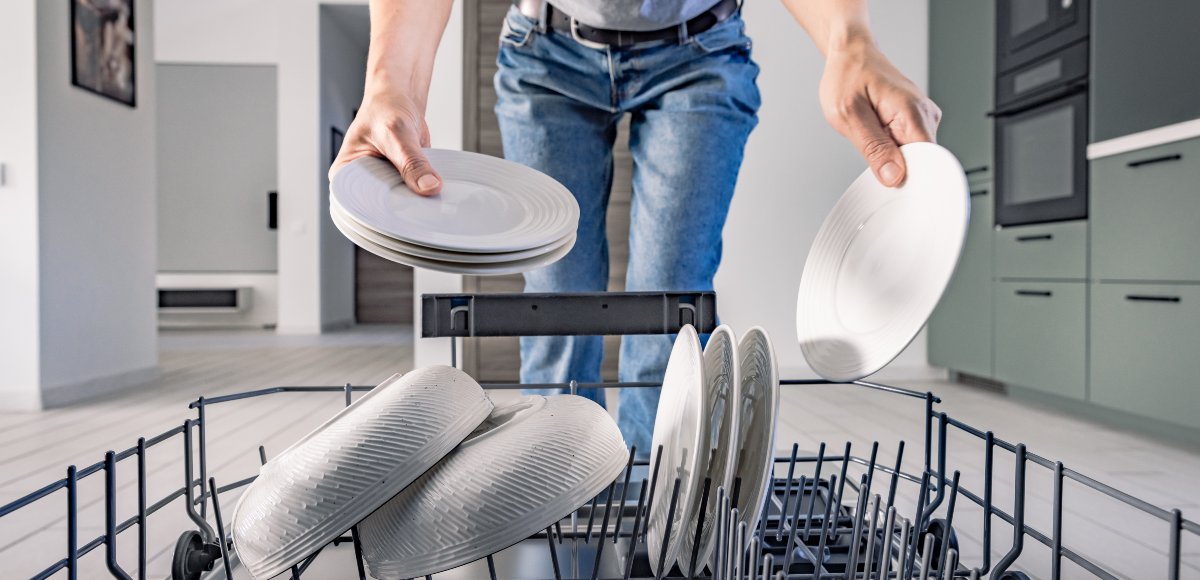
We have all been there. The fridge cools well, even though it is getting on in years. The air conditioning does its job, more or less. And the washing machine still leaves your clothes spotless, despite that little noise. When at home, it is natural to get used to our appliances working year after year and, as the saying goes, growing old with us. However, we rarely stop to check if they are running as efficiently as we would expect.
Here, we explain how to check this easily, keeping your household energy consumption under control.
Signs that warn of excessive electricity consumption in an appliance
The causes of higher-than-normal electricity consumption can be grouped into three categories: appliance ageing, lack of maintenance, and improper use.
Keeping an eye on these three aspects can help you save electricity, improve the performance of your appliances, and extend their lifespan. That's why it is worth taking a few minutes to identify the signs that warn of any abnormal consumption:
Has your electricity bill gone up for no apparent reason?
If you compare the energy usage on your recent bills and notice a slight increase, especially if it is a steady increase, this could be a sign that an appliance is starting to use more energy than usual.
The usage history is a chart showing month-on-month variations over the past year. It will help you quickly identify these kinds of issues, provided there has been no substantial change in the number of appliances you use or how you use them.
Has an appliance changed the way it works?
The next step is to identify which appliances might be the source of the problem. To do this, you just need to look out for potential operational irregularities, such as:
- The appliance making more noise than usual.
- Taking longer to turn on or to reach full capacity.
- Generating more heat than normal or even emitting strange smells.
- A drop in performance.
Any of these signs suggests that the appliance needs to be checked, both to correct its electricity consumption and to avoid potential risks that a malfunction could pose to your home's safety.
Which appliances tend to use more energy as they get older
In general, all appliances, both small and large, have a life cycle that affects their electricity consumption as the years go by. Motors, power supply systems, internal wiring, and components wear out over time, demanding more energy to perform their function.
However, this wear and tear means that larger and more frequently used appliances have a bigger impact on your bill over time. Which ones are most worth keeping an eye on?
- The fridge and freezer, especially due to compressor wear.
- The electric water heater, due to the buildup of limescale and microparticles in the tank.
- The washing machine, when the water heating element starts to lose efficiency.
- The dishwasher, mainly due to limescale buildup in the pipes.
- The air conditioning, if regular filter maintenance is not carried out.
- The tumble dryer, due to the progressive clogging of the vents.
- The desktop computer, due to dust accumulation in the internal fans.
The good news is that, in most cases, addressing these causes of overconsumption does not require buying a new appliance. A deep clean or replacing a part, if necessary, is usually enough to restore normal operation and energy demand.
How to find out and compare the actual consumption of your appliances
Individually tracking exactly how much energy each appliance consumes is very easy by installing energy monitors between the power cable and the wall socket.
Starting at around €20 for the simplest models, these devices provide real-time information on the electricity used by the appliance, giving you total control over each one.
In addition, services like Endesa's InfoEnergía offer you, free of charge as a customer, a complete set of data and tips based on your household's usual energy usage. This personalised analysis will help you understand whether you are using energy efficiently and how to reduce your electricity bill month by month.
But how do you compare an appliance's actual consumption with its ideal consumption? The most reliable way is to note down the optimum consumption shown on the appliance's energy label, giving you an exact reference point to compare against its actual consumption throughout its lifespan.
The fridge paradox: the emptier it is, the more electricity it uses
Contrary to what logic might suggest, a virtually empty fridge consumes more energy than a practically full one.
This is because food that is already chilled helps maintain a lower temperature inside the fridge by retaining the cold. Consequently, the compressor requires less electricity to cool the air inside.
This effect is known as thermal inertia, and utilising it is an excellent way to prevent your fridge from using more energy than usual. Even if you just use bottles filled with water, try to keep your fridge at least half-full: this will prevent it from working too hard when you open and close the door, and when cooling any new food you store in it.
Now that we know how to save electricity by keeping your fridge in top condition, let's look at how to keep the rest of your home comfortable too.
Tips to reduce air conditioning energy consumption
In summer, the star appliance in many of our homes is the air conditioning. To prevent it from taking centre stage on your electricity bill as well, we have some tips to help you minimise its energy consumption:
- Keep the thermostat above 23°C.
- Avoid a temperature difference of more than 10°C between indoors and outdoors.
- Humidify the air to speed up and maintain a feeling of freshness.
- Use fans alongside your air conditioning, as they help distribute the cool air while using less energy.
- Whenever possible, turn off the air conditioning in rooms you are not using.
And don't forget to check and clean the filters at the start and end of the season.
Take a minute to find the product that best suits you:
{{firstStep.title}}
Take a minute to find the product that best suits you:
{{title}}
{{content.phone.title}}
{{content.phone.text}}
{{content.phone.phoneText}}
{{content.form.title}}
{{content.form.text}}
{{content.form.success.title}}
You don't need to adapt to Endesa's tariffs because they adapt to you. If you go to our catalogue you can compare the different tariffs for yourself. Or if you prefer, you can answer a few questions and we will take care of comparing all the different electricity and gas tariffs and then make a customised recommendation.
Take a minute to find the product that best suits you:
{{title}}
{{content.phone.title}}
{{content.phone.text}}
{{content.phone.phoneText}}
{{content.form.title}}
{{content.form.text}}
{{content.form.success.title}}
You don't need to adapt to Endesa's tariffs because they adapt to you. If you go to our catalogue you can compare the different tariffs for yourself. Or if you prefer, you can answer a few questions and we will take care of comparing all the different electricity and gas tariffs and then make a customised recommendation.
Comparison of Electricity and Gas Tariffs
You don't need to adapt to Endesa's tariffs because they adapt to you. If you go to our catalogue you can compare the different tariffs for yourself. Or if you prefer, you can answer a few questions and we will take care of comparing all the different electricity and gas tariffs and then make a customised recommendation.
Do you want to see all our offers?
Spend a minute to find the product which best adapts to you:
{{firstStep.title}}
Spend a minute to find the product which best adapts to you:
{{title}}
{{content.phone.title}}
{{content.phone.text}}
{{content.phone.phoneText}}
{{content.form.title}}
{{content.form.text}}
{{content.form.success.title}}
Spend a minute to find the product which best adapts to you:
{{title}}
{{content.phone.title}}
{{content.phone.text}}
{{content.phone.phoneText}}
{{content.form.title}}
{{content.form.text}}