


If you prefer to always view the website in English, please click here.
{{content.phone.title}}
{{content.phone.text}}
{{content.phone.phoneText}}
{{content.form.title}}
{{content.form.text}}
{{content.form.success.title}}
How to maintain your equipment in winter without the need for a technician
When the cold weather arrives, heating systems and thermal equipment work harder, and keeping them in good condition is key to improving their efficiency, extending their useful life, guaranteeing comfort, and avoiding breakdowns... and surprises on your bill. We tell you which tasks you can handle and which require authorised professionals.
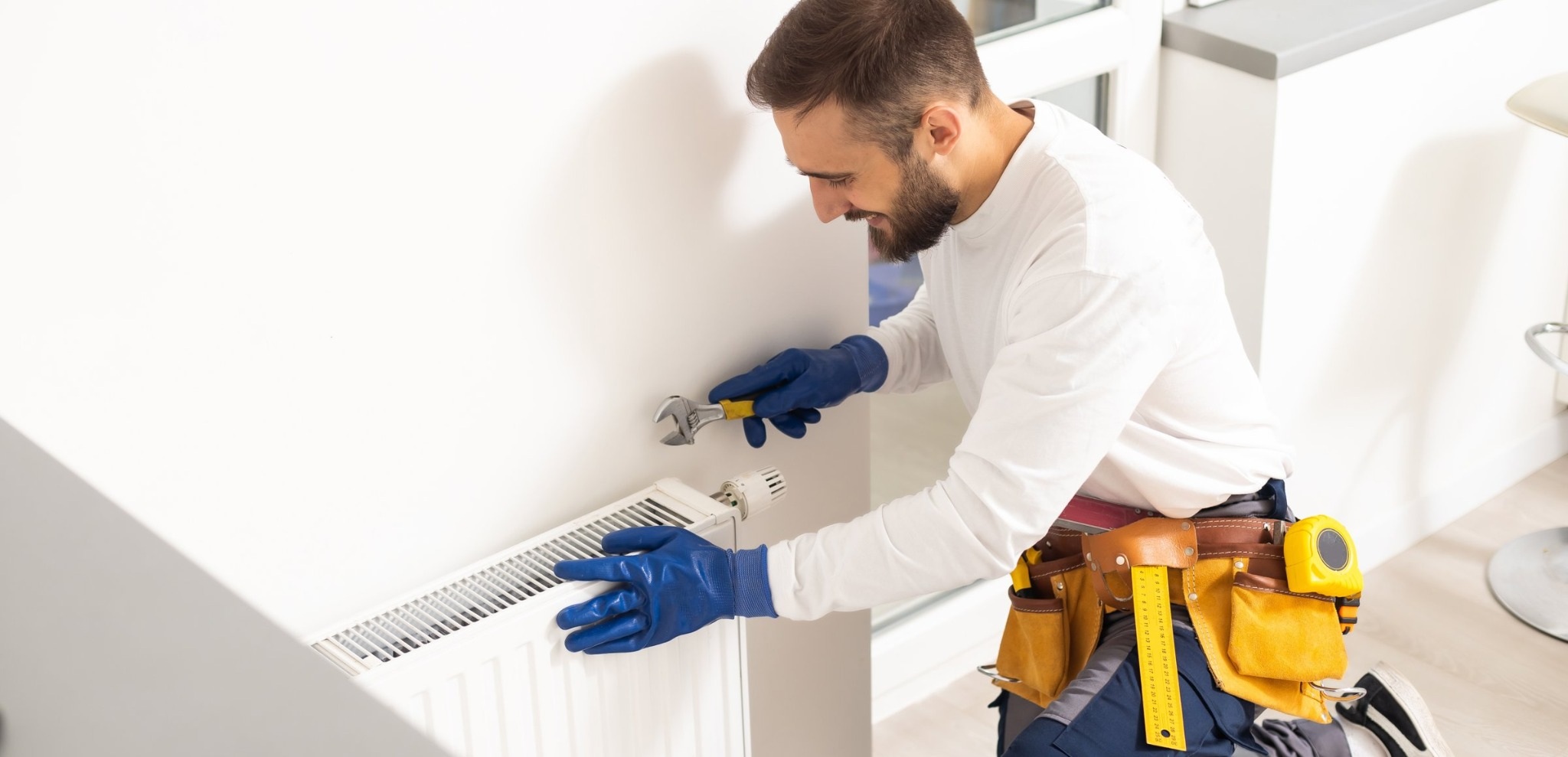
Which maintenance tasks you can do yourself... and which you cannot
Exterior cleaning tasks, bleeding radiators, cleaning air conditioning filters, performing visual checks, adjusting the electric water heater temperature and checking boiler pressure don't require internal access to the equipment, so they are considered safe and you can perform them without professional supervision.
Maintenance tasks that must be performed by certified technicians include adjusting burners, working on gas circuits or internal electrical circuits, handling refrigerant gas, opening the internal casing of boilers and heat pumps, and touching sealed components. These actions are regulated by current regulations (RITE and Industrial Safety Regulations), and require assistance from authorised experts.
Basic heating maintenance step by step
Maintaining your heating system will not only extend its useful life, but also improve its efficiency and keep its energy consumption down. Bleeding radiators and checking system pressure are essential steps for ideal, safe maintenance:
Bleeding radiators
This serves to eliminate air pockets that accumulate inside after a prolonged period of use. These air pockets reduce heating capacity and increase energy consumption. This must be done with the heating off and radiators cold.
How to do it? Place a container under the valve you are going to bleed, open it slowly (with a radiator key) until water comes out without bubbles, in a continuous stream, and close the valve again. Afterwards, check the boiler pressure, which must remain between 1 and 1.5 bars.
Regularly bleeding radiators will improve the system's efficiency and reduce its energy consumption.
Checking system pressure
Check the boiler or circuit pressure gauge. If it is below 1 bar, top up from the filling tap to the appropriate level, always following the manufacturer's instructions. If it exceeds 2 bars, we recommend seeking help from a certified technician. Never tamper with internal valves or safety systems or dismantle any component without professional supervision.
Air conditioning maintenance in heat mode (heat pump)
During winter, your AC unit functions as a heat pump, and proper maintenance ensures trouble-free running. Here's how to do it correctly:
Cleaning filters
Dirty filters reduce air flow and increase energy consumption. To clean them, you must turn off the equipment, remove the filters, wash them with lukewarm water and, if you prefer, you can use mild soap. Let them dry before placing them back in the unit.
We recommend performing this procedure every 2 or 4 weeks, if used intensively, or in the winter season.
Checking the remote and modes
Verify that heat mode is activated, and adjust the temperature between 19 °C and 21 °C (recommended by IDAE in winter), to maximise savings and avoid wasting energy. Each extra degree increases consumption by 7%.
Visually inspecting the outdoor unit
Check that there are no obstructions from ice, leaves, or dirt on the outdoor unit; keeping the surrounding area clear helps the appliance run without straining. If you find pieces of ice or damage to the unit, do not open the casing or disturb pipes or connections, and request help from a professional.
Basic boiler maintenance (tasks you can do)
Boilers require very specific care and treatments to prevent breakdowns. We explain which tasks you can carry out safely and which must be handled by professionals:
What you can do
- Check circuit pressure.
- Clean the exterior and front of the equipment to ensure there are no visible leaks.
- Adjust the thermostat and program operating schedules.
- Check that there are no obstructions in the ventilation grilles.
- Turn on the boiler if it has been inactive for a long period, always following the manufacturer's instructions.
What you must not do under any circumstances
- Never adjust the burner, electrodes, or combustion chamber or heat exchanger.
- Avoid opening the boiler, removing the equipment casing or dismantling the flue or evacuation systems.
- Do not attempt to repair internal breakdowns or make gas or pressure adjustments.
Each of these tasks requires the knowledge and skill of an authorised technician.
Maintenance of electric water heaters and DHW heat pumps
Domestic Hot Water (DHW) equipment also needs regular and scheduled maintenance to guarantee its performance and efficiency. These are some of the basic tasks you can do to care for your electric water heater and heat pump:
Adjusting the water heater temperature
Set the temperature between 50 °C and 60 °C to avoid overheating and excessive consumption, because higher temperatures mean higher bills. This should also be done to balance comfort and hygiene and avoid the risk of legionella, a type of bacteria that reproduces in humid environments and is transmitted through the air.
Checking water heater insulation
Check that the cover is in perfect condition, with no signs of dampness or corrosion. A water heater with deteriorated insulation wastes heat and costs you more to run.
DHW heat pump
If you have a model with an integrated heat pump, you can visually inspect the outdoor unit and air inlets, clean its external grilles, and check the selected mode. Do not handle the refrigerant circuit; leave it in the hands of a specialist.
Common mistakes in winter that increase your bill (and how to avoid them)
Even a small oversight can cause your energy consumption to skyrocket this winter. We want you to know the most frequent mistakes and how to correct them, so you can save money while maintaining comfort in your home:
- Turning up the thermostat too high: each extra degree increases consumption between 7% and 10%.
- Covering radiators with clothes or furniture: this blocks the radiator and reduces convection, putting strain on the boiler system.
- Ventilating the home with heating on: only open your windows for 10 minutes a day to air out your home. Do not ignore heat leaks through windows. To avoid heat leaks, use draught excluders and thermal curtains.
- Not cleaning air conditioning filters: dirty filters in heat pumps decrease efficiency and increase spending.
- Not checking your boilers annually: annual checks are essential for optimal performance. Preventive maintenance ensures comfort and savings. Always respect regulations and avoid any tasks that could compromise your safety or the safety of those living in your home.
For mandatory inspections and technical or complex maintenance, we recommend the Endesa professional maintenance service for air conditioners, boilers, and radiators. This service offers certified inspections tailored to your needs, as well as rapid attention from our team of experts.
And remember: prevention is key to ensure your comfort and safety without sacrificing efficiency, sustainability, and savings.
Take a minute to find the product that best suits you:
{{firstStep.title}}
Take a minute to find the product that best suits you:
{{title}}
You don't need to adapt to Endesa's tariffs because they adapt to you. If you go to our catalogue you can compare the different tariffs for yourself. Or if you prefer, you can answer a few questions and we will take care of comparing all the different electricity and gas tariffs and then make a customised recommendation.
Take a minute to find the product that best suits you:
{{title}}
You don't need to adapt to Endesa's tariffs because they adapt to you. If you go to our catalogue you can compare the different tariffs for yourself. Or if you prefer, you can answer a few questions and we will take care of comparing all the different electricity and gas tariffs and then make a customised recommendation.
Comparison of Electricity and Gas Tariffs
You don't need to adapt to Endesa's tariffs because they adapt to you. If you go to our catalogue you can compare the different tariffs for yourself. Or if you prefer, you can answer a few questions and we will take care of comparing all the different electricity and gas tariffs and then make a customised recommendation.
Do you want to see all our offers?
Spend a minute to find the product which best adapts to you:
{{firstStep.title}}
Spend a minute to find the product which best adapts to you:
{{title}}
{{content.phone.title}}
{{content.phone.text}}
{{content.phone.phoneText}}
{{content.form.title}}
{{content.form.text}}
{{content.form.success.title}}
Spend a minute to find the product which best adapts to you:
{{title}}
{{content.phone.title}}
{{content.phone.text}}
{{content.phone.phoneText}}
{{content.form.title}}
{{content.form.text}}