If you prefer to always view the website in English, please click here.
How to bleed radiators step by step to keep your heating efficient
Do you turn on the heating and notice that some radiators barely get warm while others work normally? Do you hear gurgling noises when the water starts circulating? There may be trapped air in the system, meaning you need to bleed your radiators.
Doing so is simpler than it looks, provided you follow the right steps. First, check how the radiators are heating up; next, switch off the heating and wait for them to cool down before opening the bleed valve. Once air stops escaping and water flows out steadily, you can close the valve and check the system pressure.
That said, bleeding does not fix every heating issue. If a radiator stays cold afterwards, it is worth checking other parts of the system before repeating the process.
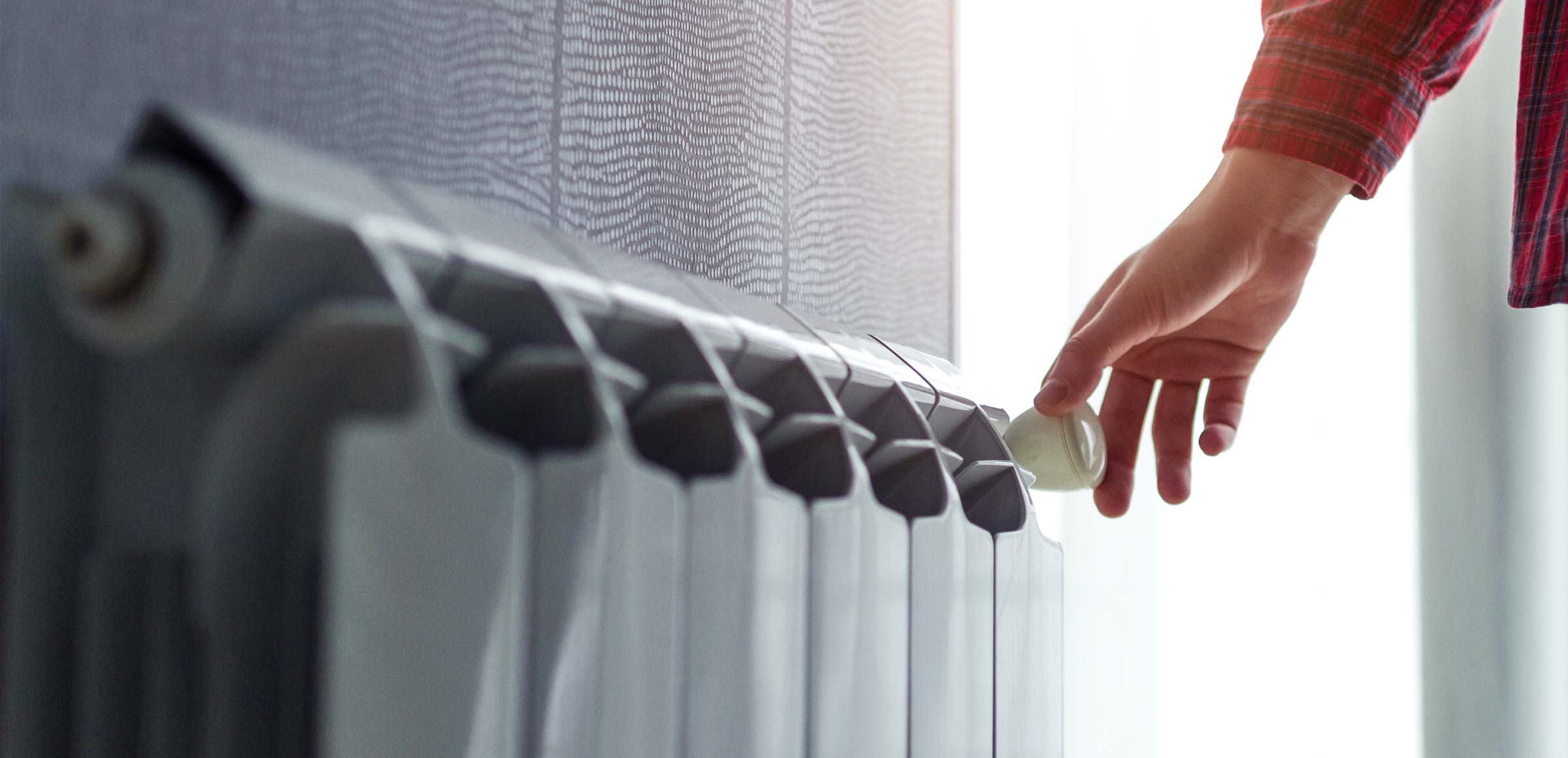
How to bleed a radiator in 6 steps
- Check whether there is actually trapped air. Gurgling noises and a radiator that is cold at the top but warm at the bottom are common signs.
- Switch off the heating. Never open the bleed valve while the heating system is running.
- Let the radiators cool down. This reduces the risk of burns.
- Slowly open the bleed valve. Hold a container underneath to catch any water.
- Close it once a steady stream of water comes out with no air. There is no need to drain the radiator.
- Check the system pressure. Check the pressure gauge on your boiler and follow the manufacturer's instructions if you need to adjust it.
Do all radiators need bleeding?
No. You only need to bleed radiators when there are signs of trapped air. If they heat up evenly and do not make unusual noises, there is no need to bleed them as a matter of routine.
This process applies to wet central heating radiators connected to a water circuit, whether the water is heated by a gas or electric boiler or by an air-source heat pump.
Standalone electric radiators, on the other hand, do not need bleeding, as they do not use a central heating water circuit.
Furthermore, a radiator that does not get very warm does not always have trapped air. Before doing anything, check which part of the radiator is cold and whether the problem affects just one radiator or several.
What bleeding a radiator means
Bleeding a radiator means releasing air that has built up inside it so that hot water can circulate properly around the heating circuit.
Air can become trapped at the top of the radiator and stop it heating up evenly. To release it, you use the bleed valve, a small valve usually located at one of the top corners of the radiator.
When you open it carefully, the trapped air escapes first, followed by water. As soon as the water flows out in a steady stream, close the valve.
Bleeding does not remove sludge build-up, nor does it fix circulation or system balancing issues on its own. Therefore, if the radiator still does not work properly afterwards, you will need to look for another cause.
How to tell if your radiator needs bleeding
Several tell-tale signs can help you spot trapped air in the system:
- Cold at the top and warm at the bottom. This is one of the most common signs of trapped air.
- Gurgling or bubbling noises. These sounds can occur when pockets of air hinder the flow of water.
- The radiator heats up unevenly. This can be caused by trapped air, although there are other possible causes.
- It takes longer than usual to heat up. It is worth checking whether the issue is related to the valves or water circulation.
To spot these symptoms, switch the heating on for a short while and feel how each radiator warms up. This check helps identify potential issues, but remember to switch the heating off and wait for the radiators to cool down before opening the bleed valve.
Radiator cold at the top, at the bottom or all over: what it means
Which part of the radiator stays cold can give you clues about the root of the problem, although it is not enough to confirm it on its own.
|
Symptom |
What to check |
|---|---|
|
Cold at the top and warm at the bottom |
There may be trapped air. Check whether it needs bleeding. |
|
Cold at the bottom or with patchy cold spots |
There may be a circulation issue, sludge build-up or a balancing problem. |
|
Completely cold |
Check the manual control valve, thermostatic valve and boiler pressure. If the issue persists, the heating circuit may need inspecting. |
|
Some radiators get hotter than others |
There may be a hydraulic imbalance. |
|
Gurgling or bubbling noises |
There may be trapped air in the circuit. |
|
All radiators are lukewarm |
Check the overall operation of your heating system and boiler. |
These symptoms are a general guide. If you are not sure what is wrong, avoid adjusting several valves at the same time. It is best to start with the basic checks and call in a professional if the problem persists.
Bleed valve, control valve and lockshield valve: which one to touch
Before you start, it helps to identify the different parts of your radiator. Although they are located close to one another, the bleed valve, the control valve and the lockshield valve serve different purposes.
- Bleed valve: usually located at one of the top corners of the radiator. It is used to release trapped air.
- Control valve or thermostatic radiator valve: usually located on one side, regulating the flow of hot water into the radiator. If it is thermostatic, it allows you to control the room temperature.
- Lockshield valve: usually located at the bottom on the opposite side to the control valve. It regulates the water flow and helps balance the heating system.
To bleed a radiator, you only need to turn the bleed valve – not the control valve or the lockshield valve. Do not adjust the latter two in an attempt to let air out.
To learn more about how they differ, check out Endesa's guide to the radiator lockshield valve: what it is for and how to adjust it, as well as our article on thermostatic radiator valves.
What you need to bleed a radiator
Before you begin, gather a few essentials so you can carry out the job comfortably and avoid spills:
- A radiator bleed key suitable for your model, if needed.
- A small container to catch the water.
- A cloth to wipe up any drips.
- Protective gloves, if you feel they are needed.
Some bleed valves require a radiator key to open, while others have a manual knob. Never force the valve or use tools that could damage it. If it is seized or you are unsure how the mechanism works, check the manufacturer's instructions or seek professional help.
Step 1. Check how your radiators are heating up
With the heating on, check which radiators have cold spots or are making noises. If only one radiator is affected, do not assume that all the others need bleeding too.
This initial check will help you pinpoint where the issue lies and decide whether bleeding is necessary.
Step 2. Switch off the heating
Turn off the heating via your room thermostat or usual programmer. If you have a boiler, follow the manufacturer's instructions to shut it down before bleeding the radiators.
Never open the bleed valve while the heating is on: the water inside can be scalding hot and under pressure.
Step 3. Wait for the radiators to cool down
Let the radiators cool down before working on them. How long this takes will depend on how hot they were and the setup of your system.
This step reduces the risk of scalding and makes bleeding the radiators much safer.
Step 4. Open the radiator valves
Check the manufacturer's or installer's guidance regarding the position of the radiator valves before bleeding. If you need to check how each radiator heats up afterwards, make sure the control valve is open.
Remember that the control valve regulates the flow of water into the radiator, whereas trapped air is released through the bleed valve. If you have communal heating, check with your building's maintenance manager before touching the radiators.
Step 5. Check the system pressure
If your system has a pressure gauge, make a note of the pressure reading before you start so you can compare it afterwards.
In many domestic boiler systems, cold system pressure sits at around 1 to 1.5 bar, although this is only a general guide. The correct pressure depends on your specific boiler and system setup, so always check the manufacturer's manual.
If the pressure is already outside the recommended range, do not proceed until you are clear on what to do.
Step 6. Locate the bleed valve
The bleed valve is usually found at one of the top ends of the radiator. It may look like a slotted screw, a small valve or a manual knob.
Hold your container underneath the outlet and keep your cloth handy. If you do not recognise the mechanism, check the manufacturer's instructions before touching it.
Step 7. Slowly open the bleed valve
Turn the bleed valve slowly using the right tool or by hand, depending on the model. Do not unscrew it completely or force the mechanism.
At first, you should hear a hissing sound as the trapped air escapes. Keep the container in place and wait until the air stops hissing out. If the valve is jammed or leaking water abnormally, stop immediately.
How much water should you let out when bleeding a radiator?
There is no fixed amount. It depends on how much air is trapped inside and the characteristics of the radiator.
The aim is simply to wait until the air stops escaping and water flows out in a steady stream. You do not need to drain the radiator or let out any more water than necessary, as doing so can cause the system pressure to drop.
Step 8. Close the valve once water flows out without air
Once the water flows steadily, gently close the bleed valve without overtightening it.
Remove the container, wipe the area dry and check that the valve is not dripping. If it continues to leak after closing, do not force it.
Which radiator should you start with?
There is no single universal order that applies to every heating system. Pipework layout and circuit design can affect the recommended order.
If your installer or manufacturer has specified an order, follow their advice. Do not automatically assume that you always have to start with the radiator closest to the boiler or the ones upstairs.
Step 9. Repeat the process on the radiators
If other radiators are also showing signs of trapped air, repeat the process on each of them. There is no need to bleed radiators that are working properly if they show no signs of trapped air.
If you live in a block of flats with communal central heating, follow the building maintenance team's instructions before carrying out any work.
Step 10. Check the system pressure again
Once you have finished, check the boiler pressure gauge again and compare the reading against the recommended range for your system.
The pressure may have dropped during bleeding because water has been released from the circuit. If it has fallen outside the recommended limits, check the manufacturer's instructions before switching the heating back on.
What to do if the pressure has dropped after bleeding
It is normal for system pressure to drop after bleeding radiators. If it falls below the recommended range, check your boiler manual to see how to adjust it.
Do not top up the water unless you know the correct procedure for your specific boiler. If the pressure keeps dropping repeatedly, or if you spot damp patches or leaks, contact a qualified engineer to inspect the system.
Step 11. Switch the heating back on and check the results
Once all the bleed valves are closed and you have checked the pressure, turn the heating back on following the manufacturer's instructions.
Let it run for a while and check whether the radiators are now heating up evenly and the gurgling noises have stopped.
If you notice no improvement, do not keep bleeding them repeatedly. The fault may lie in another part of the system.
What to do if the radiator still does not heat up
If a radiator still does not warm up properly after bleeding, check the following:
- The control valve or thermostatic valve: check that it is open and the knob is not jammed.
- The system pressure: verify that it is within the range specified by the manufacturer.
- The remaining radiators: if some heat up and others do not, there may be a circulation or system balancing issue.
- Overall heating operation: if none of the radiators are getting hot properly, the fault may lie with the boiler, the circulation pump or another component.
If you cannot find the cause, arrange a professional inspection. You can also check Endesa's guide to servicing and preparing your boiler.
If trapped air is not the issue, should you adjust the lockshield valve?
Not as a first resort. The lockshield valve regulates the flow of water through the radiator and helps balance heat distribution across all the radiators on the circuit. It is not used to release air.
If one radiator is cooler than the others, check the control valve and the boiler pressure first. If the issue persists, the system's hydraulic balancing may need checking.
Before turning the lockshield valve, make a note of its starting position. An incorrect adjustment can throw off the flow rate to other radiators in your home. If you are unsure how to adjust it, read Endesa's guide to the radiator lockshield valve or contact a professional.
When should you bleed your radiators?
It is a good idea to check your radiators at the start of the heating season, before you start using them daily. That way, you can spot any gurgling noises or cold spots early on and decide whether any of them need bleeding.
You may also need to bleed them if you hear gurgling sounds, if a radiator is cold at the top, or if maintenance work has recently been carried out on the heating circuit that could have let air into the system.
There is no need to bleed your radiators every time you switch the heating on, nor do you need to do it automatically if everything is working properly. The key is to pay attention to the signs your heating system gives you.
Do you have to bleed your radiators every year without fail?
There is no hard-and-fast rule requiring you to bleed all your radiators once a year. Whether they need bleeding depends on the condition of your system and whether any symptoms appear.
Checking them ahead of the winter heating season is a sensible preventative measure. However, if you find yourself having to bleed them very frequently, or if the boiler pressure keeps dropping, it is worth having the underlying cause investigated.
Does bleeding radiators lower your energy bill?
Bleeding a radiator that has trapped air helps restore proper heat distribution across its surface, although it does not automatically guarantee a lower bill. Any savings depend on the root cause of the issue and how efficiently your overall system is running.
To manage your energy consumption more effectively, you can also adjust your thermostat settings and make proper use of thermostatic radiator valves. On the Endesa blog, we explain what temperature to set your heating to at home and how thermostatic radiator valves work.
What if you have automatic bleed valves?
Automatic bleed valves release trapped air from the heating circuit without you having to open a valve manually. Even so, having them fitted does not rule out other heating issues.
If your radiators are noisy or heating up unevenly, the bleed valve may not be working properly, or there may be another underlying cause. If you spot any leaks, check the manufacturer's instructions or arrange a professional inspection.
What to bear in mind if your home has more than one floor
In a multi-storey home, the layout of the pipework affects how the radiators perform. Because of this, there is no universal rule dictating which floor or radiator you must start with.
Follow the order recommended by your installer and check the system pressure once you have finished. If the radiators on one floor still fail to heat up, there may be a circulation issue that requires a professional inspection.
Can you bleed radiators if you have communal heating?
It depends on the design of the system and your building's maintenance rules. Before opening a bleed valve, check the guidance provided by your residents' association or building maintenance manager.
Never tamper with communal isolation valves or shared pipework without authorisation. If the heating issue affects several flats or your entire home, report it to the maintenance service, as the fault may lie in the communal circuit.
Do you also need to bleed radiators with an air-source heat pump?
Yes. If your air-source heat pump heats water that circulates through wet radiators, you may occasionally need to bleed trapped air from the circuit.
The basic principle is similar to that of a boiler system, but you must follow the specific instructions provided by your manufacturer and installer. If you are unsure how to shut down the system safely or check the pressure, consult your user manual before doing anything.
Do you bleed a heated towel rail in the same way?
If your heated towel rail is plumbed into your central heating water circuit, the procedure is usually very similar to bleeding a standard radiator: switch off the system, let it cool down and carefully open the bleed valve until water flows out steadily with no air.
If it is a standalone electric towel rail, it does not need bleeding. If in doubt, always check the instructions for your specific model.
When to stop and call a professional
Stop bleeding your radiators if:
- The bleed valve is seized or you have to force it to turn.
- The valve keeps dripping after you have closed it.
- The system pressure is outside the recommended range and you do not know how to adjust it.
- The pressure keeps dropping repeatedly or you suspect there is a leak.
- The radiators still do not heat up or the problem affects your entire home.
- You have communal heating and are unsure which parts of the system you are allowed to touch.
A professional will be able to determine whether the fault lies with the system pressure, the valves, water circulation or another component. If you need help maintaining your heating system, check out Endesa's catalogue of maintenance services.
Frequently asked questions about how to bleed radiators
Should the heating be on or off?
Off, with the radiators cool. You can switch the heating on beforehand to check how the radiators are warming up, but you must turn it off and let them cool down before opening the bleed valve.
How do I know if there is trapped air?
Gurgling noises and a radiator that is cold at the top while warm at the bottom are classic signs of trapped air. If the radiator is completely cold all over, check the control valve and system pressure too.
How much water should come out?
Just enough until air stops escaping and water flows out in a steady stream. There is no fixed amount, and you should never drain the radiator.
Why does the boiler pressure drop?
The pressure can drop because water is released from the closed circuit when bleeding the radiators. If it keeps dropping repeatedly, there may be a leak or another fault that needs checking by a professional.
What pressure should the boiler be at?
It depends on your boiler model and heating system. In many domestic systems, cold pressure should be around 1 to 1.5 bar, but you should always follow the range specified by the manufacturer.
Which radiator should I start with?
Follow the order recommended by your installer or manufacturer. There is no single rule that applies to every home.
Should I open the thermostatic radiator valve?
Check its position according to the instructions for your system. To release trapped air, you must open the bleed valve, not the thermostatic radiator valve.
Should I touch the lockshield valve?
Not to bleed the radiator. The lockshield valve regulates water flow and balances the radiators across the system; trapped air is released through the bleed valve.
What does it mean if a radiator is cold at the top?
It usually means air has collected at the top of the radiator, especially if the bottom half is warm. This is a sign to check whether it needs bleeding.
What if it is cold at the bottom?
This can be caused by poor circulation, sludge build-up or a system balancing issue. Bleeding will not always fix this.
What should I do if it still does not heat up?
Check the control valve, the boiler pressure and the remaining radiators in your home. If there is still no improvement, book a professional inspection rather than bleeding the radiator over and over without identifying the root cause.
How often should radiators be bled?
Whenever there are signs of trapped air in the system. It is good practice to check them at the start of the heating season, but there is no need to bleed them every year if they are heating up properly.
Do you bleed radiators with an air-source heat pump?
Yes, if your air-source heat pump supplies hot water to wet radiators. Always follow the manufacturer's specific instructions and the pressure requirements for your system.
What about electric radiators?
Standalone electric radiators do not need bleeding because they do not use a central heating water circuit. Bleeding only applies to radiators connected to a wet central heating system.
{{content.phone.title}}
{{content.phone.text}}
{{content.phone.phoneText}}
{{content.form.title}}
{{content.form.text}}
{{content.form.success.title}}
Comparison of Electricity and Gas Tariffs
You don't need to adapt to Endesa's tariffs because they adapt to you. If you go to our catalogue you can compare the different tariffs for yourself. Or if you prefer, you can answer a few questions and we will take care of comparing all the different electricity and gas tariffs and then make a customised recommendation.
Do you want to see all our offers?
Spend a minute to find the product which best adapts to you:
Discover the rate that best suits your consumption profile with our smart recommender
Spend a minute to find the product which best adapts to you:
Discover the rate that best suits your consumption profile with our smart recommender
{{content.phone.title}}
{{content.phone.text}}
{{content.phone.phoneText}}
{{content.form.title}}
{{content.form.text}}


