Electrical grid
Artificial intelligence (AI) is the great driver of change and transformation in the present and future of our society. This also applies to power grids and the energy sector. The work of research groups such as SIPBA (“Signal Processing and Biomedical Applications”) at the University of Granada, dedicated to the development of advanced signal processing and AI models for biomedicine, can serve as inspiration for other critical areas, such as energy and distribution networks.
By Enrique Herrera Viedma

Artificial intelligence (AI) is the great driver of change and transformation in the present and future of our society. Its ability to analyze large-scale data, detect complex patterns and make real-time, context-aware decisions makes it a fundamental technology for addressing new social, economic and environmental challenges. Although its most direct applications are in fields such as healthcare, transport or telecommunications, today more than ever—following the recent events resulting from the April 28, 2025 blackout—its application to the energy sector, and particularly to distribution networks, offers a novel field with enormous potential.
In this field, research groups such as SIPBA (“Signal Processing and Biomedical Applications”) at the University of Granada have developed over recent decades advanced signal processing and AI models which, conceived in the biomedical domain, can serve as inspiration for other critical areas such as energy. This type of methodological approach—often based on feature extraction, machine learning and intelligent modeling—is applicable to the processing of complex and multimodal data in energy distribution networks to perform grid monitoring tasks and fault detection and prediction.
The primary objective of any technological advance should be to improve people’s quality of life. In this regard, AI has already had a positive impact on many facets of everyday life: from computer-aided medical diagnosis (CAD) to intelligent navigation systems in aeronautics or home automation, known as domotics. In all these cases, what underlies is a combination of sensors (measurements), intelligent data processing (algorithms) and an optimized, context-aware system response (decisions).
In the energy sector, AI should help build more efficient, sustainable and user-centered systems. Distribution networks, traditionally passive, can become smart and resilient grids (“smart grids”), capable of dynamically managing demand, anticipating faults or overheating, providing higher-quality service to users, integrating renewable energy and enabling more efficient use of resources. All of this is of critical importance following the events of last April.
Energy distribution networks are an essential component of any electrical system. They transport electricity from substations to end users and must operate continuously, safely and efficiently. However, growing demand, the decentralization of generation (solar panels, batteries, electric vehicles) and the need to integrate renewable energy have increased their complexity. Unfortunately, the event last April reaffirms the importance of the distribution network, making it imperative to equip the system with analytical and management capabilities that take all possible factors into account—an essential requirement for the smart grids of the future.
To manage this new reality, static rules or deterministic models are no longer sufficient (as recent experience has shown); what is required is an “agnostic” system capable of learning, with extrapolation capabilities, able to adapt to abnormal situations and anticipate undesirable events—precisely what AI offers as its core characteristic.

The SIPBA research group at the University of Granada (UGR) has developed advanced models for the analysis of biomedical signals such as EEG, ECG or medical imaging, using filtering techniques, pattern detection, automatic classification and deep learning. Although these data originate from the human body, they share many characteristics with those generated in power grids (the new subject of analysis): they are complex, multichannel signals, affected by noise, time-varying and highly contextual.
Applying similar methodologies to power grids makes it possible to:
This interdisciplinary methodological transfer, from biomedicine to energy, is one of the most promising paths towards advancing robust, reliable and real-time intelligent systems.
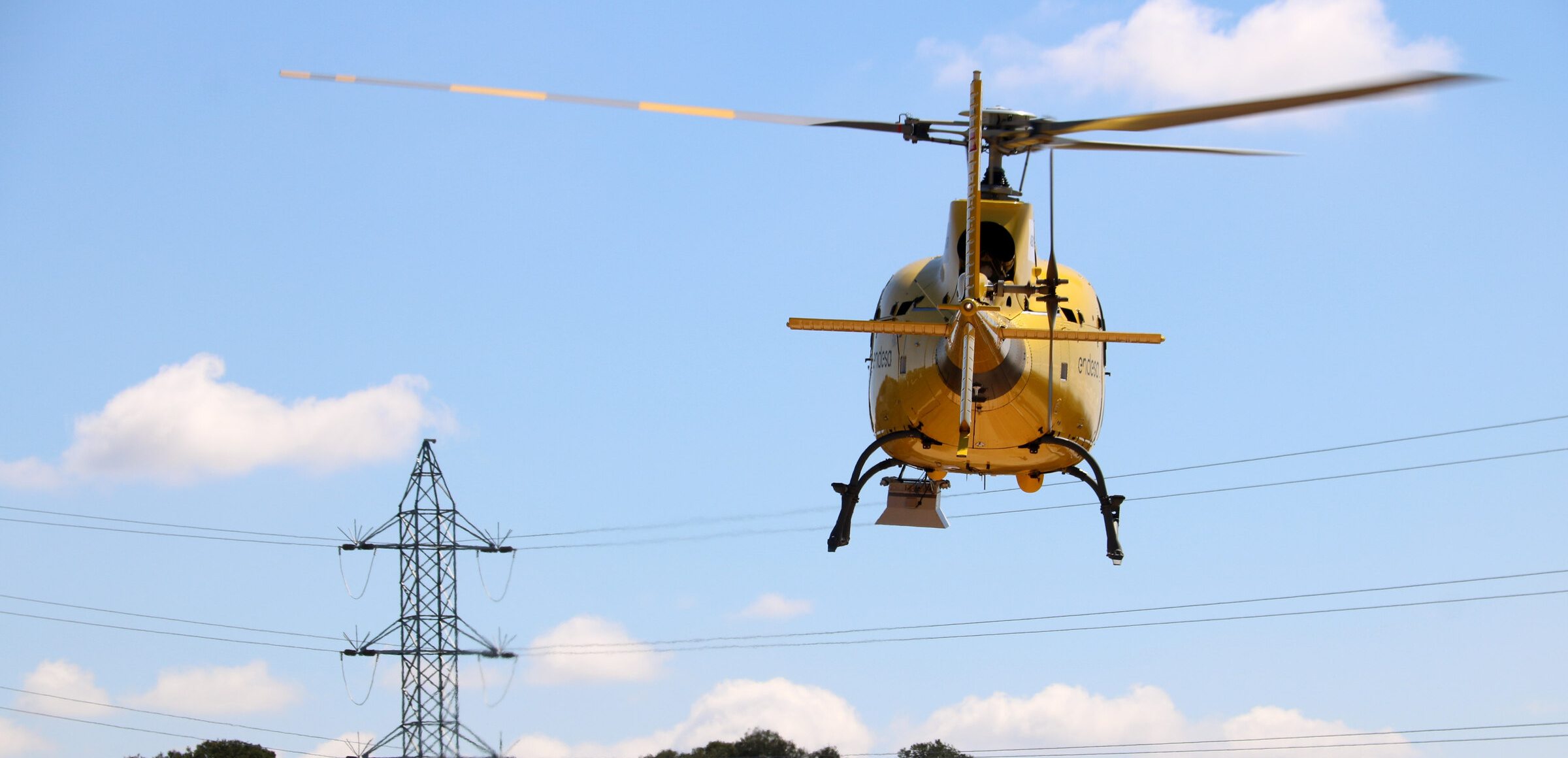
Artificial intelligence is already being applied in specific projects for the maintenance and monitoring of distribution networks. Specifically, it is used for:


Applying signal-processing-inspired AI to the energy sector not only improves the system’s technical efficiency, but also delivers tangible benefits for society:

The integration of AI in distribution networks also poses significant challenges:

AI applied to energy distribution networks has the potential to completely transform the electrical system, making it more efficient, sustainable, resilient and citizen-oriented. The experience of the SIPBA research group at the University of Granada in intelligent analysis of complex signals, automatic event detection and the design of machine learning models provides a solid methodological foundation to address these challenges.
Drawing inspiration from biomedical approaches to solve energy-related problems is a clear example of the power of interdisciplinarity and of how AI can ultimately improve people’s lives from different angles, making a smarter, more connected and sustainable future possible.