


Energy transition
Puertos del Estado is working to achieve the sustainability targets set by the European Union – a true green revolution for the decarbonisation not only of Spanish ports but of the entire transport chain.
By Gustavo Santana Hernández
Puertos del Estado's Sustainability Strategy starts from a fundamental premise: the state-owned port system is much more than a set of logistics nodes; it is a key piece in the transition towards a low-carbon economy.
At the European level, within the Fit for 55 legislative package promoted by the European Commission, the approval of Regulation (EU) 2023/1804 of the European Parliament and of the Council, which aims to drive the deployment of alternative fuels infrastructure, establishes targets and goals that have a direct impact on the port system. These include: guaranteeing the supply of electricity by 2030 in ports to moored ferries, container ships, and cruise ships; and contributing to the development of the National Policy Framework regarding the development of the market for alternative fuels for use in maritime transport.
Furthermore, the Law 7/2021 on Climate Change and Energy Transition, in its Article 16, directly affects the planning and operation of ports, establishing the need to promote “the coordination and consolidation of sustainable logistics chains originating in or destined for ports through strategic initiatives aimed at reducing greenhouse gas emissions in ports, as well as in the maritime or land transport chains originating in or destined for ports”. To achieve the goal set by the law, the regulation urges the promotion of measures within ports such as:
These decarbonisation and energy transition targets affecting ports, established by European and national regulations, are therefore specifically addressed by the Strategic Framework of the state-owned port system – approved in late 2022 – which includes the energy transition plan for Spanish ports, setting even more specific objectives and targets, because ports are key players in achieving the decarbonisation of transport and the energy transition in Spain.
This Strategic Framework of the state-owned port system, which guides the course of Spanish ports up to 2030, includes among its objectives a 70% reduction in the carbon footprint of Port Authorities and a 50% reduction for ports. And it sets out the steps to achieve this.
The first objective is to achieve eco-efficient ports, for which initiatives are being developed regarding energy efficiency, consumption optimisation, waste traceability, and ‘green’ procurement criteria to encourage the use of low-carbon materials in port works, etc.
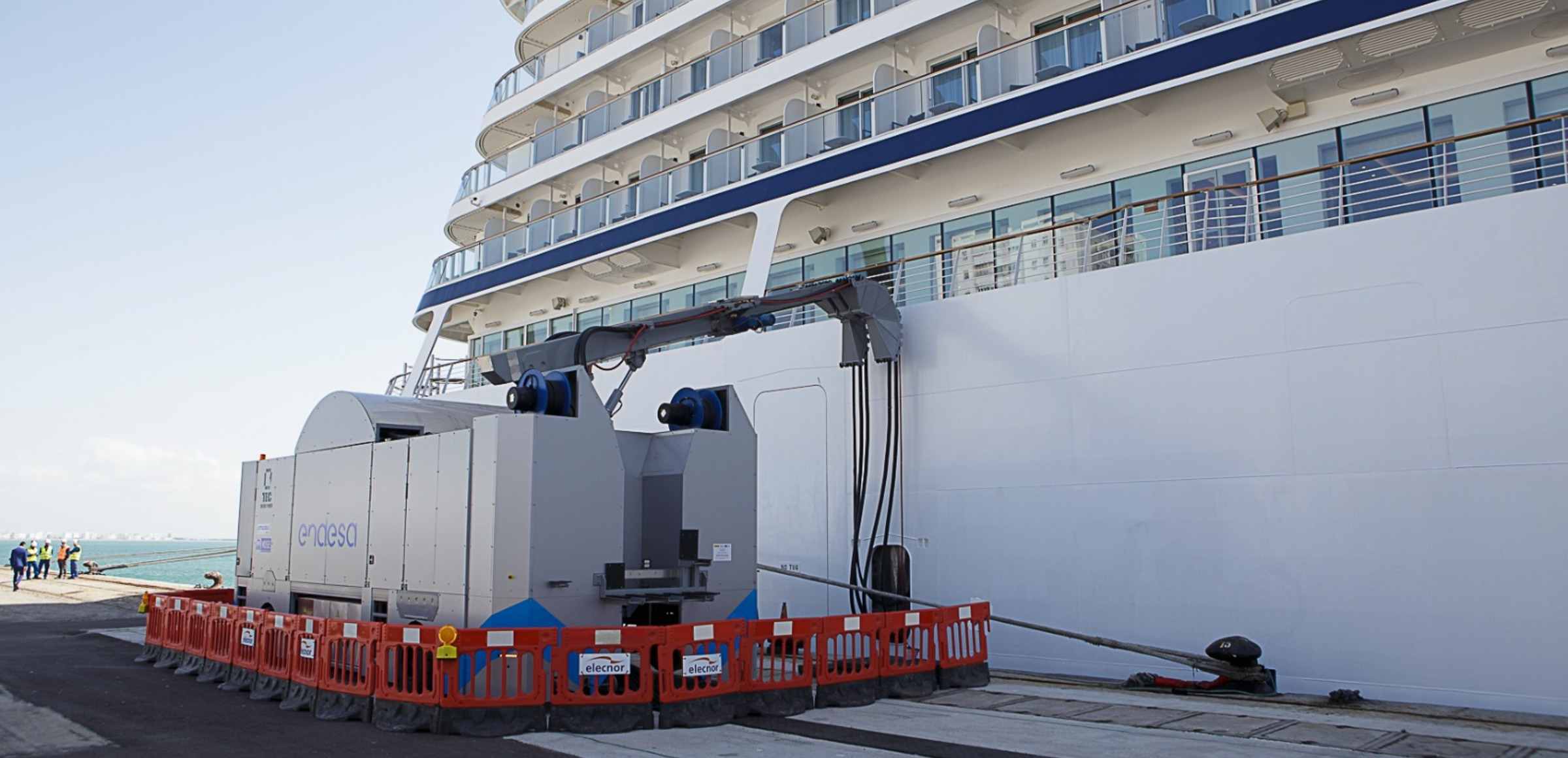
Contributing to reducing the carbon footprint of transport chains is another pillar of the sustainability strategy. To this end, there is a commitment to boosting rail transport to and from ports, alongside two fundamental initiatives: the electrification of docks (known as the OPS system, Onshore Power Supply) and the development of infrastructure and supply of alternative fuels.
The electrification of port docks is an unavoidable task in the short term. The connection of ships to the electricity grid while moored in port allows auxiliary engines to be turned off, reducing polluting emissions and noise.
In this regard, several significant initiatives are already being rolled out. Recently, the first national OPS connection for cruise ships was inaugurated at the Port of Cadiz, on the Alfonso XIII Dock, operated by Endesa – a milestone in this process. I would like to highlight at this point the importance of the collaboration with Endesa, because without their support in Cadiz and other ports in the system, along with the rest of the distribution companies, it would be impossible to develop this project.
In 2024, the Port of Barcelona was a pioneer in the installation of an OPS connection in a container terminal at a Mediterranean port. It also has connections at the Sant Bertrán passenger and RoRo cargo terminal. The Balearic and Canary Islands have enabled OPS connections for ferries.
To these facilities, we must add those already in the execution or drafting phase in most of the ports of the state system. For this purpose, the Horizon 2030 investment plan, presented by the Minister of Transport and Sustainable Mobility, envisages over €950 million in public investment in Spanish ports.
To achieve the European decarbonisation targets linked to OPS, Puertos del Estado has coordinated the integration of power needs into the planning of the national electricity grid, currently underway, in close collaboration with the Directorate-General for Energy Policy and Mines, Red Eléctrica, and the distribution companies, working to ensure that the deployment of OPS is technically and economically viable. While in 2024 the port system as a whole had an installed electrical capacity of 200 MW and recorded an annual consumption of 1 TWh, it is estimated that by 2030, in order to meet the target established by the AFIR, an additional capacity of over 1 GW will be required to meet a projected total consumption of over 2 TWh.
Regarding the regulatory framework needed to facilitate its development and incentivise the necessary participation of the private sector, the recently approved Sustainable Mobility Law highlights the importance of ports in decarbonisation and prioritises meeting the energy needs of port facilities in order to develop projects such as OPS or the promotion of alternative fuels. The Spanish Government has also implemented the Regulation on the supply, marketing, and aggregation of electricity, which introduces, among other matters, a scheme that allows for the temporary modification of contracted power. In this way, contracted power can be adapted to the consumption patterns of activities that, like OPS, present high seasonal and daily variability.
All these efforts clearly demonstrate the importance of public-private partnership, the foundation of our state-owned port system, but especially necessary in the area of decarbonisation.
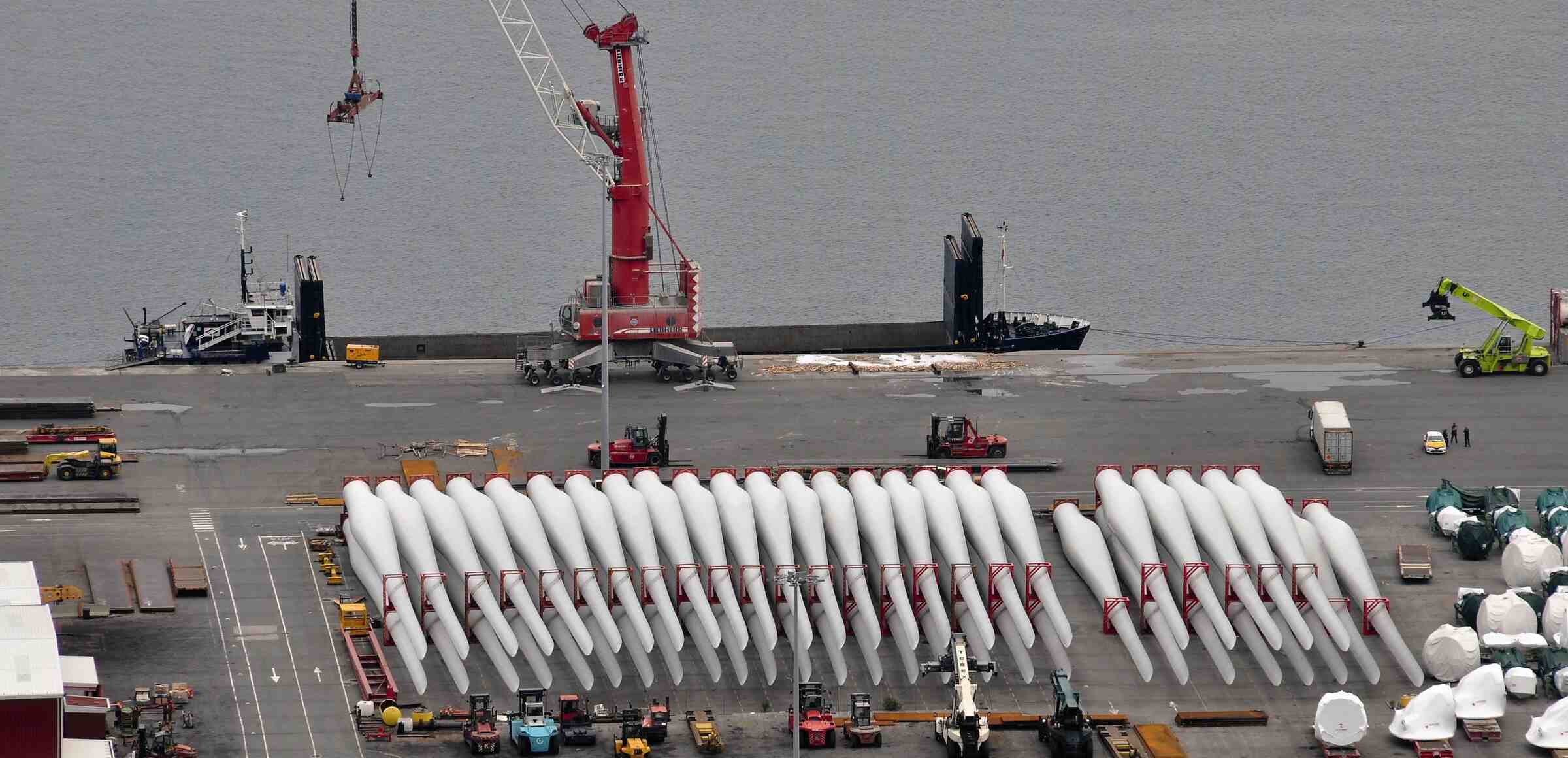
Other relevant lines of work include advancing the production and supply of new low-carbon maritime fuels, or promoting offshore renewable energy through the adaptation of infrastructure, which is enabling Spanish ports to become leading logistics hubs for the construction, assembly, transport, and maintenance of wind turbines.
In short, the adaptation of ports to current regulations on energy transition entails a profound structural change. Beyond a legal obligation, this is a necessary transformation to guarantee the sustainability of maritime transport and its integration into a low-carbon economic model. In this context, Spanish ports face the challenge —and the opportunity— of placing themselves at the forefront of this energy revolution.
.jpg)


