


If you prefer to view the website always in english, click here.
{{content.phone.title}}
{{content.phone.text}}
{{content.phone.phoneText}}
{{content.form.title}}
{{content.form.text}}
{{content.form.success.title}}
Solar surplus in spring: a guide to sizing the installation correctly and deciding if you need a battery
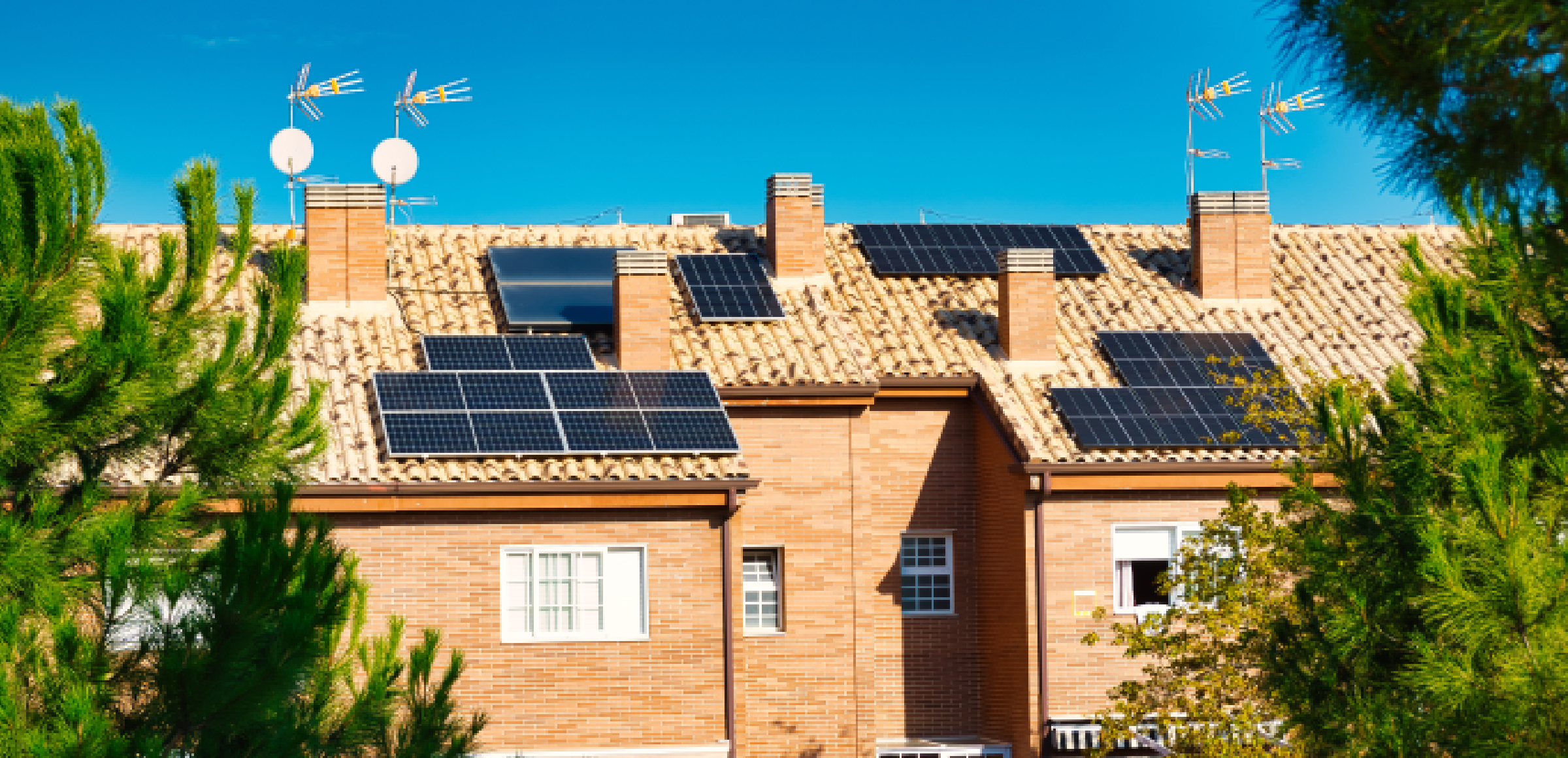
Spring arrives, daylight hours increase, and your solar installation starts generating more than ever. And then the question arises: does this surplus mean I have too many panels?
The answer is not that simple. Having more generation is not always a problem, but it is a sign that it is worth reviewing how that energy fits with your daily usage and what real benefit you are getting from it.
In this article, we explain why surpluses increase at this time of year, how to interpret them correctly, and what options you have to improve the efficiency and savings of your system.
Why there is more solar surplus in spring
In spring, solar energy generation naturally increases. Understanding why this happens is key to correctly interpreting surplus.
More daylight hours and better seasonal generation
During spring, the days are longer, and solar radiation is more intense and constant. This causes the panels to generate energy for more hours and with greater efficiency than in winter.
If you want to better understand how solar self-consumption works and what options exist for your home, visit our dedicated guide.
What it means to have a surplus and when it is normal
A surplus is energy you generate but do not use at the time. It is completely normal for it to happen in spring and summer, especially if your usage does not grow at the same rate as generation.
You can learn more about how to make the most of that leftover energy in the post: How to take advantage of self-consumption surpluses.
When excess generation may indicate incorrect sizing
Having a surplus is not a problem in itself. The key is its volume and frequency. If ti is continuously high, it may indicate that the installation is not tailored to your real needs.
A well-sized installation is not the one that generatwes the most energy, but the one that best adapts to your usage throughout the day.
Before thinking about a battery: how to know if your installation is correctly sized
Before considering storage solutions, it is important to analyse if the installation is optimised.
Compare your estimated generation with your actual usage
The first step is to compare the energy your system can generate with what you actually use. This analysis allows you to detect if you are generating more than you can use.
The importance of the usage curve, not just annual usage
Knowing the total annual usage is not enough. What is really important is when you use energy.
If most of the usage occurs outside daylight hours, surpluses will increase. Tailoring the installation to your hourly pattern is key to improving self-consumption.
How to use peak solar hours to estimate generation
Peak solar hours are a very useful reference for estimating the installation's average production. It helps you understand if the system is generating as expected and how that generation fits with your usage.
What happens to the surplus if you don't have a battery
Not having a battery does not mean losing all the energy you do not use at the time.
How simplified compensation works
If your installation generates a surplus, you can compensate for it on the bill thanks to the simplified compensation mechanism (bill credits).
We explain how this process works and what conditions you must meet to benefit in our post: Remuneration for self-consumption surpluses.
The monthly limit for compensation on the bill
This system has a limit: the savings generated cannot exceed the cost of the energy used in that period. Therefore, if you generate much more than you use, not all the surplus is used financially.
Why value is 'lost' when you generate much more than you use
When the difference between production and usage is habitually very high, part of the energy is no longer translated into savings. This reinforces the importance of correctly sizing the installation.
When a physical battery is worth it
A physical battery can be a good solution in some cases, but it is not always necessary.
Homes with night-time usage or usage outside daylight hours
If you use energy mainly at night or at times without solar generation, a battery allows you to store the energy generated during the day to use later.
Homes seeking greater self-sufficiency
Some homes prioritise reducing their dependence on the grid or having energy backup. In these cases, the battery adds extra value.
Cases in which the investment may not pay off
If your usage largely coincides with generation hours or surpluses are moderate, a physical battery may not be the most financially efficient option.
Physical battery or virtual battery: what is the difference
There are different ways to manage a surplus, and it is worth understanding how each one works.
A physical battery stores kWh
It allows you to save energy to use later. It offers greater autonomy but involves an initial investment and maintenance.
A virtual battery stores euros
Instead of storing energy, it converts surpluses into economic value. This balance can be used to compensate for usage at other times, even in months with lower generation.
You can read more about this alternative in our post Virtual battery and solar self-consumption: what it is and how to save more.
When both solutions can coexist
In some cases, combining both options allows autonomy and profitability to be balanced, adapting the system to different needs.
How to decide between adjusting your system size, changing habits, or adding a battery
Analysing your installation's data is key to making the best decision.
If surplus only happens in some months
If excess generation is concentrated in spring or summer, it may be enough to adjust usage habits to make better use of the generated energy.
If you often exceed the compensation limit
When you generate more energy than you can compensate for on the bill, it may make sense to consider solutions that allow better use of that surplus.
If you want to optimise savings vs. autonomy
Each alternative responds to a different objective: reducing the bill, gaining energy independence, or improving the overall efficiency of the system.
Common mistakes when sizing a solar installation
Many problems with surpluses are due to initial decisions that are poorly adapted to the home's real usage.
Choosing more panels 'just in case'
Installing more power than necessary can generate surpluses that are difficult to use and lengthen the return on investment.
Not reviewing daytime and night-time usage
Ignoring when you use energy makes it difficult to correctly size the installation to your needs.
Buying a battery without looking at your real surplus
Before investing in storage, it is essential to analyse how the installation behaves in practice.
Frequently asked questions about solar surplus and batteries
Is it bad to have a lot of surplus in spring?
No. It is normal due to the increase in generation. The important thing is to analyse if it is being used correctly.
Does it always pay to install a battery?
Not necessarily. It depends on your usage, when you use energy, and how much surplus you generate.
What is the difference between a physical and virtual battery?
A physical battery stores energy; a virtual one transforms the surplus into financial savings.
Can I make use of the surplus without installing a battery?
Yes. Through bill compensation, you can obtain savings without the need for physical storage. Discover more about how to make the most of self-consumption surpluses.
How do I know if I have too many solar panels?
By comparing your generation with your actual usage and analysing how they are distributed throughout the day. If you regularly generate more than you can use, it may be a sign of oversizing.
Take a minute to find the product that best suits you:
{{firstStep.title}}
Take a minute to find the product that best suits you:
{{title}}
You don't need to adapt to Endesa's tariffs because they adapt to you. If you go to our catalogue you can compare the different tariffs for yourself. Or if you prefer, you can answer a few questions and we will take care of comparing all the different electricity and gas tariffs and then make a customised recommendation.
Take a minute to find the product that best suits you:
{{title}}
You don't need to adapt to Endesa's tariffs because they adapt to you. If you go to our catalogue you can compare the different tariffs for yourself. Or if you prefer, you can answer a few questions and we will take care of comparing all the different electricity and gas tariffs and then make a customised recommendation.
Comparison of Electricity and Gas Tariffs
You don't need to adapt to Endesa's tariffs because they adapt to you. If you go to our catalogue you can compare the different tariffs for yourself. Or if you prefer, you can answer a few questions and we will take care of comparing all the different electricity and gas tariffs and then make a customised recommendation.
Do you want to see all our offers?
Spend a minute to find the product which best adapts to you:
{{firstStep.title}}
Spend a minute to find the product which best adapts to you:
{{title}}
{{content.phone.title}}
{{content.phone.text}}
{{content.phone.phoneText}}
{{content.form.title}}
{{content.form.text}}
{{content.form.success.title}}
Spend a minute to find the product which best adapts to you:
{{title}}
{{content.phone.title}}
{{content.phone.text}}
{{content.phone.phoneText}}
{{content.form.title}}
{{content.form.text}}