


If you prefer to view the website always in english, click here.
{{content.phone.title}}
{{content.phone.text}}
{{content.phone.phoneText}}
{{content.form.title}}
{{content.form.text}}
{{content.form.success.title}}
Tips for maximising solar electricity generation on cloudy days
What happens to photovoltaic generation when the sky fills with clouds and sunlight decreases? Although it might seem like solar panels only work under direct sunlight, the reality is quite different. Even on grey days, solar panels continue to generate energy thanks to diffuse radiation that passes through the clouds.
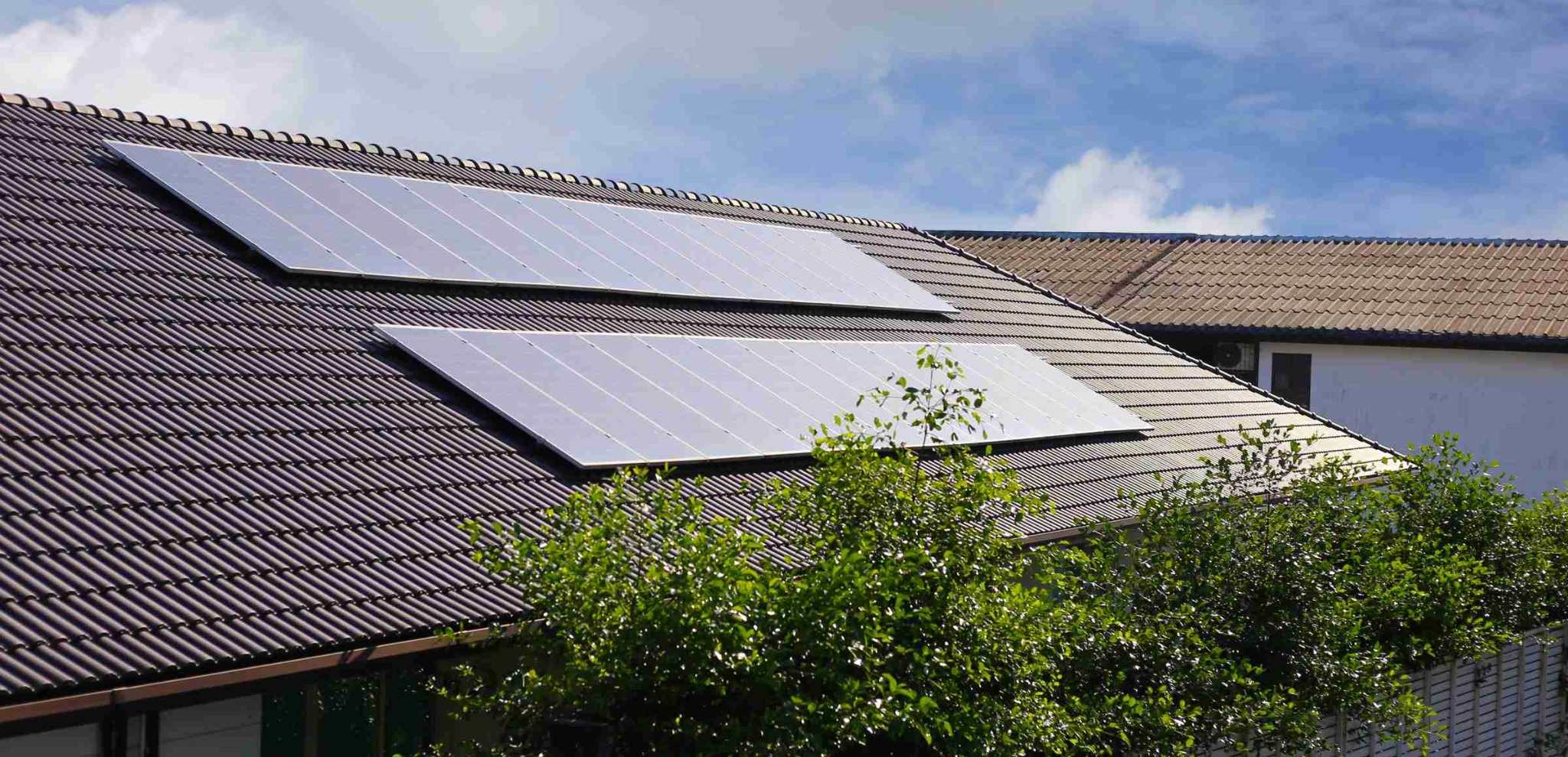
In Spain, where photovoltaic technology stands out for its widespread use and efficiency, it’s possible to maintain a good level of performance even in low-light conditions. We explain how cloudy days affect solar generation and share practical strategies you can apply to get the most out of your solar installation throughout the year.
Do solar panels generate energy on cloudy days?
The amount of energy solar panels can generate depends primarily on sunlight, so cloud cover has a direct impact. In Spain, with its high average solar radiation, conditions are ideal for harnessing this renewable energy compared to other European countries. That said, while photovoltaic systems continue to generate electricity on cloudy days, their performance decreases to a greater or lesser extent depending on cloud density and the type of solar technology used.
Understanding how this weather phenomenon affects system performance is key to optimising electricity generation and managing household energy consumption more effectively:
Direct, diffuse, and reflected radiation
Solar panels work thanks to photons. Even when sunlight doesn’t hit them directly, diffuse radiation (light scattered by clouds) is still enough to generate electricity. Additionally, part of the radiation reaching the panels comes from sunlight reflected off the ground or nearby surfaces. This is why, on cloudy days, the electricity generation curve tends to show peaks and valleys as clouds move across the sky, filtering the light.
How much does solar generation drop on cloudy days?
Solar radiation consists of direct and diffuse light, and when clouds are present, diffuse light becomes dominant because clouds scatter the sun’s photons but don’t completely block incoming radiation. For this reason, solar panels continue to operate even when the sky is overcast, though with lower electricity generation.
In real-world installations, on cloudy days without rain, a photovoltaic panel’s energy generation can drop by roughly 10% to 25% compared to a completely clear day. Under dense cloud cover, reductions typically range from 40% to 60%, depending on the type of panel installed. Even so, generation is rarely zero as long as there is ambient light.
Influence of temperature
Both the ambient temperature and the temperature the solar modules reach affect their performance. Panels tend to be more efficient in cooler conditions. A cloudy but cool day can actually be more productive than a sunny and hot day, provided there is enough diffuse radiation.
Although it might seem that more heat means more generation, photovoltaic energy depends on light, not heat. When solar cells heat above 25 °C, their conversion efficiency decreases, reducing electricity generation.
Factors that influence solar generation on grey days
While weather is beyond our control, you can optimise how solar radiation is captured and used, even on cloudy days:
- Optimise panel orientation and tilt: A properly oriented installation facing south (in Spain) at the right angle ensures maximum solar capture of both direct and diffuse radiation. Optimal tilt varies by location and season, so professional guidance is recommended to make the most of your system’s performance.
- Install high-efficiency panels: Monocrystalline panels deliver high efficiency and performance in low-light conditions, as they capture more energy from the diffuse radiation typical of cloudy days. In areas with frequent grey days, this technology helps maximise generation.
- Keep panels clean to minimise energy losses due to dirt: Dust, pollen, leaves, animal droppings, and other debris on the panels can reduce generation by 15% to 20%, especially on cloudy days. Regular maintenance is recommended, with cleaning 1 to 3 times a year, avoiding abrasive products or high-pressure water jets that could damage the glass.
- Avoid shadows and check the surroundings: Shadows have a bigger impact on solar energy capture on low-radiation days. Ideally, trim nearby trees and branches, and check that antennas or chimneys do not interfere with the panels’ field of reception. Reconfiguring modules can also be key to minimising losses.
- Use microinverters or power optimisers: Microinverter and optimiser technologies allow each panel to operate independently. This is especially useful on low-sunlight days because it prevents a single underperforming panel from reducing the performance of the entire string.
- Monitor system performance: Remote monitoring systems help detect drops in generation or energy capture issues (caused by shadows, dirt, microcracks, etc.) and address them quickly to avoid losses or long periods of inactivity.
- Install energy storage systems (batteries): Having batteries allows you to store excess energy generated during sunny periods for use when generation decreases. This ensures autonomy even during low-generation days and increases energy self-sufficiency.
How to get the most out of your self-consumption installation all year round
A professional preventive, periodic maintenance service ensures your photovoltaic installation functions efficiently throughout its entire lifetime. That’s why it’s important to provide expert care for your installation.
Key actions include checking connections and wiring to prevent energy losses or overheating, inspecting mounts and structures for proper fastening and signs of corrosion, making sure there are no microcracks, delaminations, or hot spots, identifying degradation or faults that could affect performance, removing dust, debris, or droppings that could block sunlight, trimming vegetation, and adjusting structures that might cause partial shading in low-diffuse-light conditions. These, along with many other preventive and safety measures, can help maintain efficiency and consistent generation.
The bottom line is clear: Cloudy days are not the enemy of solar energy. Photovoltaics remain one of the most reliable, cost-effective, and sustainable energy sources—even under a grey sky—because panels can still generate electricity from diffuse light, although generation is lower than on sunny days. For these reasons and more, optimising your system according to local radiation, temperature, and weather conditions is essential to get the most from your installation.
At Endesa, we offer all the advantages of solar self-consumption, from the best tariffs to solar panel installation services, as well as guidance from our specialised team, to ensure your system operates efficiently even on grey and cloudy days.
Take a minute to find the product that best suits you:
{{firstStep.title}}
Take a minute to find the product that best suits you:
{{title}}
You don't need to adapt to Endesa's tariffs because they adapt to you. If you go to our catalogue you can compare the different tariffs for yourself. Or if you prefer, you can answer a few questions and we will take care of comparing all the different electricity and gas tariffs and then make a customised recommendation.
Take a minute to find the product that best suits you:
{{title}}
You don't need to adapt to Endesa's tariffs because they adapt to you. If you go to our catalogue you can compare the different tariffs for yourself. Or if you prefer, you can answer a few questions and we will take care of comparing all the different electricity and gas tariffs and then make a customised recommendation.
Comparison of Electricity and Gas Tariffs
You don't need to adapt to Endesa's tariffs because they adapt to you. If you go to our catalogue you can compare the different tariffs for yourself. Or if you prefer, you can answer a few questions and we will take care of comparing all the different electricity and gas tariffs and then make a customised recommendation.
Do you want to see all our offers?
Spend a minute to find the product which best adapts to you:
{{firstStep.title}}
Spend a minute to find the product which best adapts to you:
{{title}}
{{content.phone.title}}
{{content.phone.text}}
{{content.phone.phoneText}}
{{content.form.title}}
{{content.form.text}}
{{content.form.success.title}}
Spend a minute to find the product which best adapts to you:
{{title}}
{{content.phone.title}}
{{content.phone.text}}
{{content.phone.phoneText}}
{{content.form.title}}
{{content.form.text}}