


If you prefer to always view the website in English, please click here.
{{content.phone.title}}
{{content.phone.text}}
{{content.phone.phoneText}}
{{content.form.title}}
{{content.form.text}}
{{content.form.success.title}}
Fast vs ultra-fast charging: which charger do you need for your trip
You are about to set off on a trip. The car is ready, the luggage is in the boot, and the battery is practically full. Before leaving, you open an app to check where you can recharge along the way, and options for 50, 100, 150 or even 350 kW appear.
Then a very common question arises: Which charger do I actually need to travel in an electric car?
It is an increasingly common question. Because when we talk about fast vs ultra-fast charging for an electric car, the answer does not depend solely on the charger's power capacity. The type of trip, the time you want to spend at stops, and your vehicle's capabilities also play a role.
And here comes one of the first surprises: more power does not always mean a better decision. If your car accepts a maximum power of 100 kW, plugging it into a 350 kW charger will not make it charge faster. Similarly, if you are going to stop for an hour to have lunch, you might not need to look for an ultra-fast station.
The key is to choose the right charger for each situation. Because a 150 km getaway is not the same as a 700 km holiday.
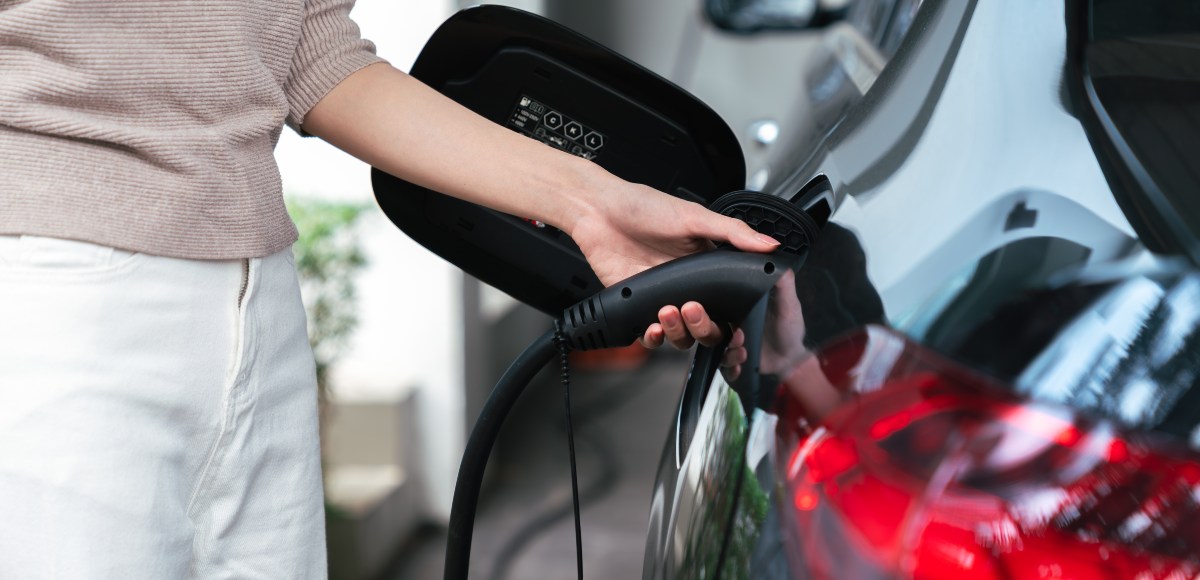
The basic difference: fast does not mean the same as ultra-fast
Before deciding which charging point to use, it is worth understanding the differences between the main types of charging available.
|
Type of charging |
Indicative power |
Where it is used |
Approximate time |
Estimación mensual |
|---|---|---|---|---|
|
Semi-fast |
7.4–22 kW AC |
Home, office, car parks and destination |
3–8 hours |
0,91 € |
|
Fast |
50–150 kW DC |
Charging stations, city and motorway |
20–40 minutes up to 80% |
1,30 € |
|
Ultra-fast |
150–350+ kW DC |
Motorways and long trips |
10–20 minutes up to 80% |
78,48 € |
The most important difference lies not only in the power, but in the context of use:
- Fast charging for electric cars is designed for taking a reasonable break and continuing the journey with enough range.
- Ultra-fast charging for electric cars, on the other hand, seeks to minimise waiting time to the maximum when the trip is long and the vehicle can take advantage of those power levels.
Fast charging is for stopping, resting, and carrying on. Ultra-fast charging is for minimising the stop when the trip is long and the car allows for it.
If you want to delve deeper into the currently available technologies, you can check out our guide on the types of chargers for electric cars.
The most common mistake: choosing the charger based solely on kW
When someone first starts travelling in an electric car, they usually think the best charger is always the most powerful one. However, the actual charging speed depends on many other factors.
The maximum power the car accepts
This is the most important factor. If your vehicle accepts a maximum of 100 kW, it will not charge any faster, even if you connect to a 150 kW or 350 kW charger.
The battery percentage when you arrive
The battery does not charge the same way when it is at 10% as when it is at 70%. The fuller it is, the more the charging speed drops.
Battery temperature
Batteries work best within certain temperature ranges. A temperature that is too high or too low can affect performance.
The vehicle's charging curve
Each manufacturer manages charging differently. That is why two cars connected to the same charger can achieve different speeds.
Station conditions
How busy the station is, the available power, or even the condition of the charger also play a role.
Therefore, it is worth remembering a key idea: a 350 kW charger does not turn any car into an ultra-fast one. The limit is set by the combination of the charger, the vehicle, and the battery.
What charger you need depending on your trip
If you are looking for a quick answer, this table summarises which option is usually best suited based on the distance and type of journey.
|
Type of trip |
Indicative distance |
Recommended charger |
Why |
|---|---|---|---|
|
City or daily commute |
Less than 100 km |
Home or semi-fast charging |
You don't need fast charging |
|
Short getaway |
100–250 km |
Home + occasional fast charging |
You leave with enough battery |
|
Medium trip |
250–400 km |
Fast (50–150 kW) |
One stop is usually enough |
|
Long trip |
More than 400 km |
Ultra-fast (150 kW or more) |
Reduces waiting times |
|
Trip with children or a long lunch |
Variable |
Fast or destination charging |
The stop lasts longer than the charge |
|
Trip in a rush |
Variable |
Compatible with ultra-fast charging |
Prioritises saving time |
Most drivers discover something curious after their first few trips: they don't need to use ultra-fast chargers as often as they imagined.
If you are taking a short trip: you don't need ultra-fast charging
Let's consider a journey of around 150 km.
With an average consumption of between 17 and 20 kWh per 100 km, you will need approximately 25 to 30 kWh to complete the journey.
In practice, many drivers won't even have to stop to recharge.
Therefore, in this scenario, the best strategy usually begins before leaving home. Having your own charging point allows you to start the trip with the battery ready and take advantage of the most convenient hours to charge.
If you are considering this option, you can explore Endesa's Waybox solution with public charging. We also recommend this comprehensive guide on installing a home charging point.
And to optimise energy costs, a specific electric vehicle tariff like the Recarga en Casa tariff can make all the difference.
If you are taking a 300 km trip: fast charging is usually enough
Let's now look at a journey of around 300 km.
Depending on the car, speed, air conditioning use, or the load being carried, total consumption can range from 52 to 60 kWh.
The recommended strategy is usually very simple:
- Leave home with a high battery level.
- Make a stop when necessary.
- Recover range up to approximately 70%–80%.
- Continue the journey.
How long does an electric car take to charge to 80%?
At a fast electric car charger of between 50 and 150 kW, recovering the energy needed to continue travelling usually takes between 20 and 40 minutes.
In other words, enough time to take a comfortable break without charging becoming the focus of the trip.
If you want to look further into this, you can read our article on electric car range and charging times.
If you are taking a long trip: this is where ultra-fast charging pays off
When we talk about journeys of between 500 and 700 km, the situation changes.
Here, every stop counts.
If you need to recharge several times during the journey, reducing each stop from 35 or 40 minutes down to 15 or 20 minutes can have a significant impact on the total travel time.
That is why, when you wonder when to use ultra-fast electric car charging, the answer is usually clear: on long trips where the goal is to minimise waiting.
In these cases, a 150 kW vs 350 kW charger can make a major difference if the vehicle is capable of taking advantage of that power.
To better plan your stops, locate available stations, and manage your charging sessions, Endesa's EV charging app is particularly useful.
And if you are organising a getaway or holiday, this guide on how to plan a holiday with an electric car can also help.
The 80% rule: why it is not always a good idea to charge more
There is a recommendation that many experienced drivers repeat: it is not always worth charging up to 100%.
The reason lies in the way batteries themselves work.
Up to approximately 80%, the battery accepts energy at a high speed. Beyond that point, the power is progressively reduced to protect the system.
This means that going from 10% to 80% is usually much faster than going from 80% to 100%.
Therefore, when it comes to charging an electric car on the road, the most efficient strategy is usually to:
- Arrive at the charger with a low battery.
- Recover energy up to 70%–80%.
- Continue on your route.
- Repeat the process when necessary.
Most long trips are completed faster by carrying out several charges up to 80% rather than a single full charge.
You can find out more in our guide on how to charge to 100% without causing battery degradation.
Quick reference table: which charger to choose based on your situation
|
Situation |
Best option |
|---|---|
|
Daily use |
Home charger |
|
Work or shopping centre |
Semi-fast |
|
Weekend getaway |
Fast |
|
300 km trip |
Fast (50–150 kW) |
|
Trip of over 500 km |
Ultra-fast |
|
Need to minimise stops |
Ultra-fast |
|
Stop for lunch or rest |
Fast |
How much does it cost to choose fast or ultra-fast?
Ultra-fast charging usually has a higher cost than fast charging because it requires infrastructure capable of supplying much more power.
However, the comparison shouldn't be made solely in financial terms.
The important question is how much time it allows you to save.
For day-to-day use, home charging is usually the most economical option. For occasional journeys, fast charging offers an excellent balance between cost and convenience. And for long trips, ultra-fast charging can clearly compensate for the time gained.
How to prepare for an electric car trip without improvising
Planning an EV trip is becoming increasingly simple, but it is still advisable to spend a few minutes preparing the route.
Before setting off
- Check the available range.
- Locate the main chargers on the route.
- Identify nearby alternatives.
- Check the estimated stopping times.
During the trip
- Do not wait until you reach 0%.
- Take advantage of natural breaks to recharge.
- Prioritise charging up to 80%.
The most efficient combination
After millions of kilometres driven by EV drivers, the conclusion is usually the same: charge at home for daily use and only use fast or ultra-fast charging when the trip requires it.
If you are thinking about taking the plunge, you can explore Endesa's electric car charger and tariff offer.
And if you are preparing a route, we also recommend this guide on where to charge an electric car during a bank holiday weekend.
FAQ
What is the difference between fast and ultra-fast charging?
Fast charging usually offers between 50 and 150 kW, while ultra-fast charging normally exceeds 150 kW and can reach 350 kW or more.
Can all electric cars use ultra-fast charging?
Yes, they can connect to compatible charging points, but not all of them can take advantage of the full power available.
Is it bad to use ultra-fast charging?
No. Manufacturers design their vehicles to use this type of charging when they are compatible with it.
Why is it recommended to charge only up to 80% on the road?
Because beyond that percentage, the charging speed drops considerably and the time needed to fill the battery increases.
What charger do I need for a 300 km trip?
In most cases, a fast charge of between 50 and 150 kW will be enough to complete the journey comfortably.
When is it worth looking for an ultra-fast charger?
Primarily on long trips (over 400 or 500 km), or when you need to minimise stopping times as much as possible.
Is it better to charge at home before leaving?
Yes. Setting off with a fully prepared battery is usually the most convenient, efficient, and economical way to tackle any electric car trip.
Take a minute to find the product that best suits you:
{{firstStep.title}}
Take a minute to find the product that best suits you:
{{title}}
{{content.phone.title}}
{{content.phone.text}}
{{content.phone.phoneText}}
{{content.form.title}}
{{content.form.text}}
{{content.form.success.title}}
You don't need to adapt to Endesa's tariffs because they adapt to you. If you go to our catalogue you can compare the different tariffs for yourself. Or if you prefer, you can answer a few questions and we will take care of comparing all the different electricity and gas tariffs and then make a customised recommendation.
Take a minute to find the product that best suits you:
{{title}}
{{content.phone.title}}
{{content.phone.text}}
{{content.phone.phoneText}}
{{content.form.title}}
{{content.form.text}}
{{content.form.success.title}}
You don't need to adapt to Endesa's tariffs because they adapt to you. If you go to our catalogue you can compare the different tariffs for yourself. Or if you prefer, you can answer a few questions and we will take care of comparing all the different electricity and gas tariffs and then make a customised recommendation.
Comparison of Electricity and Gas Tariffs
You don't need to adapt to Endesa's tariffs because they adapt to you. If you go to our catalogue you can compare the different tariffs for yourself. Or if you prefer, you can answer a few questions and we will take care of comparing all the different electricity and gas tariffs and then make a customised recommendation.
Do you want to see all our offers?
Spend a minute to find the product which best adapts to you:
{{firstStep.title}}
Spend a minute to find the product which best adapts to you:
{{title}}
{{content.phone.title}}
{{content.phone.text}}
{{content.phone.phoneText}}
{{content.form.title}}
{{content.form.text}}
{{content.form.success.title}}
Spend a minute to find the product which best adapts to you:
{{title}}
{{content.phone.title}}
{{content.phone.text}}
{{content.phone.phoneText}}
{{content.form.title}}
{{content.form.text}}