


If you prefer to always view the website in English, please click here.
{{content.phone.title}}
{{content.phone.text}}
{{content.phone.phoneText}}
{{content.form.title}}
{{content.form.text}}
{{content.form.success.title}}
Installing an electric car charger in a communal car park in 2026: regulations, permits, and steps
Under the Horizontal Property Act, to install an electric car charger in your parking space, you simply need to notify the residents' association.
This means you do not need to ask the residents' association for permission, provided the charger is for your private use, you pay for the installation, and you place it in your individual parking space.
Both the installation and the charging device must also comply with the ITC-BT-52 regulation, which govern the technical aspects of electric vehicle charging systems.
Therefore, while you do not need the association's approval, you must provide prior notice and ensure the installation is carried out in accordance with the established conditions and requirements.
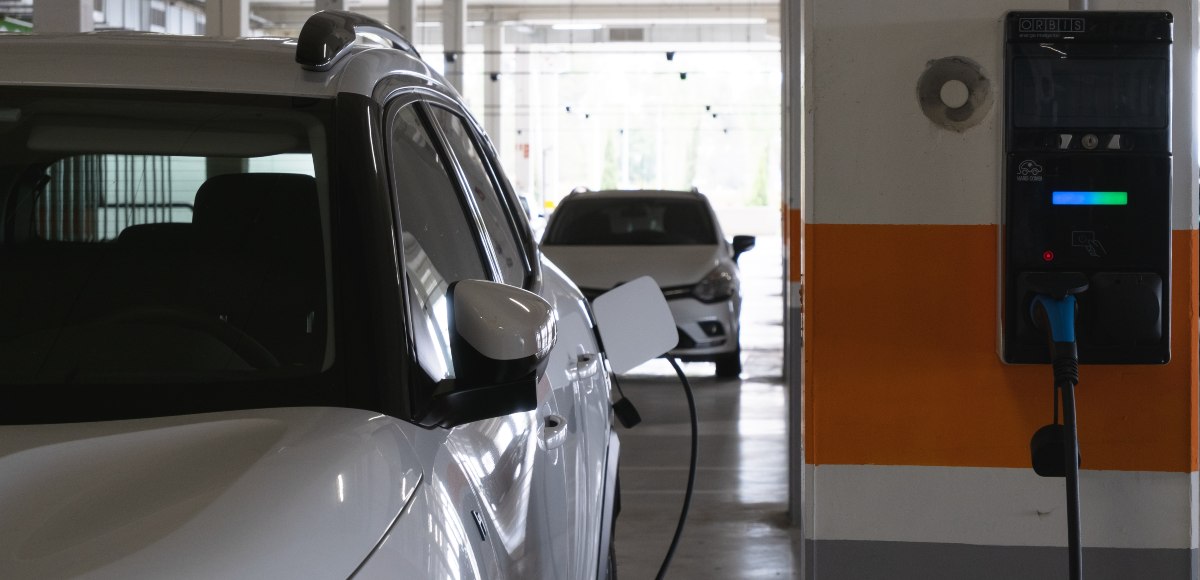
Can I install the charger without the residents' association's permission? What the Horizontal Property Act says
Since 2009, the Horizontal Property Act (LPH) has included an explicit reference to the individual installation of charging points in building car parks.
Now covered in Article 17.5, the text clears up the main doubts that still arise among new electric car owners and other residents in the building. If you want to install your charger, this is what the law says:
- You simply need to give prior notice to the residents' association.
- The charger must be for private use.
- The device must be located in your parking space.
- You must bear the cost of the installation.
- You must also pay for the electricity consumed.
It is important to note that these criteria apply to the installation of an individual charger. When the aim is to set up a charging point system for all the residents in the building, the voting percentages required for approval, which are outlined in the same law, come into play.
How to notify the residents' association about your charger's installation
To tackle any lack of knowledge and prevent any misgivings when installing your electric car charger, we recommend preparing a notification that is provable and as comprehensive as possible.
- Send it in writing to the chair of the residents' association and/or the property manager.
- Use a method that leaves a record, such as an email with a read receipt, a burofax, or recorded delivery.
- Do not frame the notification as a request for authorisation, but rather as notice of your decision.
- Include the key details: your full name as the owner, the identification of the parking space, the scheduled date, and a brief description of the installation you are going to carry out.
- Mention the legal backing of the Horizontal Property Act, as well as your commitment to comply with the ITC-BT-52 regulation during the installation.
- Add an explanation of the cable routing, especially if it affects the building's communal areas.
- To give the other residents peace of mind, mention that you will bear both the installation costs and the cost of the energy consumed by the charger.
Letter template for notifying the installation of a charger in the car park

Can the other residents object to the installation of an individual charger?
The installation of an individual charging point does not require the approval of the residents' association, meaning they cannot refuse it either.
However, to tackle any potential reluctance from the outset, there are a few aspects worth paying attention to:
- Inform the residents' association, using the notification required by the Horizontal Property Act.
- Check that the installation will be technically viable, respecting the building's communal areas and ensuring it does not conflict with any architectural restrictions or protections.
- Use professional installers, both to assess viability and to ensure a proper, certified installation.
What regulations must charging points in communal car parks comply with? LPH and ITC-BT-52
Besides the Horizontal Property Act, the ITC-BT-52 technical instruction establishes the technical conditions and safety requirements that must be followed for the installation.
This is a Supplementary Technical Instruction that has formed part of the Low Voltage Electrotechnical Regulation since 2014. It sets out the specifications for the charging device and the elements of the electrical installation supplying it, covering different scenarios and uses.
To reduce the complexity of the process, compliance with these standards is already factored into approved chargers and the work of specialist installers. That is why it is advisable to choose the device and the installer carefully, ensuring you have the corresponding safety guarantees and certificates.
How to install a charger in a communal car park, step by step
In 7 steps, your electric vehicle can enjoy a new charger in your home car park, saving you money on every charge and helping you enjoy it with greater peace of mind:
1. Check where your meter and parking space are
It is common not to know where your electricity meter is in a communal building, and it is often in a room or cupboard whose keys are held by the caretaker or the chair of the residents' association. Knowing this in advance and having a rough idea of the route between the meter and the parking space will be useful to speed up the next step: the technical survey.
2. Request an installation survey
With the help of a professional who specialises in this type of installation, you will need to ascertain several factors that affect the project's viability and, usually, its budget too:
- Floor and location of the parking space.
- Required cable routing.
- Condition of the consumer unit.
- Power required to supply the charger.
- Necessary protections and safety measures.
- Existing infrastructure, depending on whether it is an older or new-build building.
3. Choose the charger and charging power
A higher charger power is not necessarily the best solution. To choose both the device and its power capacity, you must compare their characteristics with those of your vehicle, the electrical installation, the times you will usually charge the car, and the contracted power capacity of your electricity tariff.
4. Notify the residents' association of the installation
As we've explained, this procedure required by the LPH is not an authorisation request, but clear notification that you are going to carry out the installation.
If you wish, you can use the template in this article and fill it in with your specific details.
5. Carry out the installation
To do this safely, leave the installation process in the hands of approved professionals. This will help guarantee it is carried out in accordance with ITC-BT-52, and you will receive any certificates you may need.
With Endesa's Waybox, you get solutions that include the charger, professional installation with an Electrical Installation Certificate (CIE), financing options, and all the information you need to start enjoying it right away.
6. Legalise and keep the documentation
Depending on your autonomous community, check whether you need to register the documents related to the installation. If so, this procedure is usually carried out by the installation company.
Send a copy of the Electrical Installation Certificate to the residents' association as proof that the work was carried out in accordance with the law.
And keep all the documentation for the charger and the installation process.
Where does the charger get its power from?
As the LPH indicates, the parking space owner must bear the cost of the electricity consumed by the charger. To do this, there are three power connection options:
From your home's meter
In most cases, the charger's power cable will be connected to your home's meter. This way, the electric car's consumption becomes part of your electricity bill, alongside the rest of your household appliances.
With an independent supply for the parking space
An independent supply involves installing an exclusive meter to power the charging point. This means setting up a contract with its own CUPS code, keeping the charger's consumption separate from the rest of the house's bill. This option may be chosen for various reasons, such as not exceeding the home's contracted power capacity or clearly separating consumption and expenses.
From a communal charging infrastructure
When the building already has a dedicated charging circuit in the car park, connecting the charger to that network's meter is a good alternative to avoid a build-up of cables. In these cases, the infrastructure has metering systems so each resident pays for what they consume.
How much does it cost to install a charger in a communal car park?
The price of installing a charging point varies according to the project's complexity, combined with the type of charger chosen.
A good way to make the decision easier, while also saving on costs and admin, is to combine the purchase and installation into a single process. This is the case with Endesa's Waybox + installation, which gives you everything from €1,099, alongside the legalisation of the system and financing options.
Having fixed prices also reduces the variables that can influence the cost of preparing your parking space for charging, which include:
|
Factors |
How it can affect the cost |
|---|---|
|
Distance between the meter and the parking space |
More cabling and trunking |
|
Route through the car park |
Can increase the complexity of the routing |
|
Charging power |
Determines the equipment and installation elements |
|
Necessary protections |
Require more components and time |
|
Existing infrastructure |
Can simplify a large part of the installation |
|
New supply |
Can add more procedures and costs |
|
Wi-Fi coverage in the car park |
May require the installation of signal boosters |
|
Type of tariff |
May include benefits or financing for the installation |
What grants are available to install a charger in 2026?
Grants and incentives for purchasing a charger can vary from year to year. When the time comes, we recommend checking the validity and terms of government schemes, as well as any other potential benefits from your autonomous community or local council.
The 15% tax deduction continues in 2026
Until 31 December 2026, you can still claim a 15% tax deduction on the amount you pay to install a charging system in your parking space, provided you own it. The maximum tax base is €4,000, meaning you can deduct up to €600 if you meet all the conditions.
The MOVES plan for chargers and regional grants
The MOVES III 2025 plan was managed through regional calls for applications and included grants for purchasing and installing electric chargers. During 2026, some autonomous communities are continuing to extend funds or manage emerging calls for applications, so it is worth checking these options based on where you live.
Which charger to choose for your space in a communal car park
As we have seen, the building and parking area's characteristics can influence what type of charger is best to install. Keeping this in mind, there are a few criteria that will help you choose between the models on the market:
- Charging power. Higher power allows for faster charging, but you must make sure to choose the most suitable one for your car and your electricity tariff.
- Dynamic load management. This allows the charger to regulate the load so your electricity consumption does not exceed your contracted power capacity, managing the energy more efficiently.
- Schedule programming. This allows you to automate what times you charge the car, taking advantage of cheaper off-peak prices.
- Connectivity and app control. With an application like Endesa On Your Way, you can manage the charge from your mobile, as well as select and reserve charging points away from home.
What happens if several residents want to install charging points?
The number of electric cars continues to grow and, with it, the installation of charging points in communal car parks. To avoid a piecemeal approach to installations, an increasing number of residents' associations are opting to build shared infrastructure.
This is a measure that is, in fact, already standard in new-build properties. And it brings benefits for each resident and for the association as a whole:
- It makes it easier to install new chargers at any time.
- It reduces individual costs for cabling, labour, and safety elements.
- It minimises the need to supervise charging points and the amount of documentation required for certification.
- Its regulations are already set out in ITC-BT-52, which covers collective charging systems and communal trunking.
- There may be subsidies and grants available for this type of project, depending on the building's location.
Frequently asked questions about chargers in communal car parks
Do I need permission from the residents' association to install a charger?
You only need to notify the residents' association, in accordance with Article 17.5 of the Horizontal Property Act.
Do I have to put the installation to a vote at a residents' meeting?
It is not necessary. Installing a charging point requires neither a vote nor approval. However, you can use this channel to announce your decision at the meeting so that it is on record.
Can the residents' association ban me from installing a charging point?
The residents' association cannot ban the installation itself. However, they can issue warnings and, if necessary, take action regarding potential conflicts with any architectural restrictions the building may have.
Do I need to increase the contracted power capacity of my electricity tariff?
This depends on your household's total consumption, adding the power required by the charger to the rest of your household appliances. The important thing is not to exceed the limit, either by avoiding turning everything on at once, or by increasing your contracted power capacity.
Who pays for the installation?
If the charger is in your parking space for private use, the LPH states that you must bear the costs of the device, the necessary elements, and the installation process.
Who pays for the electricity consumed by the car?
The owner of the parking space, and therefore the charging point, is responsible for paying for the energy used to charge the car.
Can I connect the charger to my home's meter?
Yes. The charger's electricity supply can come from your home's meter, joining the rest of your household consumption. There is also the option to install a meter, with its corresponding contract, solely to supply the charging point.
Do I need an independent meter for the charging point?
It is not necessary, unless you want to keep the charger's costs separate from the rest of the household's consumption. In that case, you will need to take out an independent contract with its own supply point code (CUPS).
What happens if my space is far from the meter?
The greater the distance between the meter and the parking space, the more metres of cabling will be used for the installation. The need to get around architectural obstacles can also increase this length, making the help of specialist professionals especially important.
Can I install a charger if my parking space is in a different building to my home?
Yes, provided you own the parking space. In this case, you will likely need to install a specific meter for the charging point's electricity supply.
What regulations must the installation of a charging point in a communal car park comply with?
The Horizontal Property Act, which in Article 17.5 specifies that the residents' association must be notified and that the owner must bear the costs. And the ITC-BT-52 technical instruction, which sets out the technical requirements the installation must meet.
Are there grants or benefits for installing a charging point in 2026?
Yes. If you carry out the installation before the end of 2026, you can deduct 15% of the costs on your income tax return, subject to the established limits and conditions. It is also advisable to find out about other potential grants from your autonomous community or local council.
Take a minute to find the product that best suits you:
{{firstStep.title}}
Take a minute to find the product that best suits you:
{{title}}
{{content.phone.title}}
{{content.phone.text}}
{{content.phone.phoneText}}
{{content.form.title}}
{{content.form.text}}
{{content.form.success.title}}
You don't need to adapt to Endesa's tariffs because they adapt to you. If you go to our catalogue you can compare the different tariffs for yourself. Or if you prefer, you can answer a few questions and we will take care of comparing all the different electricity and gas tariffs and then make a customised recommendation.
Take a minute to find the product that best suits you:
{{title}}
{{content.phone.title}}
{{content.phone.text}}
{{content.phone.phoneText}}
{{content.form.title}}
{{content.form.text}}
{{content.form.success.title}}
You don't need to adapt to Endesa's tariffs because they adapt to you. If you go to our catalogue you can compare the different tariffs for yourself. Or if you prefer, you can answer a few questions and we will take care of comparing all the different electricity and gas tariffs and then make a customised recommendation.
Comparison of Electricity and Gas Tariffs
You don't need to adapt to Endesa's tariffs because they adapt to you. If you go to our catalogue you can compare the different tariffs for yourself. Or if you prefer, you can answer a few questions and we will take care of comparing all the different electricity and gas tariffs and then make a customised recommendation.
Do you want to see all our offers?
Spend a minute to find the product which best adapts to you:
{{firstStep.title}}
Spend a minute to find the product which best adapts to you:
{{title}}
{{content.phone.title}}
{{content.phone.text}}
{{content.phone.phoneText}}
{{content.form.title}}
{{content.form.text}}
{{content.form.success.title}}
Spend a minute to find the product which best adapts to you:
{{title}}
{{content.phone.title}}
{{content.phone.text}}
{{content.phone.phoneText}}
{{content.form.title}}
{{content.form.text}}