


If you prefer to always view the website in English, please click here.
kW and kWh: the mix-up that might be making you misread your energy bill
There’s a small detail on your electricity bill that often goes unnoticed, yet it completely dictates what you pay each month. It isn't the final total, but rather two abbreviations that are frequently confused: kW (kilowatt) and kWh (kilowatt-hour).
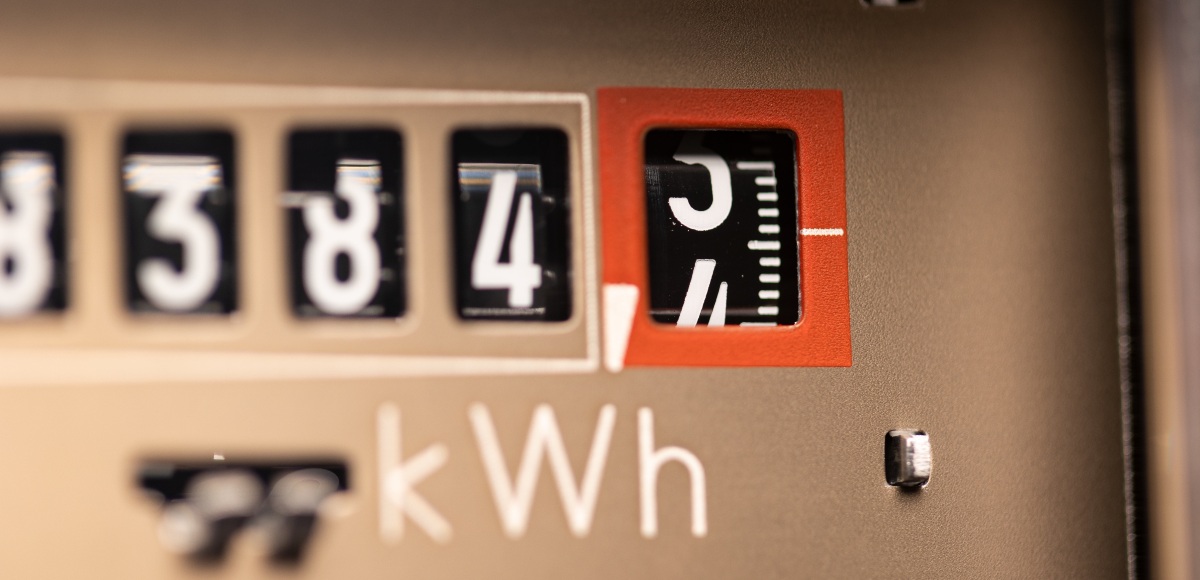
Simply put, kW refers to your contracted power – the maximum amount of energy your home's electrical system can draw at once to keep multiple appliances running simultaneously. Meanwhile, kWh measures the energy you actually consume – the total amount of electricity used over a given period. In practice, your bill distinguishes between these two concepts. While kW is charged as a fixed cost (the power term), kWh translates into a variable cost based on your actual usage (the energy term).
Learning to tell kW and kWh apart is the first step to truly understanding your electricity bill. If you're looking to save money, tweaking your contracted power and adjusting your daily habits can make a massive difference without requiring major lifestyle changes. But first, let's look at a simple water analogy to make perfect sense of both concepts.
The analogy that clears it all up: taps and water
To easily picture the difference between kW and kWh, experts often rely on the tap and water analogy:
Think of the kilowatt (kW) as the tap itself. Specifically, how wide the tap can open. If you have a very large tap (high kW power), a huge volume of water can gush out at once, letting you fill buckets in seconds. However, if you have a very narrow tap (low power), you’ll only ever get a trickle. If you try to turn on too many taps at once, the system will overload – which, in electrical terms, means you exceed your limit and the system trips.
On the flip side, the kilowatt-hour (kWh) represents the total amount of water that has actually flowed out of the tap. It doesn't matter whether the water poured out of a massive tap for just a few minutes or trickled from a small tap all day; what the meter measures to calculate your 'energy term' is the final volume of water you collected.
In short: kW is the maximum energy capacity available to you at any exact moment, whereas kWh is the actual amount of energy consumed after one hour of use. Once you grasp this, it’s much easier to see how your energy supplier calculates your bill.
kW: the power you have available, whether you use it or not
So, you now know that the kilowatt (kW) defines your contracted power. But what does that actually mean in practice?
Power is your home’s maximum simultaneous capacity; essentially, how much electrical power your home can draw at once. This limit is tied to technical availability, as the electricity grid must be ready to supply you with those exact kW the second you need them.
Why you pay for power even if you don't use it: the travel card analogy
When you buy a monthly bus or tube pass, you pay a fixed fee for the right to use the transport network whenever you like, right?
It doesn't matter if you make a hundred journeys or stay home all month and never travel; the pass costs the same because the infrastructure (the tracks, the drivers, the trains) has been kept ready for you.
Electricity works the exact same way. Your contracted power appears as the 'power term' on your bill and is measured in kW. It acts as a fixed charge to help cover the maintenance of cables, substations, and the guarantee that power is always available to you.
In Spain, the average home has a contracted power of between 3.3 and 4.6 kW. If you have contracted 4.6 kW, for instance, the combined draw of all the appliances you switch on at the same time must never exceed that number. If it does, your Power Control Switch (ICP) will trip the electricity supply as a safety precaution.
kWh: what you actually consume and what you are charged
If kW represents your home’s maximum capacity, the kilowatt-hour (kWh) is the unit that measures your real usage. It is the cumulative electricity consumption that your meter logs day after day.
There is a very simple formula to calculate this:
Appliance power rating (kW) × Hours of use = kWh consumed
For example, if you run an appliance that requires 1 kW of power for exactly one hour, you will have consumed 1 kWh. If that same appliance only runs for half an hour, you will have used 0.5 kWh.
Understanding the energy term on your bill
The result of this formula – the actual energy you use – makes up the variable part of your bill. This is also known as the 'energy term'. If you go on holiday and switch everything off, this charge should drop to almost zero (save for the fridge and any appliances left on standby, known as vampire power).
Keeping a close eye on your kWh is the most direct way to save money, as it entirely depends on your habits: turning off lights, using eco cycles on the washing machine, or adjusting the thermostat. According to the IDAE, an average Spanish household consumes around 3,500 kWh a year, roughly equating to 270–300 kWh a month.
Real examples: the kW rating of your appliances vs their monthly kWh usage
Have you ever wondered exactly how much power your home uses? To better manage your energy and your budget, it’s vital to understand both the power rating (kW) and the average monthly usage (kWh) of your household appliances.
The final cost on your bill will heavily depend on the tariff you have chosen, whether that’s a fixed-rate plan or a time-of-use tariff. For the table below, we have based our calculations on the kilowatt-hour price of our 24h Fixed Tariff (Tarifa Fija 24 h), which comes to €0.126600/kWh when applying the 10% first-year welcome discount.
| Appliance | Average power (kW) | Estimated usage (hours/month) | Monthly consumption (kWh) | Estimated monthly cost |
|---|---|---|---|---|
| Fridge | 0,20 - 0,35 kW | 720 h (24 h/día) | 50 – 60 kWh | €6.96–€7.60 |
| Washing Machine | 1,50 - 2,50 kW | 12 - 15 h | 20 - 25 kWh | €2.53–€3.17 |
| Electric oven | 1,20 - 3,00 kW | 8 - 10 h | 12 - 15 kWh | €1.52–€1.90 |
| LED TV | 0,05 - 0,15 kW | 120 - 150 h | 10 - 15 kWh | €1.27–€1.90 |
| Air conditioner | 0,90 - 2,00 kW | 60 - 90 h | 80 - 120 kWh | €10.13–€15.19 |
| Dishwasher | 1,80 - 2,50 kW | 15 - 20 h | 20 - 25 kWh | €2.53–€3.17 |
Note: this table is only a rough estimate. It is important to check the actual specifications of your appliances and the specific terms of your tariff for a more accurate figure.
Looking at this breakdown, we can see that a washing machine requires a lot of kW to run, causing short spikes in your power demand. Conversely, while a fridge uses very few kW, it racks up a large amount of kWh because it runs 24/7.
How the two appear on your bill and what you can do about them
Locating the kW and kWh on your physical bill is the best way to start taking control of your spending. On your Endesa bill, you'll see that the total cost is split into two main sections.
kW is the FIXED term: displayed as 'Contracted power'
You pay this for every single day of the billing period, regardless of whether you actually used any electricity.
What can you do? If your fuses have never blown, you likely have room to lower your contracted power. You could save around €50 a year for every kW you drop.
kWh is the VARIABLE term: displayed as 'Energy consumed'
This is calculated by multiplying the kWh recorded on your meter by the unit price of your tariff.
What can you do? This is where your daily habits make all the difference. Reducing usage time, sticking to eco cycles, and stopping vampire power (leaving devices on standby) will directly lower your final bill.
For a deeper dive into understanding your electricity costs, check out our guide explaining the Endesa bill.
The most common misconception: assuming high-wattage appliances are always expensive to run
It’s a common myth that an appliance with a high wattage will cost a fortune to run. In reality, it’s all relative. Your true costs aren't driven by power (kW) alone, but rather by the combination of power and time.
Take the oven versus the fridge. An oven is one of the most power-hungry appliances in the house, easily peaking at 2.2 kW. However, if you only use it for one hour a week to cook a Sunday roast, its monthly consumption will barely hit 8.8 kWh. In contrast, a modern fridge has a very low power rating – around 0.15 to 0.2 kW. Yet, because it runs continuously, it ends up drawing between 45 and 60 kWh every single month.
That is why it's crucial to understand how much power your appliances actually need to function, and manage your usage accordingly.
FAQ: Frequently asked questions about kW and kWh
What is the difference between kW and kWh?
Understanding the difference between kW and kWh is key: The kW (kilowatt) measures your home's power capacity, whilst the kWh (kilowatt-hour) measures the total volume of energy you actually consume.
Why do I pay for power even if I haven't turned anything on?
Because the power term is a fixed charge for reserving that specific capacity on the electricity grid just for your home. Think of it as a maintenance fee that guarantees you will always have electricity the moment you flip a switch.
If I buy a new oven, do I have to increase my contracted power?
That entirely depends on what other appliances you plan to run at the very same time, not on the oven itself. Once you understand your home's total electrical footprint, you'll know how to stagger the use of your appliances. If you do exceed your limit, your ICP will safely trip the power.
How do I know how many kW I have contracted?
You can check this in seconds by looking at your latest electricity bill. You can also view your contract details at any time via the Endesa Customer Area or the Endesa Clientes App.
Take a minute to find the product that best suits you:
{{firstStep.title}}
Take a minute to find the product that best suits you:
{{title}}
{{content.phone.title}}
{{content.phone.text}}
{{content.phone.phoneText}}
{{content.form.title}}
{{content.form.text}}
{{content.form.success.title}}
You don't need to adapt to Endesa's tariffs because they adapt to you. If you go to our catalogue you can compare the different tariffs for yourself. Or if you prefer, you can answer a few questions and we will take care of comparing all the different electricity and gas tariffs and then make a customised recommendation.
Take a minute to find the product that best suits you:
{{title}}
{{content.phone.title}}
{{content.phone.text}}
{{content.phone.phoneText}}
{{content.form.title}}
{{content.form.text}}
{{content.form.success.title}}
You don't need to adapt to Endesa's tariffs because they adapt to you. If you go to our catalogue you can compare the different tariffs for yourself. Or if you prefer, you can answer a few questions and we will take care of comparing all the different electricity and gas tariffs and then make a customised recommendation.
Comparison of Electricity and Gas Tariffs
You don't need to adapt to Endesa's tariffs because they adapt to you. If you go to our catalogue you can compare the different tariffs for yourself. Or if you prefer, you can answer a few questions and we will take care of comparing all the different electricity and gas tariffs and then make a customised recommendation.
Do you want to see all our offers?
Spend a minute to find the product which best adapts to you:
{{firstStep.title}}
Spend a minute to find the product which best adapts to you:
{{title}}
{{content.phone.title}}
{{content.phone.text}}
{{content.phone.phoneText}}
{{content.form.title}}
{{content.form.text}}
{{content.form.success.title}}
Spend a minute to find the product which best adapts to you:
{{title}}
{{content.phone.title}}
{{content.phone.text}}
{{content.phone.phoneText}}
{{content.form.title}}
{{content.form.text}}