


If you prefer to always view the website in English, please click here.
How (and how often) to charge to 100% without causing battery degradation
If you own an electric car, one question always comes up sooner or later: Is charging to 100% a good idea? Or am I shortening the battery’s lifespan without realising it? The short answer is simple: you can charge to 100% whenever you need to.
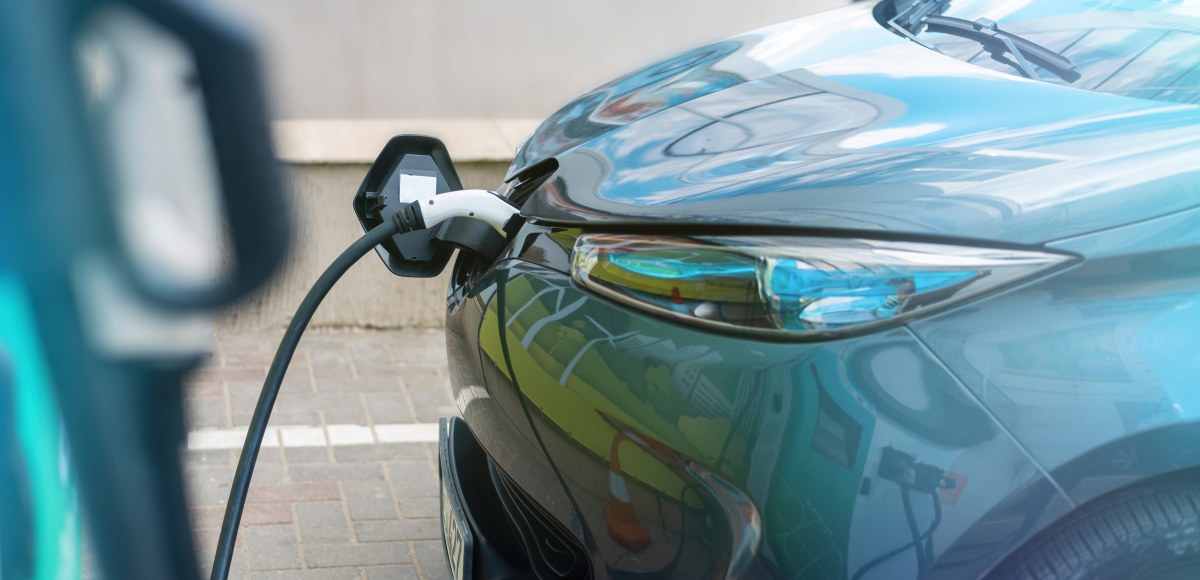
That said, the key is in the details. More than the percentage itself, what really matters is how, when, and why you charge.
Is it bad to charge an electric car to 100%?
When it comes to charging electric cars, there are plenty of questions and plenty of advice, sometimes conflicting. One of the most common doubts has to do with whether or not it is harmful to charge the battery to 100%. The answer isn't as simple as a yes or a no.
Charging to 100% isn’t the problem in itself
Let’s start by debunking a common myth: charging to 100% is not inherently bad. Your car is designed to handle it, and there’s no issue with doing it occasionally. In fact, for situations like long trips, it makes perfect sense.
The problem is not reaching 100%, but staying there longer than necessary.
What matters most is how long the battery spends at high charge levels
Here is the key that makes a difference: it’s not just how much you charge, but how long you leave the car sitting at that level. For example, charging to 100% overnight and then not using the car for two more days is not ideal. That extra time sitting idle with a full battery adds unnecessary wear.
It is advisable to charge to 100% right before a trip, not before parking. So if you need a full charge, ideally the battery should reach that level just before you set off.
Why not all manufacturers recommend the same thing
Not all electric cars work the same way, and that is also reflected in their charging recommendations. Some manufacturers set the daily limit at around 80%, others at 90%, and for certain models, 100% can be used more often.
Why? It mainly comes down to battery chemistry and how the vehicle itself manages energy. That’s why, beyond any general advice, one basic rule applies: always follow the manufacturer’s recommendations.
What charge percentage makes sense for everyday use?
One of the keys to looking after your electric car’s battery is not simply about charging more or less, but about finding a smart balance for everyday use.
The typical daily range for many models
For most drivers, there’s one range that works particularly well: between 20% and 80%. It’s not a strict rule, but it strikes a good balance between having enough range and protecting the battery over the long term.
Staying within that range reduces battery stress and helps preserve performance over time.
When 80% can be enough
If you mainly use your car for everyday driving, such as commuting to work, driving around town, or running errands, you probably don’t need to charge beyond 80%.
Home charging makes this even simpler. Learn how to optimise your home charging with these tips on how to charge your electric car at home.
And if you’re thinking about installing a charging point, take a look at Endesa’s home charging solutions.
When 90% makes more sense
If you drive longer distances each day or can’t charge as often, raising the limit to 90% may be a more practical option.
That extra bit of range provides peace of mind without putting too much additional strain on the battery, as long as you don’t leave the car sitting at that level for too long.
The importance of following the manufacturer's limit
Many electric cars let you set a charging limit either through the app or directly in the vehicle’s system. Using this feature is a simple way to build good charging habits with minimal effort.
And when you need more range, you can always charge to 100% occasionally.
How often you can charge to 100% without damaging the battery
Knowing when to charge to 100% is just as important as understanding when there’s no need to. The key is to adapt charging to your actual routine and not turn that maximum charge percentage into an automatic habit.
Before long trips or days requiring high range
This one is simple. If you need more range, charging to 100% is the best option. Road trips, weekend getaways, or long driving days are exactly when it makes sense. That said, whenever possible, schedule charging to finish shortly before you leave.
If you’re planning a route, this guide to travelling by electric car may be useful.
Cases where you rarely need a full charge
For a predictable daily routine, especially if you don’t leave the city or can charge regularly, it’s best not to reach 100%. In fact, this is the most effective way to preserve the battery.
What changes if you drive long distances or cannot charge every day
If you drive long distances or rely on public chargers, it’s normal to use 100% more often.
In those cases, the goal is not so much to avoid it, but to balance it out with good charging habits:
- Don’t leave the car sitting at 100% for too long.
- Avoid regularly draining the battery to 0%.
- Don’t overuse fast charging.
How to charge to 100% in the least aggressive way possible
Charging to 100% doesn’t have to be a problem, as long as you do it smartly. More than the percentage itself, what primarily influences your battery’s health is what happens after charging.
Schedule your charge to finish near your departure time
If your car or charging point allows it, scheduling your charging session is one of the best decisions you can make. That way, the car will reach 100% right when you need it, not hours earlier.
Home AC charging is better than overusing fast charging
Home (AC) charging is the most suitable for everyday use. It’s more stable and means less wear for the battery.
Fast (DC) charging is extremely useful, especially on the road, but it’s best reserved for occasional use. Additionally, there's one important detail: after 80%, fast charging usually slows down as a protective measure for the battery.
Avoid leaving the car parked at 100% for hours
Charging to full and then leaving the car parked for hours (or days) is not recommended.
If you’re not going to use the car, it’s better to keep the battery at a mid-range charge level.
What factors truly accelerate battery degradation
From extreme temperatures to certain charging habits, some factors can accelerate wear and tear. Let’s focus on the ones that actually speed up battery degradation.
High temperatures and extreme cold
In very hot weather, the battery can suffer more. This is especially true if it stays exposed to those conditions for long periods. Cold weather can also change the car’s energy consumption.
So we can conclude that extreme temperatures can affect both battery performance and long-term degradation.
Frequent fast charging
Using fast charging on occasion is perfectly safe. The problem arises when it becomes a habit, as it creates more thermal stress on the battery.
Deep discharges and spending too long at 0% or 100%
Extremes are rarely your battery’s ally. As a general rule, it’s best not to leave the car sitting at 0% a long time, nor to leave it at 100% without using it. The key is to avoid both extremes whenever possible.
Does the type of battery matter?
Batteries are constantly evolving; and behind each type lies a specific technology that directly influences how it should be charged, how it responds to daily use, and what habits help extend its lifespan.
Why chemistry matters
Because not all batteries behave the same way. How a battery responds to charging, use, and temperature depends largely on its composition.
Batteries with more conservative daily guidelines
Some battery technologies, such as certain NCM batteries, often recommend narrower charging limits, typically around 80% to 90%, for daily use. That doesn’t mean you can’t charge them to 100%, but it suggests doing so more judiciously.
Why you should always check the vehicle owner’s manual
Every electric car has its own charging recommendations, designed specifically for its battery. That’s why it’s important to always follow the manufacturer's recommendations.
FAQ
Is it okay to charge to 100% once a week?
Yes. If you need to, there’s no problem. The important thing is not to leave the car at 100% for too long.
Is it worse to charge to 100% or let the battery drop too low?
Both extremes are best avoided if they happen regularly. Ideally, try to keep the battery in an intermediate range most of the time.
Does fast charging cause more degradation?
Yes, if used frequently. For occasional use, such as road trips, it’s perfectly fine.
Is it better to charge a little every day or wait until the battery is empty?
Ideally you should charge regularly and maintain stable levels.
What should I do if I'm planning a long trip tomorrow?
Simple. Charge to 100%, but try to time it so charging finishes just before you leave.
Take a minute to find the product that best suits you:
{{firstStep.title}}
Take a minute to find the product that best suits you:
{{title}}
{{content.phone.title}}
{{content.phone.text}}
{{content.phone.phoneText}}
{{content.form.title}}
{{content.form.text}}
{{content.form.success.title}}
You don't need to adapt to Endesa's tariffs because they adapt to you. If you go to our catalogue you can compare the different tariffs for yourself. Or if you prefer, you can answer a few questions and we will take care of comparing all the different electricity and gas tariffs and then make a customised recommendation.
Take a minute to find the product that best suits you:
{{title}}
{{content.phone.title}}
{{content.phone.text}}
{{content.phone.phoneText}}
{{content.form.title}}
{{content.form.text}}
{{content.form.success.title}}
You don't need to adapt to Endesa's tariffs because they adapt to you. If you go to our catalogue you can compare the different tariffs for yourself. Or if you prefer, you can answer a few questions and we will take care of comparing all the different electricity and gas tariffs and then make a customised recommendation.
Comparison of Electricity and Gas Tariffs
You don't need to adapt to Endesa's tariffs because they adapt to you. If you go to our catalogue you can compare the different tariffs for yourself. Or if you prefer, you can answer a few questions and we will take care of comparing all the different electricity and gas tariffs and then make a customised recommendation.
Do you want to see all our offers?
Spend a minute to find the product which best adapts to you:
{{firstStep.title}}
Spend a minute to find the product which best adapts to you:
{{title}}
{{content.phone.title}}
{{content.phone.text}}
{{content.phone.phoneText}}
{{content.form.title}}
{{content.form.text}}
{{content.form.success.title}}
Spend a minute to find the product which best adapts to you:
{{title}}
{{content.phone.title}}
{{content.phone.text}}
{{content.phone.phoneText}}
{{content.form.title}}
{{content.form.text}}