


If you prefer to view the website always in english, click here.
{{content.phone.title}}
{{content.phone.text}}
{{content.phone.phoneText}}
{{content.form.title}}
{{content.form.text}}
{{content.form.success.title}}
From lithium-ion to solid-state: the energy future driving electric cars
One of the keys to the energy transition is the decarbonisation of transport, a sector that remains largely dependent on fossil fuels. According to the International Energy Agency (IEA), transport was responsible for around 16% of total CO2 emissions, which have increased in this sector by around 19% since 2010. These data are particularly relevant given that road transport is, undoubtedly, the dominant mode of transport for both passengers and goods.
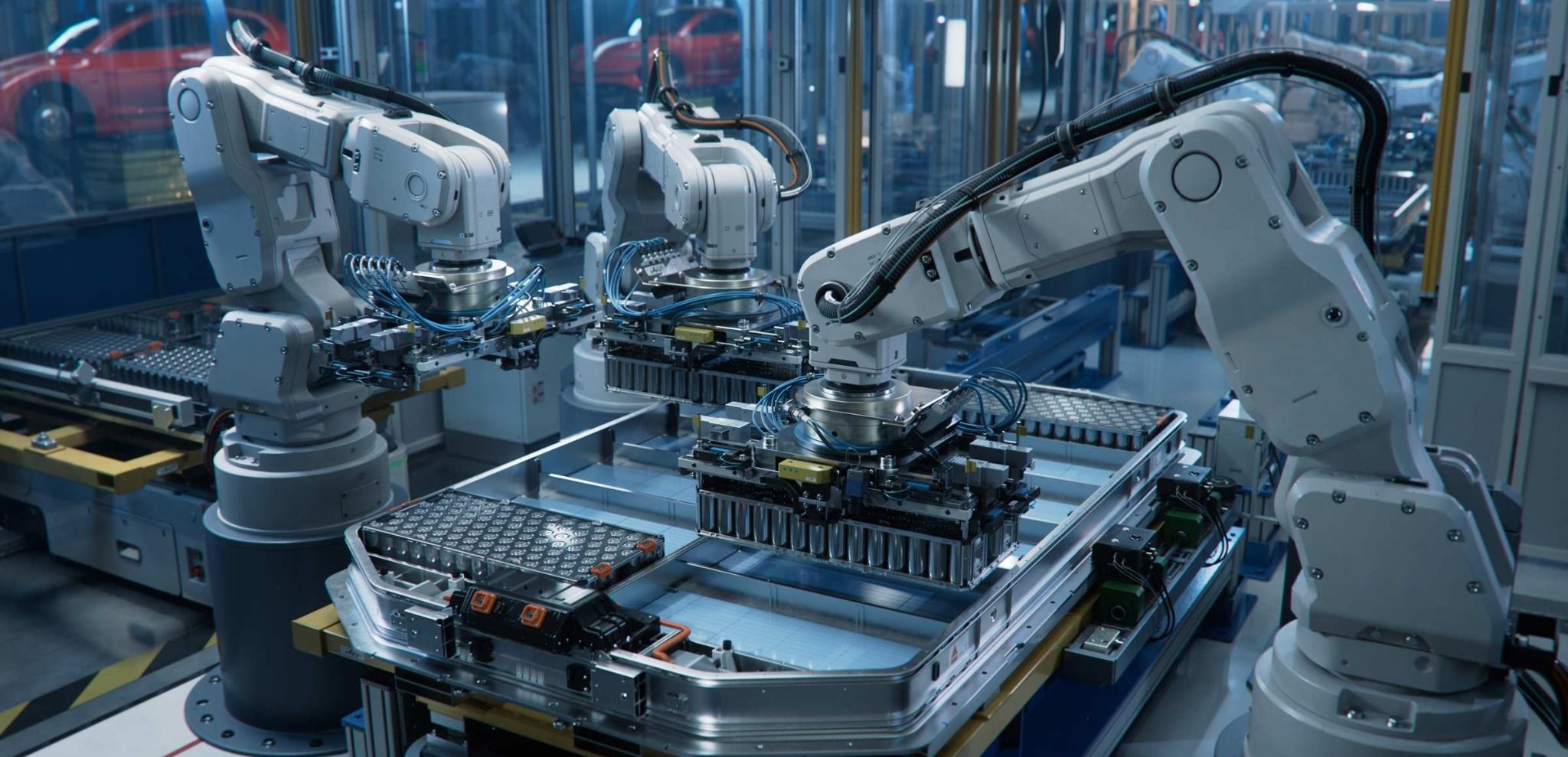
In this context, the transition towards so-called electric mobility is accelerating. This is driven by national strategies and regulatory frameworks promoting decarbonisation, but also, and decisively, by the technological development of electrochemical storage systems: batteries.
Thanks to this continuous improvement, it is increasingly common to see electric vehicles (EVs) on our roads. Globally, sales of these vehicles are on track to exceed 20 million units in 2025, approximately one quarter of all new cars sold worldwide. In Europe, this trend is growing, but has moderated in recent years; it is forecast that electric vehicle sales will exceed 10 million euros in 2030.
In Spain, although the market share of the electric vehicle is still lower than in other European countries, growth is becoming increasingly solid. According to recent estimates, in 2024 the national fleet accumulated around 340,000 electric vehicles (BEV + PHEV). However, this figure alone does not reflect the current pace of adoption. In 2025, registrations of electrified vehicles could reach nearly 20% of total sales, representing around 200,000 units per year, according to data from ANFAC and ACEA.
Currently, this market is dominated by lithium-ion batteries. However, focus is shifting towards solid-state batteries, a new generation that promises to overcome some of the limitations of lithium batteries. Specifically, they promise improvements in terms of safety, energy density and significantly shorter recharging times.
What are batteries and how do they work to move an electric vehicle?
A battery is a storage system capable of transforming electrical energy into chemical energy and vice versa through electrochemical reactions. In the case of electric vehicles, they fulfil the equivalent function of a conventional vehicle's fuel tank. They store the energy necessary to move the motor and power some of the vehicle's systems, such as heating. However, it is worth noting that a large part of the vehicle's systems continue to be powered by the lead-acid battery typical of conventional internal combustion engine vehicles.
Although from the outside they appear to be a single block, a battery is composed of hundreds or thousands of cells, and each of them functions as a tiny energy warehouse. A cell is formed by a cathode, an anode and an electrolyte, which allows the movement of ions between both. It also contains a separator, a porous material that physically keeps the anode and cathode isolated to prevent short circuits, while allowing the passage of ions through its pores. A simple way to imagine it is to visualise two rooms connected by a corridor, but separated by a very fine lattice. Electrons cannot pass through it, but ions can move through it.
In essence, a battery works by separating charges, that is, separating positively charged particles (ions) from negatively charged particles (electrons) that naturally tend to remain together at the cathode.
During the charging process, ions leave the cathode, crossing the electrolyte and the separator, and insert themselves into the anode. Meanwhile, electrons move through an external circuit from the cathode to the anode, driven by the electrical energy supplied by the charger. During the battery discharge process, the reverse occurs. Lithium ions pass from the anode to the cathode, while electrons pass from the anode to the cathode through the external circuit, and their energy powers the motor.
Why do lithium-ion batteries dominate the electric vehicle market?
For more than a decade, lithium-ion batteries have been the benchmark technology in electric mobility. Their success is due to a combination of factors. They can store a large amount of energy in a relatively small volume and weight, recharge quickly, present an adequate service life and, above all, rely on a mature and widely extended production chain.
Lithium-ion batteries function using a liquid electrolyte, normally an organic solution, which allows lithium ions to travel between the anode and the cathode. This architecture has demonstrated its efficacy and reliability, allowing electric vehicles to achieve increasingly greater ranges and more competitive prices.
Limitations of current lithium-ion batteries
Although lithium-ion batteries have been essential for the expansion of the electric vehicle, they present challenges that condition their future evolution:
- Safety and thermal risk: The liquid electrolyte they use is flammable. Therefore, in the event of overheating, short circuit or physical damage, a phenomenon called thermal runaway can occur, causing the battery to catch fire.
- Energy density limits: The amount of energy a battery can store depends on how much lithium it is capable of intercalating in the anode and on the capacity of the cathode. In current batteries, these values are close to their practical limit, which makes it difficult to achieve significant increases in range without increasing the size or weight of the battery.
- Degradation with use: Lithium-ion batteries suffer ageing with every charge and discharge cycle. Degradation accelerates with high temperatures, fast charging or deep discharges. Over time, useful capacity decreases and the vehicle's range is reduced.
- Dependence on critical materials: Cathodes usually employ elements such as cobalt, nickel or manganese. Their extraction presents environmental, social and geopolitical challenges, as does lithium itself. This dependence creates vulnerability in the supply chain and puts pressure on costs.
- Complexity in recycling and sustainability: Although recycling processes exist, the efficient recovery of valuable materials still has room for improvement. The growing demand for batteries necessitates rethinking reuse and circular economy strategies.
Solid-state batteries as an evolution of electromobility
These limitations have driven the industry, universities and research centres to develop alternatives that allow for extended range, improved safety and reduced charging speeds. In this context, one of the most promising technologies emerges: solid-state batteries.
Although they function under the same electrochemical principles as lithium-ion batteries, they introduce a fundamental change: they replace the liquid electrolyte with a solid electrolyte. This solid electrolyte can be ceramic, polymeric or a combination of both types.
This change, which at first glance seems minor, completely transforms the behaviour of the battery. The electrolyte is a key component regarding the safety, energy density and durability of the cell.
One of the most relevant benefits of solid-state batteries is their potential to increase energy density, which translates directly into greater vehicle range. The solid electrolyte allows the use of lithium-metal anodes instead of graphite, whose lithium storage capacity is much lower.
According to industry estimates and studies collected by bodies such as the IEA, this advance could increase energy density by between 20% and 50% compared to commercial lithium-ion batteries. Some prototypes even point to higher values in the medium term. In practical terms, this could allow for significantly superior ranges without needing to increase the size or weight of the battery. This is especially relevant for passenger cars and freight transport.
The solid electrolyte is not flammable, which drastically reduces the risk of thermal runaway. Furthermore, the battery can withstand higher temperatures or stress situations, improving both safety and its lifespan.
In lithium-ion batteries used in electric vehicles, the most common chemistries, such as NMC or NCA, usually offer between 1,500 and 2,000 full cycles before dropping below 80% of their original capacity. LFP (lithium iron phosphate) chemistries, increasingly present in the market due to their robustness, can reach 3,000 to 4,000 cycles under appropriate operating conditions. Scientific literature suggests that solid-state batteries could exceed these values. By not using a liquid electrolyte, many of the internal processes that degrade the battery with use are avoided.
In addition, they offer faster charging speeds due to the greater thermal and chemical stability of the solid electrolyte. This allows for fast charging by admitting higher currents, which can avoid certain phenomena that degrade conventional Li-ion batteries. Charging speeds of 10% to 80% in 10-12 minutes are expected, bringing charging times closer to the refuelling times of a conventional vehicle.
Also, the use of a solid electrolyte and lithium-metal anodes opens new possibilities regarding materials, potentially reducing dependence on cobalt or nickel, although the dependence on lithium remains.
What consumers and the industry can expect in the coming years
Despite their enormous potential, solid-state batteries are still in an advanced development phase, but not fully industrialised. Manufacturing them on a large scale remains a challenge. Specifically, due to the difficulty of achieving stable contact between the solid electrolyte and the electrodes, guaranteeing sufficient ionic conductivity and developing production processes that are economically viable.
For this reason, although numerous manufacturers including Toyota, BMW or Nissan have announced prototypes or pilot lines, the majority place the arrival of the first commercial applications between 2027 and 2030.
While there are optimistic visions, solid-state batteries will take several years to achieve a significant presence in the automotive fleet. Some specialised estimates forecast that, although these technologies may begin to reach the market before 2030, they will not be dominant until well into the next decade or even the following one, depending on the speed at which production and cost challenges are overcome.
For consumers, this means that during the coming years two trends are likely to be seen:
- Premium and high-performance vehicles will incorporate these batteries first due to their higher initial cost and the need for technological and marketing justification.
- As production matures and costs are reduced, solid-state batteries could progressively extend to more mass-market segments.
In parallel, the battery and component industry is reorganising to be able to produce the new materials and processes required. For example, industrial projects such as the construction of active material plants for solid electrolytes in Japan aim to develop significant production capacity by the middle of the decade, which indicates industrial commitment to this technological leap.
Solid-state batteries, continuous innovation
Solid-state batteries represent one of the most promising technological advances for the next generation of electric vehicles. Their design, which replaces the liquid electrolyte with a solid one, offers clear advantages: higher energy density, improved safety, longer life cycles, shorter charges and more sustainable material options. These improvements have the potential to reduce the current barriers limiting the mass adoption of electric vehicles, such as 'range anxiety' or long fast-charging times.
However, there is still a long way to go between prototypes and large-scale production. The manufacturing of solid electrolytes and their integration with materials like metallic lithium requires new technologies, manufacturing processes and adapted supply chains, which conditions the speed of their commercial adoption.
For consumers, the next decade will witness the first real applications of this technology, first in high-end models and later in more affordable vehicles. For the industry, it implies a challenge of continuous innovation, global collaboration and adaptation of value chains. If the deadlines announced by the main players are met, solid-state batteries could transform electric mobility as we know it, consolidating their role as a pillar of the energy transition towards more efficient, safe and sustainable transport.
Take a minute to find the product that best suits you:
{{firstStep.title}}
Take a minute to find the product that best suits you:
{{title}}
You don't need to adapt to Endesa's tariffs because they adapt to you. If you go to our catalogue you can compare the different tariffs for yourself. Or if you prefer, you can answer a few questions and we will take care of comparing all the different electricity and gas tariffs and then make a customised recommendation.
Take a minute to find the product that best suits you:
{{title}}
You don't need to adapt to Endesa's tariffs because they adapt to you. If you go to our catalogue you can compare the different tariffs for yourself. Or if you prefer, you can answer a few questions and we will take care of comparing all the different electricity and gas tariffs and then make a customised recommendation.
Comparison of Electricity and Gas Tariffs
You don't need to adapt to Endesa's tariffs because they adapt to you. If you go to our catalogue you can compare the different tariffs for yourself. Or if you prefer, you can answer a few questions and we will take care of comparing all the different electricity and gas tariffs and then make a customised recommendation.
Do you want to see all our offers?
Spend a minute to find the product which best adapts to you:
{{firstStep.title}}
Spend a minute to find the product which best adapts to you:
{{title}}
{{content.phone.title}}
{{content.phone.text}}
{{content.phone.phoneText}}
{{content.form.title}}
{{content.form.text}}
{{content.form.success.title}}
Spend a minute to find the product which best adapts to you:
{{title}}
{{content.phone.title}}
{{content.phone.text}}
{{content.phone.phoneText}}
{{content.form.title}}
{{content.form.text}}