


If you prefer to always view the website in English, please click here.
{{content.phone.title}}
{{content.phone.text}}
{{content.phone.phoneText}}
{{content.form.title}}
{{content.form.text}}
{{content.form.success.title}}
Radiator lockshield valve: open, closed, and how to adjust it
The lockshield valve regulates how much water flows through the radiator, balancing its temperature with the rest of your heating system. It is usually located at the bottom, protected by a small cap, and performs a different function to the valve at the top of the radiator. Here is when and how to adjust the lockshield valves in your home.
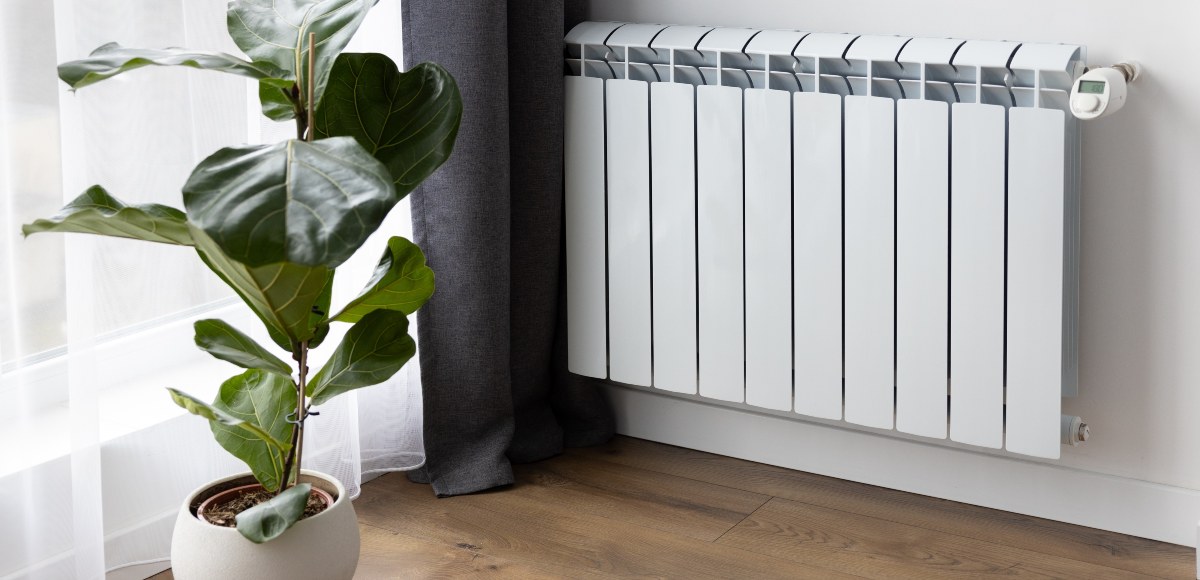
What a radiator lockshield valve is and what it does
The lockshield is a valve that allows you to open or restrict the flow of water in each radiator. If you imagine a house with several radiators, the flow of hot water reaching the last one depends partly on how much flow the others are using. Balancing them ensures you enjoy a consistent temperature across every room in your home.
While this is its main job, it isn't its only one: if you need to remove a single radiator (for example, to paint the wall behind it), closing the lockshield disconnects it from the system while the heating keeps running in the rest of the house.
Where to find the radiator lockshield valve
The lockshield valve is located at the bottom of the radiator, usually under a cap that you must unscrew or pull off to access it. However, it hasn't always been there: if your radiators are very old, this system might not have been invented when they were manufactured and installed.
On a modern radiator, these are the three valves you will typically find. One of them, and the least well-known, is the lockshield valve:
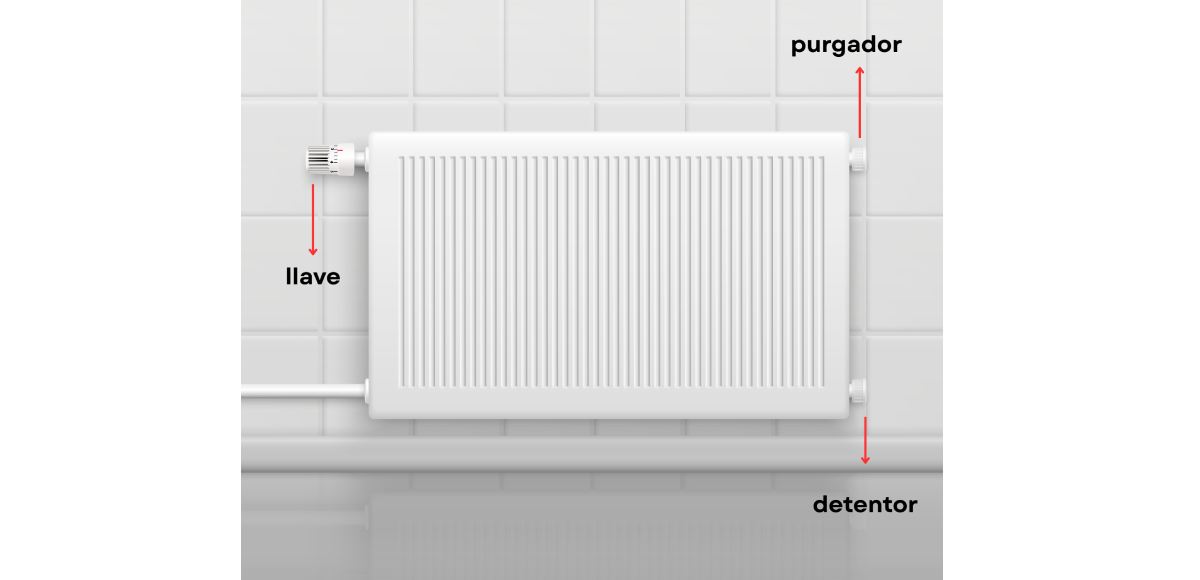
Lockshield, manual valve, and bleed valve: what each one does
Aside from other factors related to your boiler and heating circuit, the lockshield, the thermostatic radiator valve (TRV) or manual valve, and the bleed valve on each radiator can heavily influence your comfort.
As a general rule, if you notice a radiator is unusually cold, the lockshield should be the last thing you touch. Opening the radiator valve further, checking if it needs bleeding, or even checking the boiler pressure are often quicker and more effective solutions.
As shown in the table below, each valve has its own specific function and time to be used:
| Component |
What it does |
When to use it |
|---|---|---|
|
Lockshield valve |
Regulates water flow and balances the system |
Occasional adjustment |
|
Manual valve or TRV |
Controls the room temperature |
Daily use |
|
Bleed valve |
Releases trapped air |
Maintenance |
How to open or close a radiator lockshield valve
To adjust the lockshield valve, you must first remove its protective cap. Once removed, you will find this valve is as simple as a screw that can be turned left or right with a screwdriver or an Allen key, unless the manufacturer specifies otherwise. Depending on which way you turn it, the following will happen on most models:
- Turning it clockwise will reduce the flow of water through the radiator and, consequently, the heat it emits.
- Turning it anticlockwise will increase the flow of water through it. This will make the radiator hotter.
However, before you proceed, bear the following tips in mind to ensure you do it successfully:
Note the lockshield's current position before moving it
This is the most important, yet frequently forgotten, step when adjusting a lockshield: knowing exactly what position it is currently in.
The reason is that adjusting the flow is a process of trial and error until you get the desired result. If you turn the screw too much, the effect might be excessive or impact your other radiators. Therefore, you may need to revert to the previous position, always keeping its starting point as your reference. The same applies in reverse.
To be safe, we recommend taking a photo of the initial position and, crucially, noting down how many quarter turns you have made from the previous position with each adjustment.
Balancing lockshield valves is actually one of the most delicate tasks when installing a heating system. Professional installers, even with professional measuring tools, also have to go back and forth adjusting each radiator's lockshield multiple times until the whole house is heated evenly with no cold spots.
Other useful tips for balancing a radiator lockshield valve
1. Never force the cap
Over time, the lockshield cap can become stuck, especially if it is a screw-on type. If this happens, do not force it:
- Apply a suitable lubricant or rust-remover to try and free it.
- If you cannot remove the cap, or if the model is not designed for DIY adjustment, leave the job to a professional.
2. Turn the lockshield in short increments
A quarter turn per attempt is ideal. This will allow you to make more precise corrections and easily keep track of the turns you make.
3. Adjust one radiator lockshield at a time
Since adjusting one radiator can affect the others, you should avoid changing multiple lockshields at once to keep the system as balanced as possible. Adjust the one you want to change, and once set, check the other radiators to see if they need a slight tweak too. But always do it one by one.
4. Wait for the radiator to heat up before adjusting again
The effect of adjusting a lockshield is not immediate. It is best to wait at least 10 minutes to verify the result, whether you have increased or reduced the water flow.
5. Check for simpler solutions first
If you are tweaking a lockshield because the radiator isn't getting hot enough, there might be other, easier-to-fix causes:
- Check that the boiler pressure is correct.
- Make sure the radiator valve is fully open.
- Check for any water leaks around the joints.
- Bleed the radiator to ensure there is no trapped air.
How open or closed should a radiator lockshield valve be?
For a radiator to emit heat, its lockshield must be open. However, this doesn't mean every unit should be fully open, as some typically require more flow than others around the circuit.
When installing a full heating system, engineers adjust the radiators one by one for optimal balance. Consequently, there is no single standard position for a lockshield valve. Nor is there a one-size-fits-all rule for every home, as the right setting depends on your specific setup.
What happens if a lockshield is completely closed?
Closing the lockshield completely stops the radiator from working. This is common practice when safely draining and removing a radiator – for example, when decorating a room or replacing the unit – as it allows the rest of the house's radiators to keep running.
What happens if all the lockshield valves are completely open?
Thinking that fully opening all the lockshields in your home will generate more heat is a mistake. In reality, efficient heating relies on balancing the flow between the radiators. Depending on where they sit in the circuit, some naturally need more or less flow to heat up optimally. This process is known as hydraulic balancing of the system.
Why does adjusting the lockshield valves balance the heat across the house?
The hydraulic balancing the lockshield valves aims to prevent something you have almost certainly experienced: sitting in the smallest room of a house and finding it much hotter than the living room or master bedroom.
This is because regulating each radiator's lockshield manages the flow of heat, distributing it evenly throughout the home based on several factors:
- The distance between radiators.
- The size and layout of the rooms.
- How close each radiator is to the boiler.
- The number, size, and placement of the radiators.
- The diameter of the system's pipework.
- The complexity of the circuit, especially in multi-storey homes.
Balancing, therefore, isn't just about slightly closing the radiator closest to the boiler; it is about carefully assessing how each one actually performs.
How to know if a radiator's lockshield valve needs adjusting
If a radiator isn't getting as hot as expected, there could be several causes. Before reaching for a screwdriver or Allen key, it is worth checking the symptoms:
|
Radiator symptom: |
First check: |
|---|---|
|
Cold at the top. |
May have trapped air: bleed it. |
|
Cold all over. |
Check the manual valve, the TRV, and finally the lockshield. |
|
Takes longer to heat up than others. |
Potential imbalance: lockshield valve. |
|
None are getting very hot. |
Boiler pressure and temperature. |
|
The radiator is making noises. |
Check if it needs bleeding and if the boiler pressure is correct. |
|
Water leaking from the lockshield. |
Call a heating engineer. |
|
The lockshield won't turn or you can't access it. |
Call a professional engineer. |
Does adjusting lockshield valves help save on heating?
Having properly adjusted lockshields helps improve your home's energy efficiency, resulting in continuous savings on your gas bill.
However, simply reducing the flow to one or all of your radiators doesn't directly save money: the boiler will still consume energy to keep the water in the entire circuit hot, regardless of how it is distributed among the radiators.
To save money, it is better to implement other solutions without touching the lockshield valves:
- Manage your thermostat smartly, avoiding setting the temperature too high or leaving the heating on when you aren't home.
- Keep your system well-maintained, with professional servicing for all its components.
- Maintain the correct boiler pressure and temperature, following the manufacturer's recommendations.
- Use the radiator's manual or thermostatic valve, rather than the lockshield, to adjust the temperature of each room to suit your needs at any given time.
What to do if the lockshield valve is stuck or leaking
When tweaking a radiator lockshield goes beyond a minor DIY adjustment, or if it is clearly seized or damaged, the risk of causing a major system breakdown increases.
In general, we recommend calling a professional in the following situations:
- The lockshield is seized.
- It is leaking water.
- You don't know what its initial position was.
- Your home has a complex heating system.
- All your radiators are having issues.
- The adjustment requires draining the heating circuit.
Quick guide to adjusting a radiator lockshield valve
- Make sure the radiator is bled.
- Check that the boiler pressure is correct.
- Check that the radiator valve is open.
- Locate the lockshield and remove the protective cap.
- Take a photo and note down its starting position.
- Check which radiators heat up first.
- Adjust one lockshield/radiator at a time.
- Make adjustments in quarter turns.
- Wait to check the results before touching it again.
- If it leaks or is stuck, stop and call a professional.
Frequently asked questions about radiator lockshield valves
How do you increase the flow on a lockshield valve?
In most cases, by turning the lockshield anticlockwise. However, you should check this depending on the model.
Which way do you turn a lockshield to close it?
Generally, by turning the valve to the right, or clockwise. However, you should always check the manufacturer's instructions first.
Does the lockshield valve need to be fully open?
Not necessarily. Each radiator needs to receive the exact water flow to do its job and keep the entire heating circuit balanced.
How many turns should a lockshield be opened?
It depends on each radiator. Its position in the circuit, the conditions of the room it heats, and other factors all influence the correct setting for every lockshield in the house.
What happens if I close the lockshield completely?
No water will enter the radiator, disabling its ability to heat the room.
Why is a radiator not heating up, even with the lockshield open?
This could be due to several reasons: the radiator needs bleeding, the TRV is closed, there is sludge build-up, the boiler pressure is too low, or there is another system issue.
Is it a good idea to open all lockshields to the maximum?
Generally, no. Each lockshield ensures its radiator receives the necessary water flow without straining the system, while helping to balance the efficiency of every radiator in the heating circuit.
Can the lockshield be used to regulate room temperature?
It is not the recommended control for everyday use. Instead of the lockshield, it is much more efficient to use the manual radiator valve or TRV.
Does closing the lockshield slightly save gas?
Not directly. In reality, it is balancing the lockshields across all your radiators that helps create an efficient system and prevents you from consuming more gas than necessary.
Are the lockshield and the bleed valve the same thing?
No. The lockshield is a valve normally found at the bottom of the radiator that regulates water flow, while the bleed valve is used to release trapped air and is typically at the top.
Is the lockshield the same as the thermostatic radiator valve?
No. The lockshield is used to make semi-permanent adjustments to the radiator's water flow, while the thermostatic or manual radiator valve is used to turn its temperature up or down for everyday use.
Take a minute to find the product that best suits you:
{{firstStep.title}}
Take a minute to find the product that best suits you:
{{title}}
{{content.phone.title}}
{{content.phone.text}}
{{content.phone.phoneText}}
{{content.form.title}}
{{content.form.text}}
{{content.form.success.title}}
You don't need to adapt to Endesa's tariffs because they adapt to you. If you go to our catalogue you can compare the different tariffs for yourself. Or if you prefer, you can answer a few questions and we will take care of comparing all the different electricity and gas tariffs and then make a customised recommendation.
Take a minute to find the product that best suits you:
{{title}}
{{content.phone.title}}
{{content.phone.text}}
{{content.phone.phoneText}}
{{content.form.title}}
{{content.form.text}}
{{content.form.success.title}}
You don't need to adapt to Endesa's tariffs because they adapt to you. If you go to our catalogue you can compare the different tariffs for yourself. Or if you prefer, you can answer a few questions and we will take care of comparing all the different electricity and gas tariffs and then make a customised recommendation.
Comparison of Electricity and Gas Tariffs
You don't need to adapt to Endesa's tariffs because they adapt to you. If you go to our catalogue you can compare the different tariffs for yourself. Or if you prefer, you can answer a few questions and we will take care of comparing all the different electricity and gas tariffs and then make a customised recommendation.
Do you want to see all our offers?
Spend a minute to find the product which best adapts to you:
{{firstStep.title}}
Spend a minute to find the product which best adapts to you:
{{title}}
{{content.phone.title}}
{{content.phone.text}}
{{content.phone.phoneText}}
{{content.form.title}}
{{content.form.text}}
{{content.form.success.title}}
Spend a minute to find the product which best adapts to you:
{{title}}
{{content.phone.title}}
{{content.phone.text}}
{{content.phone.phoneText}}
{{content.form.title}}
{{content.form.text}}