If you prefer to always view the website in English, please click here.

How to take good pictures with your mobile making use of the light
This post was written by Gianfranco Bulgarelli @gianfribul, Italian-Argentinian photographer and influencer specialising in photo editing.
The importance of light in your photos
Light is an essential pillar of photography. Without light, images could not be captured. The light for a cameras is like a brush for the artist: It helps us to create images and capture what we want to show, what we want to communicate and what we want to convey.
Cameras operate in a similar way to our eyes, when there is no light we are not able to see or perceive what surrounds us. Here is an example, if you were in the middle of a forest on a dark night, with completely cloudy skies, you would not be able to see anything. But if the clouds dissipated and the Moon appeared, just with that small focus of light, your eyes would get used to it and little by little you would be able to make out the trees, the horizon, some rocks, a river that you heard before but could not see.
Like the pupils of your eyes, cameras have a sensor that expands and contracts to let in more or less light. The sensors on a camera are responsible for receiving this light and transforming it into data to create images.
Historically, cameras consisted of a box, with an aperture for the lens, which covered a mechanism of plates made of photosensitive minerals inside, and this is where the images were recorded.
These photosensitive materials evolved into what we know today as reels or photographic films, composed mostly of an emulsion made of gelatine and silver halide crystals. These materials require very elaborate processes to develop the images and this needs to be done in a closed room, practically in the dark so that the film is not exposed and the photographs damaged.
How can you take professional-quality photos with your mobile?
Nowadays, those reels of film have given way to technological sensors that catch the light and convert it into a digital signal, which means that it is now much easier to create images. Nowadays, the smartphones we use every day have evolved to such an extent that they have become professional cameras, depending of course on the use we make of them.
Modern mobile phones have enormous potential and we all have one, you just need to take it out of your pocket.
One of my goals as a creator of content about photography is to teach people how to get the most out of the cameras in their smartphones. It is very easy to activate a mobile phone to take a picture automatically and that is how you create a memory of that moment, but this is not how you really take advantage of the true potential of your camera.
That is exactly why I would like to show you some very simple tricks to help you make better use your skills and not end up taking that typical photo that anyone could take. The main aim is to be a little more creative, to make the most of the tools at your disposal.
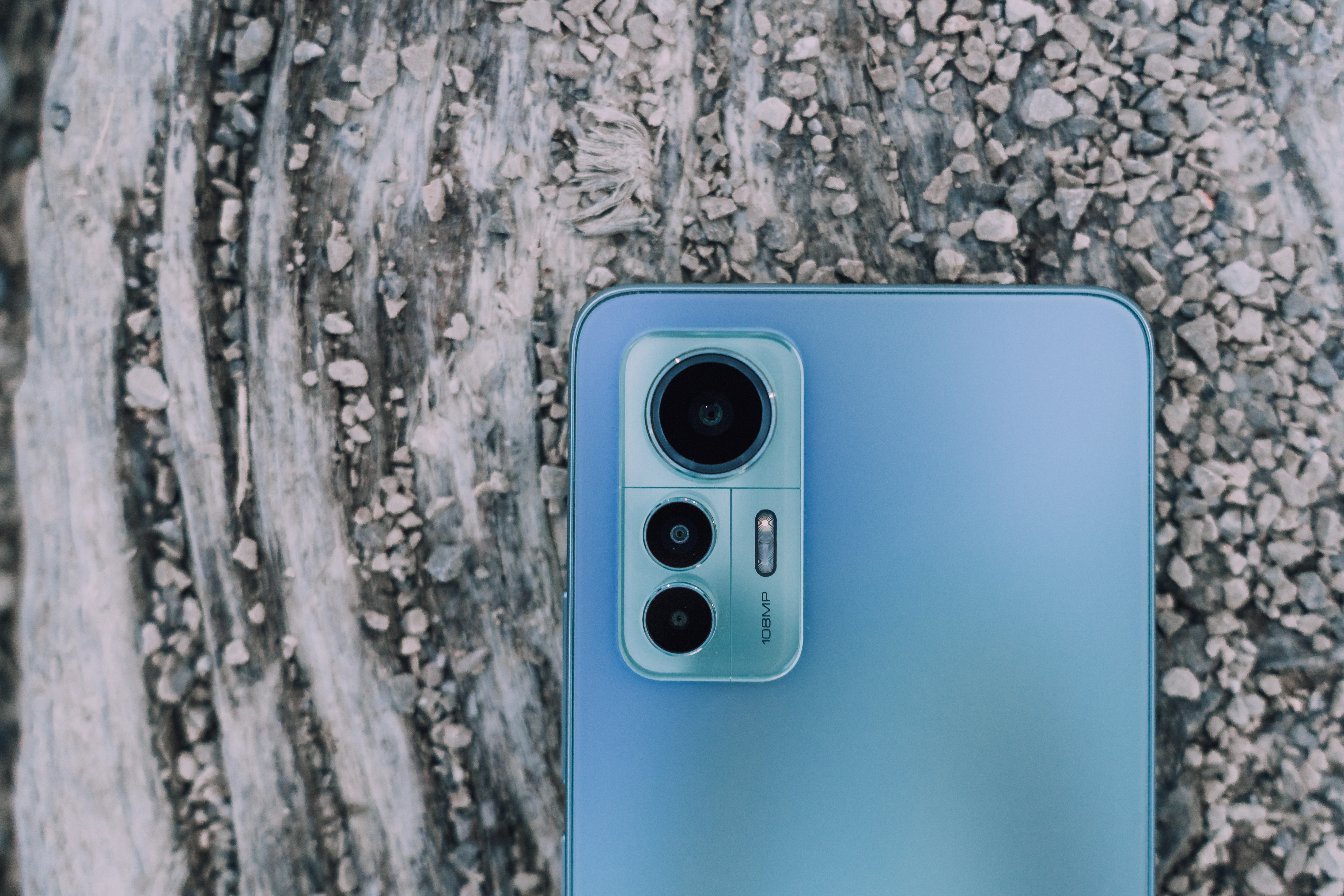
8 tricks to help you take more creative photos with your mobile
- Try all the different lenses on your phone's camera: today's mobiles generally come with different lenses: wide-angle, ultra wide-angle, telephoto, etc. Play around with them and see how you get totally different results.
- Try all the different modes included in phone's camera app: mobile phones come with a number of automatic photography modes that help you create incredible photos really simply: Panoramic mode, portrait mode, long exposure mode, etc. You can try each of them to get different results for the same image.
- Use the "Pro" or manual mode on your camera (also known as professional mode). With this mode you to adjust the parameters just like on any professional camera: White balance, shutter speed, ISO sensitivity, focus, etc. By learning to use these parameters, you will be able to take more professional photographs.
- Experiment with reflections to create more eye-catching photos. You to take advantage of all reflective surfaces and use them in your photographs: A puddle of water after a storm, a calm sea, a window, a shop window, even the bonnet of a car are all very interesting reflective surfaces. Place your phone as close as possible to the reflective surface and you will get a really striking result. Playing with reflections will give your images an amusing, creative touch.
If there are no reflective surfaces nearby and you have the possibility, ask someone if you can borrow their mobile, place it in front of the camera on your phone with the screen up and take advantage of the reflection from the screen to take really original photos.

- Place items in the foreground in front of your phone to create depth of field. This will make your photographs more interesting.
- Experiment with different photographic angles: high-angle shot, low-angle shot, wide-angle shot, cowboy shot, close-up, overhead, etc.
- Learn all about them and use the rules of composition to your advantage: rule of thirds, law of gaze, law of symmetry, horizon, vanishing point, etc.
These simple tricks will help you go one step further and make a difference when taking pictures. But, the most important advice is: Be calm, enjoy it and above all, have fun.
Make portraits more interesting with your mobile
Portrait with natural light
1. For this, all you need is for it to be daytime and place yourself as close as possible to a window where a lot of light comes in.
2. Select the portrait mode if it is available on your phone's camera.
3. Lock the focus of the camera on your eyes, you can easily do this by holding down the screen until a box appears on the point you want to focus on.
4. Then, reduce the exposure of the image. To do this you must slide down your finger, while keeping your finger on the screen, until it looks darker. Depending on the device, a bar may appear on the side, the lower you slide the more you will reduce the exposure, achieving a more dramatic effect.
5. Stay as close as possible to the window and look out.
6. Finally, take the photo and you will have selfie that is much more interesting.
Portrait with your TV screen
1. To take a much more creative selfie, you first need to download a neon wallpaper.
2. Put this wallpaper on a TV you have in your home. This can be done by connecting a computer to the TV via HDMI or in any other way.
3. Turn off all the lights in the house, so the neon background stands out.
4. Get as close as possible to the TV and select portrait mode on the camera on your mobile phone.
5. Lock the camera's focus on your eye and lower the exposure slightly by swiping down.
6. For a light-hearted, original touch, you can put on sunglasses so that the neon background is reflected in them.
7. Everything ready to click and get a unique selfie.
Portrait with an RGB LED Tube
1. For this photographic trick you will need an RGB LED tube. They are easy to find in supermarkets and online.
2. Next, you should look for an interesting location to take the photos. It can be in your home, the centre of the city, in a park, etc.
3. To make a self-portrait, you are going to need a tripod or a surface that can hold the tube. If you want to try this with friends, try placing it about 45º above the person. You can move it about to get different effects and bring out the artistic in you.
Now all you need to do is to follow our Instagram profile to discover more visual tips on how to get the most out of all the energy you have.
{{content.phone.title}}
{{content.phone.text}}
{{content.phone.phoneText}}
{{content.form.title}}
{{content.form.text}}
{{content.form.success.title}}
Comparison of Electricity and Gas Tariffs
You don't need to adapt to Endesa's tariffs because they adapt to you. If you go to our catalogue you can compare the different tariffs for yourself. Or if you prefer, you can answer a few questions and we will take care of comparing all the different electricity and gas tariffs and then make a customised recommendation.
Do you want to see all our offers?
Spend a minute to find the product which best adapts to you:
Discover the rate that best suits your consumption profile with our smart recommender
Spend a minute to find the product which best adapts to you:
Discover the rate that best suits your consumption profile with our smart recommender
{{content.phone.title}}
{{content.phone.text}}
{{content.phone.phoneText}}
{{content.form.title}}
{{content.form.text}}


