


If you prefer to always view the website in English, please click here.
{{content.phone.title}}
{{content.phone.text}}
{{content.phone.phoneText}}
{{content.form.title}}
{{content.form.text}}
{{content.form.success.title}}
NZEB building: what it is, requirements and how a nearly zero-energy building is built
NZEBs (Nearly Zero Energy Buildings) represent the new standard for sustainable construction in Europe. Below, we explain clearly and rigorously what a nearly zero-energy building is, what Spanish regulations require and how a construction capable of consuming very little energy is designed step by step thanks to insulation, efficiency and renewable energies.
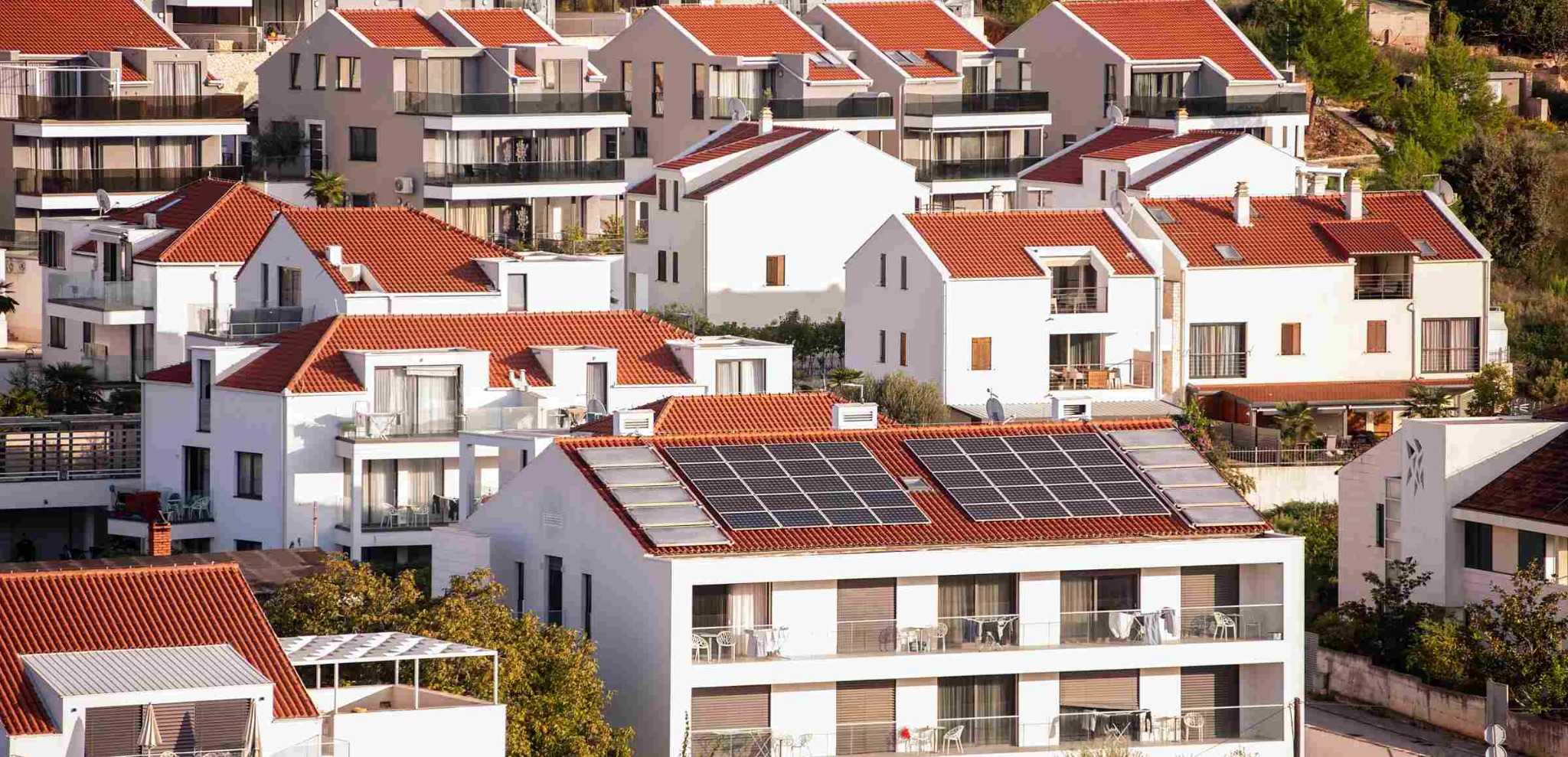
What is an NZEB (Nearly Zero Energy Building)?
An NZEB (Nearly Zero Energy Building) is a construction designed to have extremely low energy consumption, thanks to a combination of high efficiency, reinforced insulation and renewable energies. In Spain, this concept is known as EECN (Edificio de Consumo de Energía Casi Nulo), and it is aligned with European regulations requiring new buildings to minimise their energy demand and meet a large part of it with renewables.
In other words, an NZEB consumes very little energy and the little it needs comes largely from clean sources generated in the building itself or in its surroundings.
Main characteristics of a nearly zero-energy building
Low energy demand
NZEBs are designed to need very little energy for heating, cooling, lighting or ventilation. This is achieved through optimised architecture and high-performance materials.
Reinforced thermal insulation
The building envelope (facades, roofs, floors) incorporates insulation thicknesses far superior to those of a conventional building, reducing unwanted thermal losses and gains.
Airtightness and infiltration control
An NZEB must be very airtight. Air infiltration and exfiltration are controlled to avoid leaks that send energy consumption soaring.
Use of renewable energies
Regulations require that a significant part of the energy consumed comes from renewable sources, such as photovoltaic, solar thermal or geothermal energy.
Very high-efficiency climate control systems
Technologies such as air source heat pumps, geothermal energy and high-efficiency equipment allow demand to be met with minimal consumption.
Controlled ventilation with heat recovery
NZEBs incorporate mechanical ventilation with heat recovery, which renews the air without losing energy, improving comfort and indoor air quality.
NZEB requirements according to regulations in Spain
Spanish regulations, based on the Technical Building Code (CTE) and European directives, establish that an NZEB building must comply with:
- Very low energy demand, especially for heating and cooling.
- Very reduced non-renewable primary energy consumption, according to CTE limits.
- Minimum contribution of renewable energies, especially for DHW (Domestic Hot Water) and electricity.
- High efficiency in thermal and electrical installations.
- Infiltration control and airtightness.
These requirements are adapted to the Spanish climate and seek to ensure that new buildings are highly efficient and sustainable.
How an NZEB building is built step by step
Bioclimatic design
The process begins with a design that takes advantage of the climate: optimal orientation, solar protection, natural ventilation and maximisation of natural light.
Insulation and reinforced thermal envelope
High-performance materials are used to minimise energy losses. The envelope is continuous and free of thermal bridges.
High-performance windows
Thermally broken frames and low-emissivity double or triple glazing.
Airtightness and infiltration control
Joints, junctions and openings are sealed to guarantee a level of airtightness far superior to that of a conventional building.
Very high-efficiency climate control
Systems such as air source heat pumps, geothermal energy and latest-generation heat pumps allow demand to be met with minimal consumption.
Mechanical ventilation with heat recovery
Renews indoor air without losing energy, guaranteeing comfort and health.
Integration of renewable energies
Photovoltaic panels, solar thermal or geothermal energy allow part of the building's energy demand to be met.
Advantages of an NZEB building
- Drastic reduction in the energy bill: consumption is so low that annual savings can be very significant.
- Constant thermal comfort: the indoor temperature remains stable throughout the year.
- Healthier indoor air: controlled ventilation improves air quality and reduces pollutants.
- Emission reduction: by consuming less energy and using renewables, the building's carbon footprint decreases.
- More durable and higher value homes: NZEBs tend to increase in value more and require less energy maintenance.
NZEB vs Passive Houses: How do they differ?
Although they share objectives, they are not the same.
- NZEB is a regulatory standard, flexible and adapted to each country.
- The Passive House (or Passivhaus) is a voluntary certification with very strict criteria for energy demand, airtightness and comfort.
In summary, a Passivhaus building always complies with NZEB, but an NZEB does not have to comply with Passivhaus.
How much does it cost to build an NZEB building?
The cost depends on the type of building, materials and systems installed, but usually represents an increase of 5% to 15% compared to conventional construction. However, this extra cost is offset by:
- Annual energy savings.
- Lower energy dependence.
- Higher property value.
What type of installations favour the NZEB standard?
NZEB buildings do not only depend on good design and an efficient envelope. They need installations capable of working with very little energy and, at the same time, making the most of available renewable sources. These are the technologies that contribute most to reaching that level of efficiency.
Air source heat pump + underfloor heating
The combination of an air source heat pump and underfloor heating is one of the most efficient solutions for heating and cooling an NZEB building. Air source heat pumps extract energy from the outside air (even when it is cold) and transform it into heating, cooling or hot water with very low electrical consumption. By working with low and constant temperatures, it fits perfectly with underfloor heating, which distributes heat (or cooling) evenly throughout the home.
Mechanical ventilation with heat recovery
In an NZEB building, airtightness is fundamental. But if the building is very airtight, it is essential to guarantee good indoor air quality. That is why mechanical ventilation with heat recovery is used.
This system extracts stale air from the inside and replaces it with clean air from the outside, but without losing energy. The heat recovery unit transfers the temperature of the outgoing air to the incoming air. This maintains thermal comfort and reduces energy demand, while improving the health and well-being of those living in the building.
Photovoltaics
Solar photovoltaic energy is key for an NZEB building to reduce its non-renewable primary energy consumption. Solar panels allow clean electricity to be generated directly on the roof or facade of the building, covering part of the electrical demand for climate control, lighting or appliances.
Furthermore, when combined with systems like air source heat pumps, photovoltaics allow a significant part of the building's energy consumption to be self-generated, further reducing its energy bill and carbon footprint.
Smart home technology
Efficiency depends not only on materials or installations. It also depends on how they are managed. Smart home technology allows the building's consumption to be monitored and controlled in real time, optimising the use of climate control, lighting or ventilation.
Among its most common functions are:
- Automatic temperature adjustment according to occupancy.
- Intelligent management of blinds and solar protection.
- Control of peak consumption.
- Integration with photovoltaics and batteries.
- Alerts for inefficiencies or anomalous consumption.
Thanks to these systems, the building functions more efficiently and stably, reducing consumption without sacrificing comfort.
Take a minute to find the product that best suits you:
{{firstStep.title}}
Take a minute to find the product that best suits you:
{{title}}
You don't need to adapt to Endesa's tariffs because they adapt to you. If you go to our catalogue you can compare the different tariffs for yourself. Or if you prefer, you can answer a few questions and we will take care of comparing all the different electricity and gas tariffs and then make a customised recommendation.
Take a minute to find the product that best suits you:
{{title}}
You don't need to adapt to Endesa's tariffs because they adapt to you. If you go to our catalogue you can compare the different tariffs for yourself. Or if you prefer, you can answer a few questions and we will take care of comparing all the different electricity and gas tariffs and then make a customised recommendation.
Comparison of Electricity and Gas Tariffs
You don't need to adapt to Endesa's tariffs because they adapt to you. If you go to our catalogue you can compare the different tariffs for yourself. Or if you prefer, you can answer a few questions and we will take care of comparing all the different electricity and gas tariffs and then make a customised recommendation.
Do you want to see all our offers?
Spend a minute to find the product which best adapts to you:
{{firstStep.title}}
Spend a minute to find the product which best adapts to you:
{{title}}
{{content.phone.title}}
{{content.phone.text}}
{{content.phone.phoneText}}
{{content.form.title}}
{{content.form.text}}
{{content.form.success.title}}
Spend a minute to find the product which best adapts to you:
{{title}}
{{content.phone.title}}
{{content.phone.text}}
{{content.phone.phoneText}}
{{content.form.title}}
{{content.form.text}}