


If you prefer to always view the website in English, please click here.
{{content.phone.title}}
{{content.phone.text}}
{{content.phone.phoneText}}
{{content.form.title}}
{{content.form.text}}
{{content.form.success.title}}
How your heating ECO mode works and how much you can save
Heating usually accounts for one of the highest energy costs in the home. It represents almost half of total domestic energy expenditure, if Domestic Hot Water (DHW) is also included. Therefore, using it efficiently not only reduces the electricity bill, but also the environmental impact and demand on the electricity grid.
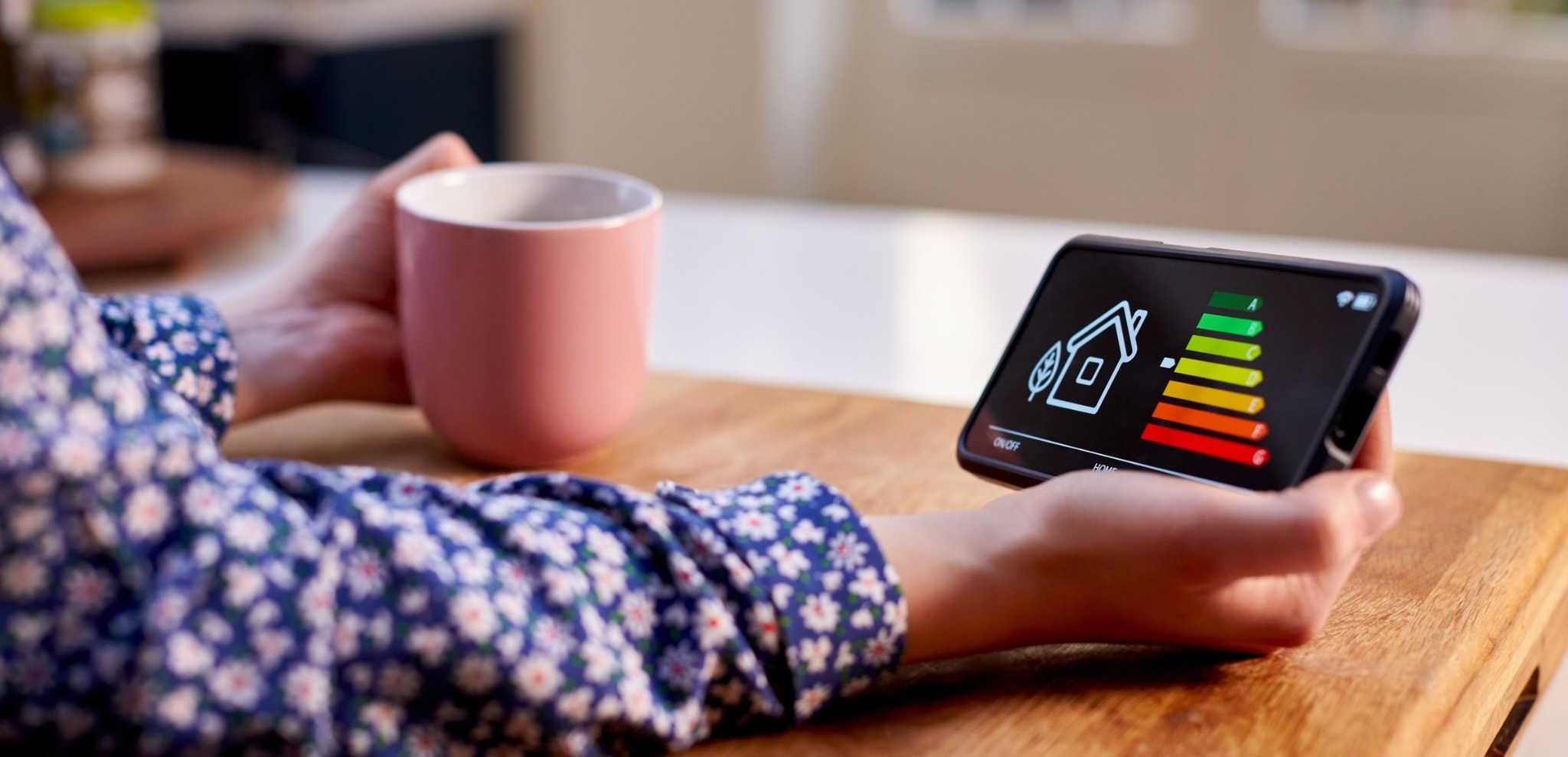
In this context, ECO (or economy) mode has become an increasingly common tool in many boilers and smart heating systems. It allows energy usage to be optimised while maintaining the temperature at adequate levels and avoiding unnecessary spikes. According to the IDAE (Institute for Energy Diversification and Saving), adjusting the temperature efficiently can mean a saving of up to 7% for every degree the setting is lowered.
What is ECO mode in heating?
ECO mode does not mean turning off the heating, but rather helping it to operate within more efficient ranges. It is a setting integrated into many heating systems. Its main objective is to optimise energy consumption without sacrificing thermal comfort.
This type of regulation is based on algorithms that seek a balance between consumption and comfort. The result is a stable temperature in the home with optimised energy use, often avoiding unnecessary strain on the heating system.
How ECO mode actually works
The equipment automatically adjusts the operating power to avoid unnecessary consumption peaks. It regulates the target temperature more smoothly and efficiently, allowing the system to maintain a pleasant climate without abrupt changes. It also decreases the speed of components such as fans or boiler modulators to avoid unnecessary energy spikes.
Normally, this setting keeps domestic hot water and heating at moderate temperatures:
- Domestic Hot Water (DHW): usually limited to a temperature of 40 °C to 45 °C, sufficient for taking showers at a pleasant temperature without excessive expense.
- Heating: adjusts the ambient temperature to between 19 °C and 21 °C. This is the range recommended by the IDAE to guarantee a comfortable environment inside the home, and savings on the electricity bill.
ECO mode also allows for reduced burner operating time, and optimises the on/off cycle, avoiding unnecessary consumption.
Advantages of ECO mode on your electricity bill
Activating ECO mode on your heating offers multiple advantages, both at home and on your electricity bill at the end of the month:
Energy savings without losing comfort
By avoiding power spikes, reducing the temperature, optimising cycles and adjusting the system's work according to the home's real heat need, ECO mode will decrease electricity and gas expenditure.
Reduction of bill costs
Although the exact final figure depends on factors such as the type of heating installed, your home's insulation and usage habits, in modern or smart equipment it is estimated that it can reduce consumption by between 25% and 30%, compared to conventional modes that do not include ECO. According to IDAE studies, the efficient use of heating can cut the bill by between 10% and 30% annually.
Longer equipment lifespan
Avoiding abrupt starts and stops reduces wear and tear on components such as burners, compressors or heating elements, and causes less thermal stress on the boiler.
Positive impact on the environment
Lower energy consumption will represent fewer indirect CO₂ emissions associated with electricity generation, contributing to a more sustainable home.
How much you can save using ECO mode
Energy savings will depend on the type and size of the home, its insulation, the heating system installed, consumption habits and the climate of the area where the house or flat is located.
But there are estimates based on energy efficiency studies that help put realistic figures on it. In a home with electric heating or a gas boiler, ECO mode can mean consumption reductions of around 25% to 30% compared to standard system usage. Furthermore, the IDAE points out that for every degree of temperature you lower on your heating system, you can save close to 7% on electrical energy consumption.
For example, if your usual heating consumption is around 1,000 kWh during a season, activating ECO mode on your heating system could save you between 250 and 300 kWh. In terms of consumer price, this would imply direct savings by the end of winter.
In which heating systems does ECO mode exist?
Switching on ECO mode optimises the system's operation to maintain an efficient and stable temperature, avoiding unnecessary cost spikes. We explain how to enable it to get the most out of your heating:
In modern boilers
In modern gas or condensing boilers, ECO mode usually appears on the control panel, in the digital menu or on the integrated thermostat. It is normally activated from the main menu by pressing the button identified as 'ECO', 'Savings', or by configuring adjusted minimum and maximum temperatures. Activate it to limit the water temperature and optimise heating. We recommend always checking the manufacturer's instructions for your model.
In electric radiators
Modern electric radiators increasingly include an ECO button or mode on their interface. This internally adjusts the on/off cycles to maintain a constant temperature with lower energy expenditure. In models with digital control, ECO can be activated from the menu or the associated app. Configure it by adjusting the temperature to between 19 °C and 21 °C.
With smart systems
If you have smart home technology, smart thermostats or programmable thermostats, you can create automatic routines that simulate ECO mode. These adapt the temperature according to schedules and occupancy, reducing consumption when no one is home, or during the night. Many of these offer the option of remote control from your mobile.
How to combine ECO mode with other habits to save more
It is not enough just to activate ECO mode; you must also accompany this alternative with usage and consumption habits to multiply your opportunities to save:
- Bleed the radiators to improve efficiency.
- Periodically check your boiler system, every 2 years according to regulations.
- Improve insulation. Seal windows and doors to prevent heat loss.
- Set the right temperature; we recommend keeping your home between 19 °C and 21 °C when you are at home. Opt for a lower temperature when you are not there, or at night.
- Program heating schedules, turning it on only when you really need it.
- Take advantage of thermal inertia. If possible, heat the space gradually before arriving home, and turn it off in advance. This helps to conserve residual heat.
- Combine ECO mode with a tariff that adapts to your consumption in winter, such as those offered by Endesa.
ECO mode is an effective tool for reducing consumption without sacrificing comfort. Correctly setting the temperature, optimising how your heating system runs, and accompanying it with good practices or usage habits, can mean significant savings on your bill, and contribute to energy efficiency at home.
If you are looking to go a step further and improve your system or equipment, explore Endesa's high-efficiency boilers and maintenance plans, designed to guarantee safety, comfort and savings all year round.
Take a minute to find the product that best suits you:
{{firstStep.title}}
Take a minute to find the product that best suits you:
{{title}}
You don't need to adapt to Endesa's tariffs because they adapt to you. If you go to our catalogue you can compare the different tariffs for yourself. Or if you prefer, you can answer a few questions and we will take care of comparing all the different electricity and gas tariffs and then make a customised recommendation.
Take a minute to find the product that best suits you:
{{title}}
You don't need to adapt to Endesa's tariffs because they adapt to you. If you go to our catalogue you can compare the different tariffs for yourself. Or if you prefer, you can answer a few questions and we will take care of comparing all the different electricity and gas tariffs and then make a customised recommendation.
Comparison of Electricity and Gas Tariffs
You don't need to adapt to Endesa's tariffs because they adapt to you. If you go to our catalogue you can compare the different tariffs for yourself. Or if you prefer, you can answer a few questions and we will take care of comparing all the different electricity and gas tariffs and then make a customised recommendation.
Do you want to see all our offers?
Spend a minute to find the product which best adapts to you:
{{firstStep.title}}
Spend a minute to find the product which best adapts to you:
{{title}}
{{content.phone.title}}
{{content.phone.text}}
{{content.phone.phoneText}}
{{content.form.title}}
{{content.form.text}}
{{content.form.success.title}}
Spend a minute to find the product which best adapts to you:
{{title}}
{{content.phone.title}}
{{content.phone.text}}
{{content.phone.phoneText}}
{{content.form.title}}
{{content.form.text}}