


If you prefer to always view the website in English, please click here.
How many solar panels does my house need?
Knowing how many solar panels a house needs is the first step to making the most of self-consumption. A correctly sized installation allows you to save more, optimise your investment, and avoid installing more panels than you actually need. The number of panels will mainly depend on your annual consumption, the power capacity of the modules, the sunlight hours in your area, and the characteristics of your roof.
Taking all these factors into account will help you get the most out of solar energy from day one.
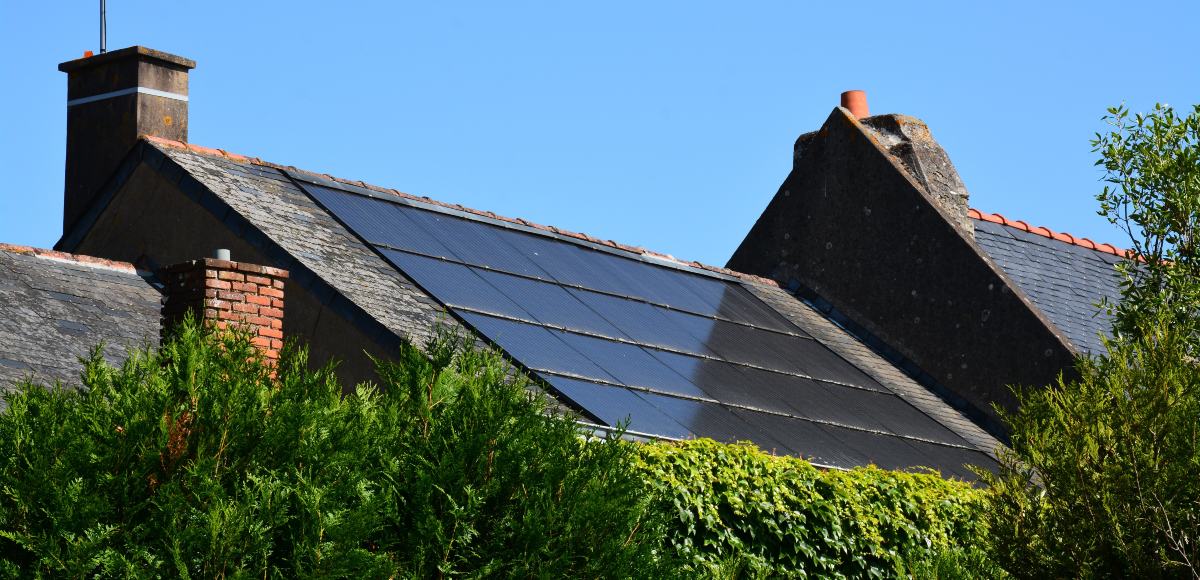
Quick answer: how many solar panels a home needs
If you have come here looking for a quick answer to the question 'how many solar panels does my house need?', this table can serve as an initial reference. Although each installation must be assessed individually, annual consumption allows for a fairly accurate estimate.
|
Annual consumption |
Home profile |
Indicative no. of panels |
|---|---|---|
|
Up to 2,500 kWh |
Small flat or low consumption |
3–5 panels |
|
2,500–4,500 kWh |
Average home |
5–8 panels |
|
4,500–7,000 kWh |
Family home |
8–12 panels |
|
More than 7,000 kWh |
Large house or high consumption |
12–18+ panels |
These values are indicative, as factors such as location, shading, or the power capacity of the modules can alter the final result.
If you are considering installing solar panels on your home, you can check the available solutions in Endesa's solar panel catalogue.
How to calculate how many solar panels you need step by step
The most accurate way to calculate how many solar panels a home needs is to start with its actual energy demand.
There is a simple formula for this:
Number of panels = Annual consumption (kWh) / Annual production of one panel
Although the calculation is straightforward, the result depends on several factors such as location, the performance of the modules, and your actual energy utilisation.
You can check your annual electricity consumption on your bills or in the Endesa Customer Area. If you are unsure, you can learn how to estimate it in this guide on how to calculate a house's electricity consumption.
The production of each panel depends on its power capacity, solar radiation, and peak sun hours – a key indicator for correctly sizing the installation. You can find out more in our article on what a peak sun hour is.
Practical calculation example
Let's imagine a home with an annual consumption of 3,500 kWh.
If each panel generates approximately 600 kWh per year:
3,500 kWh ÷ 600 kWh = 5.8 panels
In this case, it would be standard practice to install between 5 and 7 solar panels.
How many panels you need based on your annual consumption
If you want to know how many solar panels you need based on your consumption, this table will serve as a quick guide.
|
Annual consumption |
Type of home |
Panels needed |
|---|---|---|
|
2,000 kWh |
Small flat |
3–4 |
|
3,500 kWh |
Average home |
5–7 |
|
5,000 kWh |
Family home |
7–10 |
|
7,000 kWh |
Large home |
10–14 |
|
10,000 kWh |
High consumption |
14–20+ |
This section is particularly useful if you are wondering 'how many solar panels do I need if I consume 3,500 kWh a year?' or 'how many panels do I need based on my consumption?'.
How many solar panels you need based on the size of the house
Although consumption is more relevant than square metres, the size of the home can serve as an initial reference.
In a small home of between 50 and 80 m², between 3 and 5 solar panels are usually installed. A 100 m² house normally needs between 5 and 8 panels, while a 150 m² home usually requires between 8 and 12 panels.
| Size of the home | Indicative no. of panels |
|---|---|
| 50–80 m² | 3–5 |
| 100 m² | 5–8 |
| 150 m² | 8–12 |
| More than 180 m² | 12–18+ |
However, two homes with the same surface area can have very different energy consumption levels depending on the number of occupants, climate control, or the electrical appliances installed.
Factors that change the number of solar panels
Although consumption is the starting point, it is not the only element that influences the sizing.
Geographical location, module power capacity, roof orientation, shading, and consumption habits can significantly change the final result.
Therefore, before installing solar panels at home, it is important to analyse both your consumption and the actual conditions of the property.
Orientation, tilt, and shading: why your roof matters
Not all roofs produce the same amount of energy.
A south-facing orientation usually offers the best annual performance, although east and west orientations can also be highly efficient if they coincide with your consumption times.
Shading from trees, buildings, or roof elements can reduce electricity generation, so it is essential to take them into account before designing the installation.
Is it better to install more panels or adjust the installation to your consumption?
Installing more panels than necessary does not always mean greater savings.
When production exceeds standard consumption, surplus energy increases and not all the energy is used directly.
For this reason, it is highly recommended to design an installation tailored to the actual needs of the household, leaving a margin only for potential future increases.
What happens to the solar energy you don't use
One of the great advantages of self-consumption is that the energy you don't use is not lost.
When production exceeds consumption, you can benefit from surplus compensation, which lowers your electricity bill.
Another option is the virtual battery, which allows you to accumulate the monetary value of your surplus energy. You can find out more in our article on how a virtual battery works.
Furthermore, with solutions like Endesa Solar Plus with Virtual Battery, it is possible to get even more out of the energy generated and optimise the savings from your photovoltaic installation.
How much space you need to install solar panels
One of the most common questions is how much space a photovoltaic installation takes up.
Although it depends on the size of each module, a solar panel typically requires between 2 and 2.5 m² of usable surface area.
| Number of panels | Approximate space |
|---|---|
| 4 panels | 8–10 m² |
| 6 panels | 12–15 m² |
| 10 panels | 20–25 m² |
| 15 panels | 30–38 m² |
Therefore, before sizing an installation, it is advisable to check the available space on the roof.
Practical example: a home with average consumption
Let's take the example of a family home with an annual consumption of 3,500 kWh.
Under normal conditions, with good orientation and no significant shading, this home would need between 5 and 7 solar panels to cover a substantial part of its energy demand.
The final electricity generated will depend on the modules' performance, the available sunlight hours, and the family's consumption habits.
What if I have an electric car, an air source heat pump, or a pool?
If you are going to introduce new consumption sources, it is worth considering them from the start.
An electric car, an air source heat pump, or a pool can increase energy demand and make it necessary to install more panels.
For example, an increasing number of users are opting to charge their electric cars with solar energy, while others combine air source heat pumps and solar panels to improve their home's energy efficiency.
Taking these consumption sources into account from the beginning will help you size the installation correctly and avoid future expansions.
Is it cost-effective to install solar panels at home?
In most households, yes.
A photovoltaic installation allows you to reduce your electricity bill from day one and take advantage of renewable energy generated in your own home.
Furthermore, surplus compensation and the evolution of electricity prices reinforce its appeal as a long-term investment.
Did you know that at Endesa we help you get the maximum return on your solar installation? Thanks to our advisory services, you will be able to discover your actual consumption and surplus energy, and choose the most efficient tariff for your home.
Why you should request a personalised assessment
The tables and examples in this guide serve as a reference, but every home is different.
Actual consumption, roof orientation, shading, and usage habits directly influence the number of panels needed.
For this reason, the best approach is to request a personalised assessment to correctly size the installation and maximise long-term savings.
You can start by exploring Endesa Solar Panels.
FAQs
How many solar panels does a normal house need?
Most homes with average consumption need between 5 and 10 solar panels.
How many solar panels do I need for a 100 m² house?
Typically between 5 and 8 panels, although it will depend on the annual consumption.
How many solar panels do I need if I consume 3,500 kWh a year?
The standard estimate is between 5 and 7 solar panels.
Is it better to install more solar panels to save more?
Not necessarily. The most cost-effective option is usually to adjust the installation to your actual consumption.
How much roof space do I need?
As a general guide, each panel requires approximately 2 to 2.5 m².
What happens if my solar panels produce more energy than I consume?
Surplus energy can be compensated on your bill or managed via a virtual battery.
How much does roof orientation matter?
A lot. A good orientation can significantly increase energy generation.
Can I install solar panels if I have an electric car?
Yes. In fact, it is one of the most common combinations to increase energy savings.
How many solar panels do I need if I have an air source heat pump?
It will depend on the system's total consumption, although it will normally be necessary to increase the installed photovoltaic capacity.
Do I need a battery to make better use of my solar panels?
It is not essential, but a physical or virtual battery can help you optimise the use of your surplus energy.
Take a minute to find the product that best suits you:
{{firstStep.title}}
Take a minute to find the product that best suits you:
{{title}}
{{content.phone.title}}
{{content.phone.text}}
{{content.phone.phoneText}}
{{content.form.title}}
{{content.form.text}}
{{content.form.success.title}}
You don't need to adapt to Endesa's tariffs because they adapt to you. If you go to our catalogue you can compare the different tariffs for yourself. Or if you prefer, you can answer a few questions and we will take care of comparing all the different electricity and gas tariffs and then make a customised recommendation.
Take a minute to find the product that best suits you:
{{title}}
{{content.phone.title}}
{{content.phone.text}}
{{content.phone.phoneText}}
{{content.form.title}}
{{content.form.text}}
{{content.form.success.title}}
You don't need to adapt to Endesa's tariffs because they adapt to you. If you go to our catalogue you can compare the different tariffs for yourself. Or if you prefer, you can answer a few questions and we will take care of comparing all the different electricity and gas tariffs and then make a customised recommendation.
Comparison of Electricity and Gas Tariffs
You don't need to adapt to Endesa's tariffs because they adapt to you. If you go to our catalogue you can compare the different tariffs for yourself. Or if you prefer, you can answer a few questions and we will take care of comparing all the different electricity and gas tariffs and then make a customised recommendation.
Do you want to see all our offers?
Spend a minute to find the product which best adapts to you:
{{firstStep.title}}
Spend a minute to find the product which best adapts to you:
{{title}}
{{content.phone.title}}
{{content.phone.text}}
{{content.phone.phoneText}}
{{content.form.title}}
{{content.form.text}}
{{content.form.success.title}}
Spend a minute to find the product which best adapts to you:
{{title}}
{{content.phone.title}}
{{content.phone.text}}
{{content.phone.phoneText}}
{{content.form.title}}
{{content.form.text}}