Cities of the future
Nearly Zero Energy Buildings (NZEB), together with energy renovation and the digitalisation of the built environment, have become fundamental pillars of European decarbonisation policies. Spain is making progress, although it is still in a process of regulatory adaptation to reach the new standards defined by the European Union.
By Francisco Arévalo
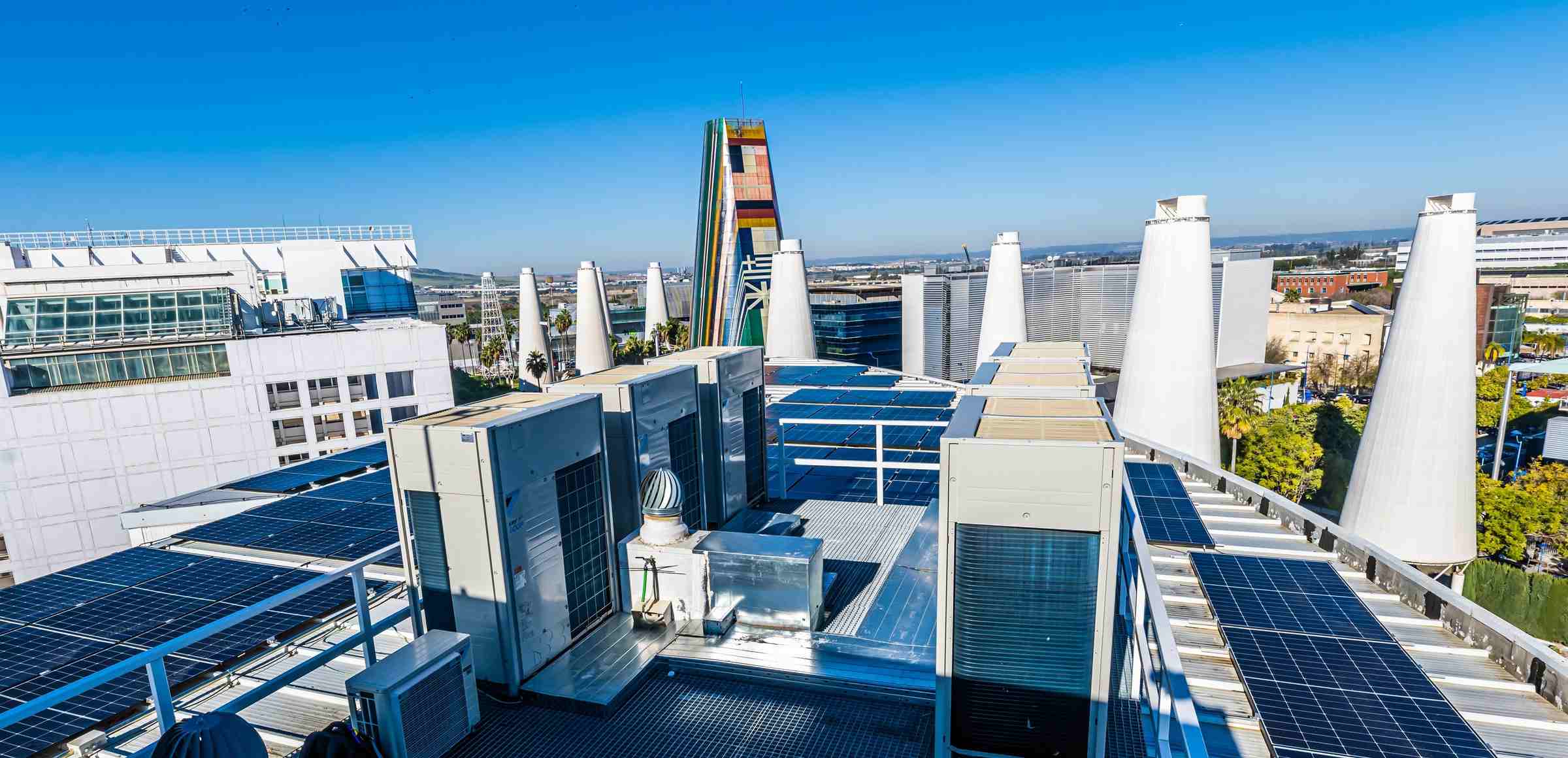
The energy performance of the building stock is closely linked to the energy transition in Europe. Buildings account for around 40% of energy consumption and 36% of greenhouse gas emissions associated with energy. In this context, Directive 2010/31/EU (EPBD) on the energy performance of buildings formally introduced the term “nearly zero-energy building”, defined as a building with a very high energy performance, with a very low energy demand that is covered to a very significant extent by energy from renewable sources, produced on-site or nearby.
The regulations were subsequently reinforced by Directive (EU) 2018/844, which incorporates elements such as the digitalisation of the built environment, automation, technical building systems and the acceleration of deep energy renovation. The process culminates with the 2021 Proposal for a recast of the EPBD (COM/2021/802 final), framed within the European Green Deal. This establishes the objective of creating a zero-emission building stock by 2050 and introduces the ZEB (Zero Emission Building) concept, an evolution of the NZEB. In a ZEB, the building must not only present minimal demand and a high renewable contribution, but also guarantee zero GHG emissions in its normal operation, considering the annual energy balance.
In our country, nearly 58% of buildings were constructed before the first regulations introducing minimum energy efficiency criteria in Spain (the basic building standard NBE-CT-79 on thermal conditions in buildings). Consequently, the complete transposition of the recast EPBD has not yet materialised. However, the current Technical Building Code (CTE) incorporates the concept of “Nearly Zero Energy Buildings (NZEB)”, based on consumption restrictions by climatic zones and on the use of renewable energies to cover part of the consumption.
From a technical point of view, an NZEB integrates an optimised set of passive solutions (reinforced thermal insulation, high-performance joinery, infiltration control, bioclimatic design); active solutions (low specific power climate control, controlled mechanical ventilation, LED lighting with automatic presence controls and regulation by natural light contribution, Energy Management Systems); and renewable solutions (photovoltaics for individual or collective self-consumption, solar thermal, biomass or geothermal for heat production; and energy storage systems with grid interaction capability). All of this serves to reduce energy demand, maximise performance and favour decarbonisation.
On the other hand, the transition towards NZEB and ZEB buildings requires applying sustainable construction criteria, with a correct selection of sustainable, high-durability materials and low-impact construction techniques with a focus on circularity.
On this path, energy renovation is the main decarbonisation strategy. This is achieved through the improvement of the envelope with External Thermal Insulation Composite Systems (ETICS), ventilated façades or the replacement of joinery; the modernisation of heat pumps and high-efficiency boilers; and, of course, the incorporation of renewable energies and digitalisation for monitoring, intelligent control and building management.
Digitalisation is a fundamental vector within the European energy efficiency framework. The Smart Readiness Index (SRI), defined in Delegated Regulation (EU) 2020/2155, establishes the common methodology for assessing the smart readiness of a building by analysing its capacity to deploy smart functionalities in three areas: energy efficiency and operation, response to user needs and energy flexibility.
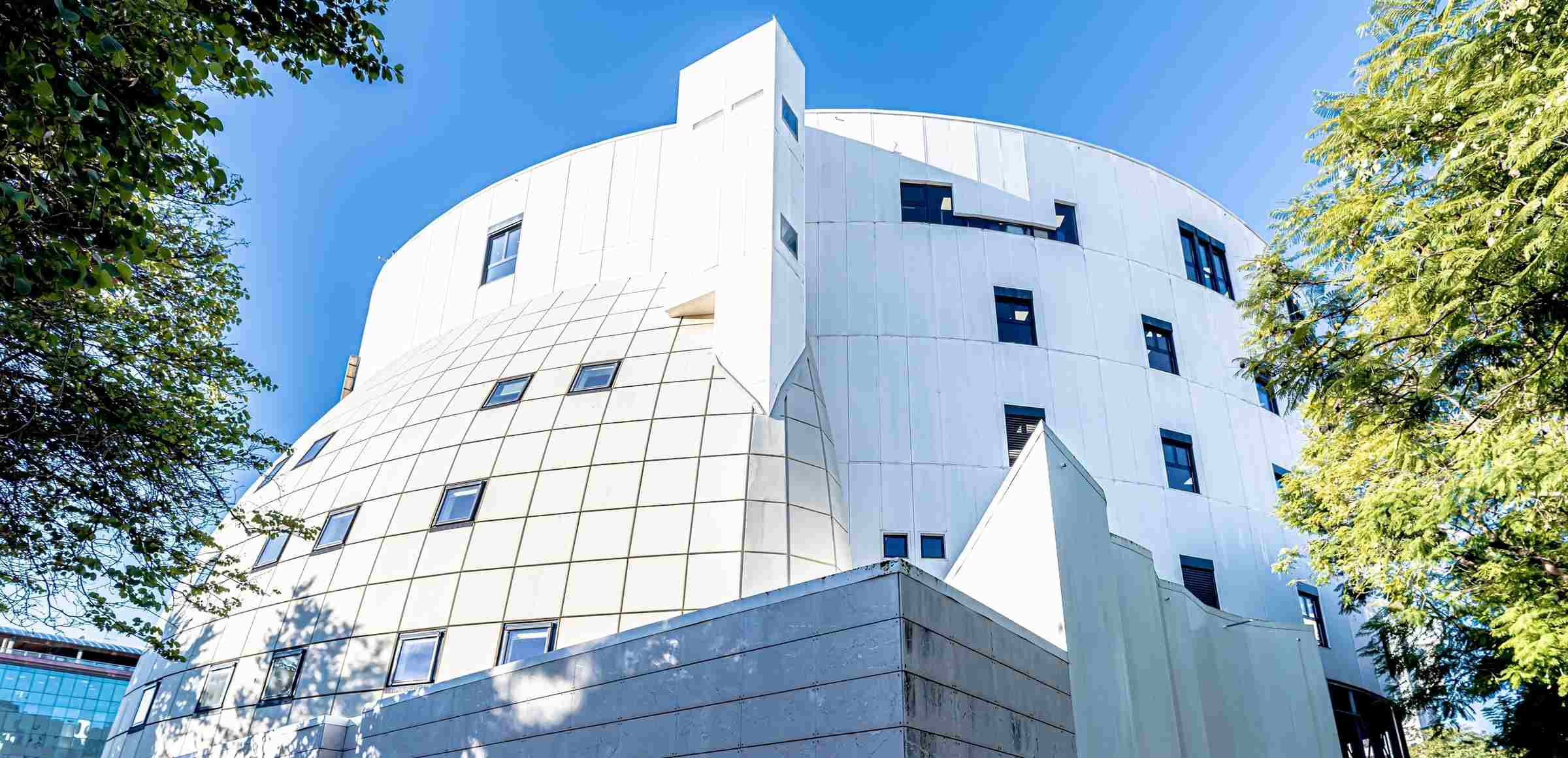
The headquarters building of the Andalusian Energy Agency, a public entity of the Andalusian Government that manages the Energy Network of the Regional Government of Andalusia and leads and coordinates the Building working group of the eCitySevilla project, was built in 1992 for temporary use at the Universal Exposition of Seville. Over 30 years of operation, it has undergone minor renovations to reduce its energy consumption and adapt it for administrative use, while retaining from its original construction the lighting and climate control installations, as well as the joinery and glazing of openings.
Following a prior energy audit and with the aim of making it the first nearly zero-energy building in the Sevilla TechPark, thereby reinforcing the exemplary role of the regional Administration, a comprehensive renovation was carried out. This introduced many of the passive, active and renewable solutions discussed above, in addition to applying the SRI methodology with outstanding results, achieving a score of around 90% and an energy saving of 55% of the building’s total electricity consumption, a figure that rises to 75% when considering only climate control and lighting consumption.
The modernisation of the building stock is not only an environmental challenge, but also a source of competitiveness, innovation and well-being for society. The combination of sustainable construction, energy renovation, new economic mechanisms such as Energy Savings Certificates (ESCs), which certify, quantify and monetise the final energy savings resulting from an improvement action by converting them into a tradable asset; and digitalisation through the SRI, creates a scenario of enormous opportunity for the sector.