


If you prefer to always view the website in English, please click here.
How much it costs a year to leave your phone charging all night (the answer will surprise you)
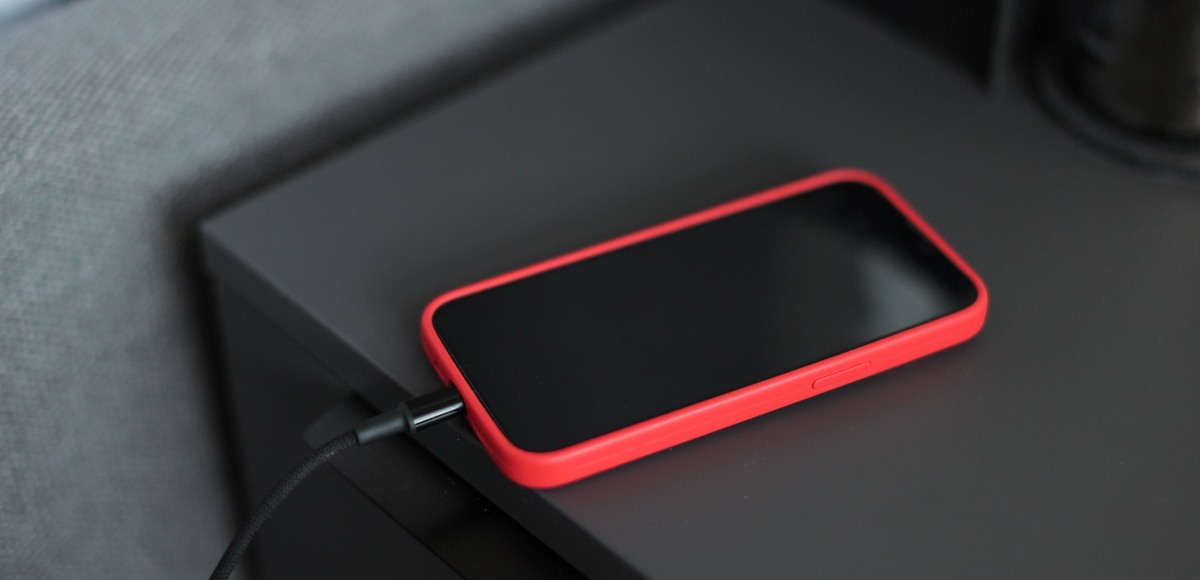
There is a ritual almost all of us perform before going to sleep: plugging the mobile phone into the charger and leaving it on the bedside table until the next morning. Many people believe this habit is one of the main reasons their electricity bill keeps going up. But how true is that, really?
While some worry about their phone's consumption, elsewhere in the house there is a constant, silent energy drain that goes completely unnoticed. The real 'watt thief' isn't the device in your hand, but a series of appliances that you never unplug and that are drawing electricity without you even realising.
The calculation: how a night's charging translates into euros per year
To find out how much it costs to leave your phone charging all night, we first need to understand how electricity consumption is calculated. What we pay for isn't the charger's power capacity, but the energy it actually consumes, measured in kilowatt-hours (kWh). This is calculated by multiplying the device's power, expressed in kilowatts (kW), by the time it is running. The formula is simple:
[(W / 1,000) × hours = kWh]
Today's chargers are highly energy-efficient. While the phone is plugged in and charging, consumption is relatively low. However, the most interesting part happens when the battery hits 100% charge: at that point, the device stops drawing energy, and the charger switches to a maintenance mode with minimal consumption.
Bearing all this in mind, the annual cost of charging a smartphone is even less than you might think.
The first surprise: the cost is ridiculously low
Charging your phone costs barely 50 euro cents a year. Less than what you'd spend on a coffee in any café in Spain is what you pay to power your smartphone for 365 full nights.
Even with fluctuating kWh prices, a smartphone's impact on household finances is marginal. If you're someone who unplugs the charger every morning thinking you'll make huge savings, the reality is that this gesture barely makes a dent in your monthly bill.
Therefore, from a strictly economic point of view, the impact of charging your phone at night is practically imperceptible. So, if the phone barely uses any electricity, why does the bill keep rising?
The second surprise: what really costs money isn't the phone
This is where the concept of vampire power or standby consumption comes into play – that is, the energy consumed by electrical appliances when they are seemingly turned off but remain plugged into the mains.
This invisible expense accounts for between 7% and 11% of the total electricity consumption in an average Spanish home. This translates into an unnecessary expense of around €5 a month.
When it comes to identifying which appliance uses the most in standby mode, the smartphone doesn't even make the list of prime suspects. The first device we should look at is the router, which costs us about €11.91 a year just by being left on. Other major culprits when left on standby are printers, audio systems, smart speakers, televisions, and games consoles, although modern models are more efficient.
Meanwhile, the fridge, which out of necessity must always be kept on, is the undisputed king of consumption. For example, an inefficient 700 kWh model could cost almost €80 a year to run. As we mentioned, the 50 cents for the phone is just a marginal expense.
What if you leave the charger plugged in without a phone attached?
Does a mobile charger use electricity when plugged in without a phone? The short answer is yes. However, the amount a phone charger uses when left alone in the socket is minuscule.
It is estimated that a charger that isn't actively charging consumes between 0.1 and 0.5 watt-hours per hour. In financial terms, the annual cost of leaving the charger plugged in permanently is less than 15 cents a year. You would need dozens of chargers plugged in simultaneously for the electricity meter to register any significant movement.
Even so, unplugging it is a good habit to prevent overheating and extend the lifespan of the charger itself.
The only piece of advice that actually matters: what time you charge
If you really want to optimise your spending, looking beyond the few cents your mobile costs, the key is to charge it during off-peak hours. On time-of-use tariffs, the price per kWh is significantly lower at night – specifically from midnight to 08:00, Monday to Friday, and 24 hours a day on Saturdays, Sundays, and national public holidays.
Charging your phone at night takes perfect advantage of these cheaper hours. But real savings won't come from shifting when you charge your phone; they will come from shifting your heavy consumption:
- Setting your electric water heater to heat water only during off-peak hours.
- Putting the washing machine or dishwasher on after midnight or at the weekend.
- Using switched extension leads to turn off the router, TV, and other peripherals when you go to sleep, wiping out that 10% phantom load in one go.
In conclusion, don't obsess over your smartphone charger. Its consumption is so small that it's not worth worrying about its impact. If you want to see a real difference on your next bill, keep an eye on the router, the little red standby lights on your appliances, and, above all, take advantage of the times when energy is cheapest so your most powerful appliances do the hard work while you rest.
Take a minute to find the product that best suits you:
{{firstStep.title}}
Take a minute to find the product that best suits you:
{{title}}
{{content.phone.title}}
{{content.phone.text}}
{{content.phone.phoneText}}
{{content.form.title}}
{{content.form.text}}
{{content.form.success.title}}
You don't need to adapt to Endesa's tariffs because they adapt to you. If you go to our catalogue you can compare the different tariffs for yourself. Or if you prefer, you can answer a few questions and we will take care of comparing all the different electricity and gas tariffs and then make a customised recommendation.
Take a minute to find the product that best suits you:
{{title}}
{{content.phone.title}}
{{content.phone.text}}
{{content.phone.phoneText}}
{{content.form.title}}
{{content.form.text}}
{{content.form.success.title}}
You don't need to adapt to Endesa's tariffs because they adapt to you. If you go to our catalogue you can compare the different tariffs for yourself. Or if you prefer, you can answer a few questions and we will take care of comparing all the different electricity and gas tariffs and then make a customised recommendation.
Comparison of Electricity and Gas Tariffs
You don't need to adapt to Endesa's tariffs because they adapt to you. If you go to our catalogue you can compare the different tariffs for yourself. Or if you prefer, you can answer a few questions and we will take care of comparing all the different electricity and gas tariffs and then make a customised recommendation.
Do you want to see all our offers?
Spend a minute to find the product which best adapts to you:
{{firstStep.title}}
Spend a minute to find the product which best adapts to you:
{{title}}
{{content.phone.title}}
{{content.phone.text}}
{{content.phone.phoneText}}
{{content.form.title}}
{{content.form.text}}
{{content.form.success.title}}
Spend a minute to find the product which best adapts to you:
{{title}}
{{content.phone.title}}
{{content.phone.text}}
{{content.phone.phoneText}}
{{content.form.title}}
{{content.form.text}}