If you prefer to always view the website in English, please click here.
The various types of digital meters
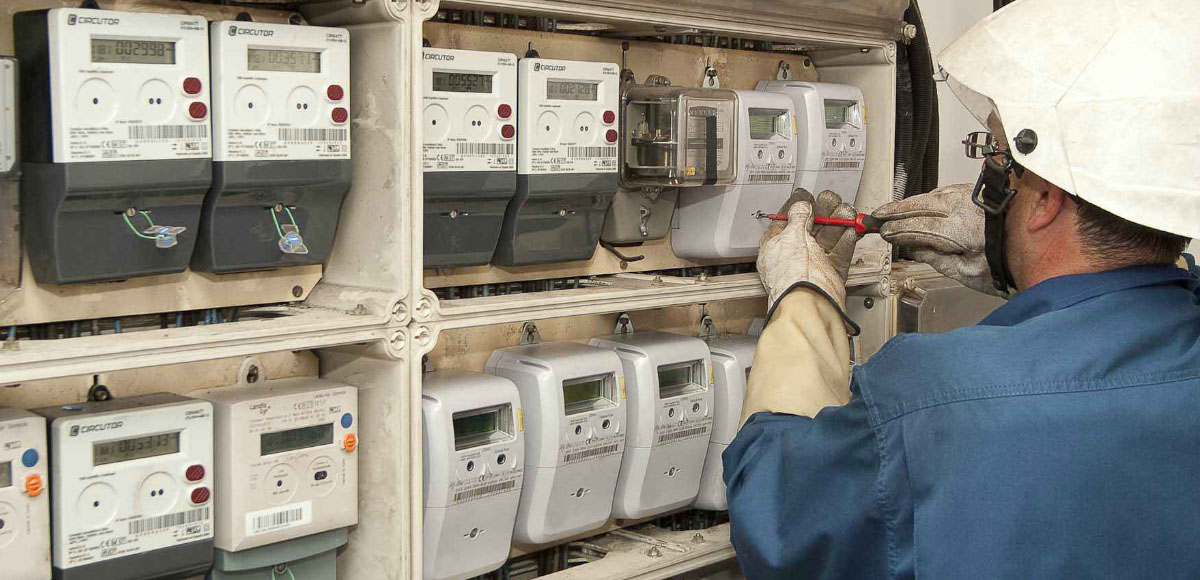
Digital meters are devices that measure your electricity consumption. We have been replacing traditional meters with digital meters in recent years. Digital meters are much more reliable and easier to maintain. Here is some information about the types of meters and their characteristics.
{{content.phone.title}}
{{content.phone.text}}
{{content.phone.phoneText}}
{{content.form.title}}
{{content.form.text}}
{{content.form.success.title}}
All electricity meters in Spain are now digital, except in some very specific cases. We have been replacing traditional analogue meters since 2010 to offer consumers a better, faster and safer service.
Let's look at the elements that characterise digital meters.
Advantages of digital meters
Digital meters are a substantial improvement on analogue meters, as they feature technology with the following benefits:
- Readings are taken and displayed in real time, so you know what you are spending and can adjust your consumption based on this information.
- They are much more reliable than analogue meters, as they are more difficult to manipulate.
- They are smart and can be managed remotely: they can be read remotely, making it easier for companies and providing consumers with information when they are not at home or in their business.
- They offer the possibility of billing in periods, applying different tariffs depending on the time or day. Tariffs that vary depending on the time include Conecta 3 Periods Tariff, which organises your energy consumption into three bands.
What types of digital meters are there?
There are various types of meters, with the most suitable type depending on the nature of the electrical installation or the service provided in each case.
Type 1 meters
These are for: connection points where the contracted power in any period is 10 MW or more; connection points of generation facilities with nominal apparent capacity of 12 MVA or more; and connection points where the annual electricity interchange is 5 GWh or more.
Type 2 meters
These are for connection points where the contracted power in any period exceeds 450 kW; connection points of generation facilities with nominal apparent capacity of 450 kVA or more; and connection points where the annual electricity interchange is 750 MWh or more.
The remote measurement system must be operational for type 1 and type 2 meters. They are used in large installations.
Type 3 meters
This group includes meters that do not meet the requirements of the other groups. Readings can be taken manually or through a platform.
Type 4 meters
These are for connection points where the contracted power in any period exceeds 15 kW but does not exceed 50 kW.
These are the meters usually found in business premises and establishments.
Type 5 meters
These are for connection points where the contracted power in any period is 15 kW or less and connection points of generation facilities with rated power of 15 kVA or less. This is the most common type of meters in homes. They are often located in suitable places, such as meter rooms, halls, basements or garages.
Information from type 5 meters is transferred through the distributor from a platform and is expressed in pulses.
What does my digital meter have?
We will focus on type 5 meters, as these are the most common and are designed for households. Your digital meter has:
- A display: on which you can check your reading in real time, with information on electricity and contracted power.
- A consumption indicator: this is a light that flashes when consumption data is being recorded, i.e. it shows you are consuming electricity at that moment.
- A cut-off button: this will trip If you exceed the power contracted. It is, therefore, essential to contract a suitable level of power for your needs.
- A serial or identification number: this is information about your device. It is linked to your electricity contract, associating the consumption with the holder of the contract.
Some recommendations for your digital meter
The holder of the contract is responsible for ensuring the meter is used correctly and is in good condition. The meter must never be manipulated. Hacking with specialist software and bypassing are forbidden by law. You must contact your electricity company if you detect any issues.
If you detect a reading error, the distribution company is responsible for remedying the error and adjusting the bill. If this happens, you can send a meter reading to your distributor.
Comparison of Electricity and Gas Tariffs
You don't need to adapt to Endesa's tariffs because they adapt to you. If you go to our catalogue you can compare the different tariffs for yourself. Or if you prefer, you can answer a few questions and we will take care of comparing all the different electricity and gas tariffs and then make a customised recommendation.
Do you want to see all our offers?
Spend a minute to find the product which best adapts to you:
Discover the rate that best suits your consumption profile with our smart recommender
Spend a minute to find the product which best adapts to you:
Discover the rate that best suits your consumption profile with our smart recommender
{{content.phone.title}}
{{content.phone.text}}
{{content.phone.phoneText}}
{{content.form.title}}
{{content.form.text}}


