


If you prefer to view the website always in english, click here.
What are the cheapest new electric cars of 2026?
Finding an electric car in Spain for less than €20,000 was an almost impossible task until just a year ago. Today, a quick search on the main automotive websites shows that electric mobility is becoming more accessible every day. We present 8 models below this price point, including 3 small city cars that come in under €10,000. And, most importantly, we give you some tips on how to save more on your purchase, including the current 2026 Auto+ Plan.
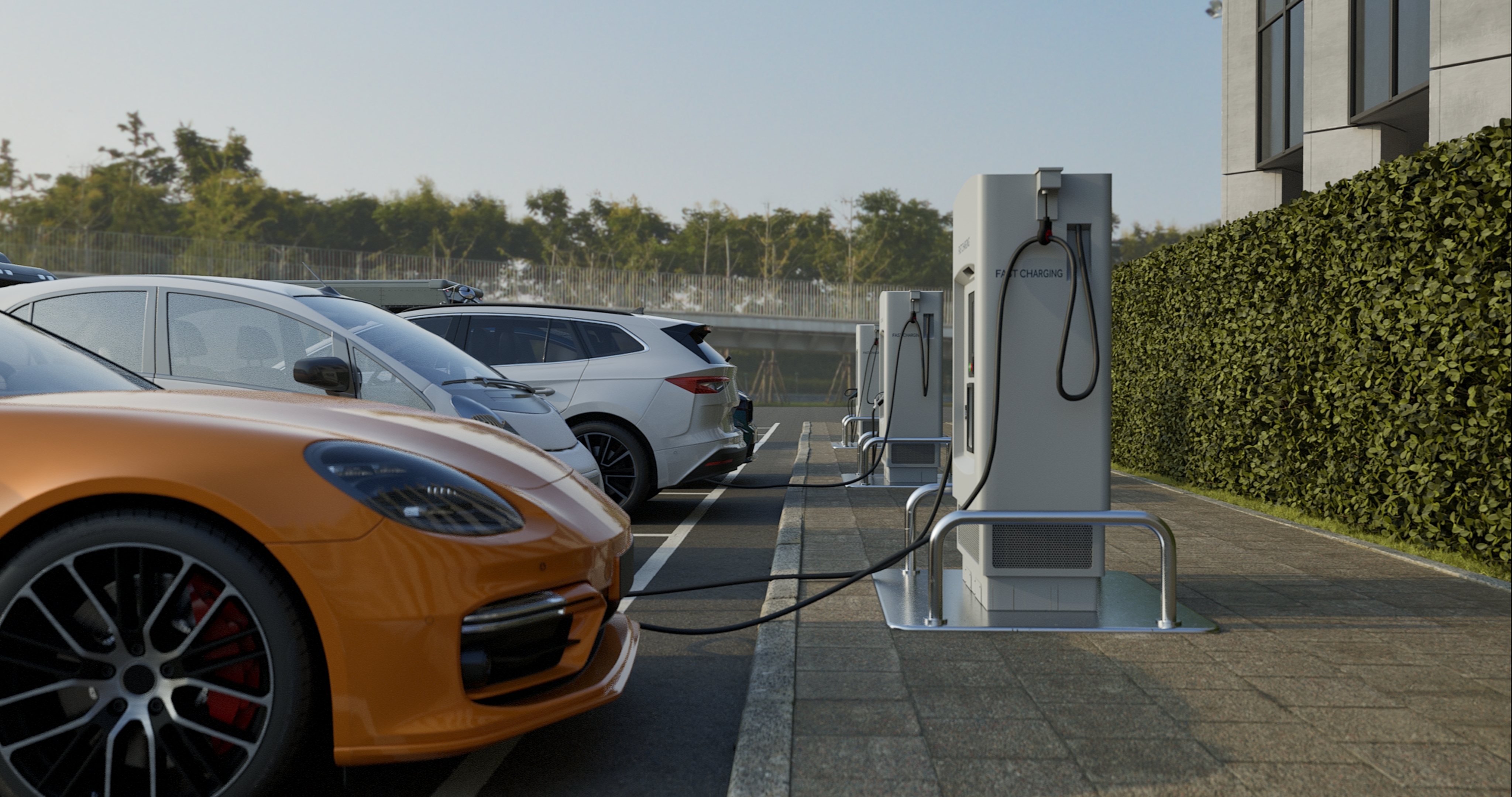
How we compared the best-priced electric cars
To compile the ranking, we focused on the official base price set by the brand, without taking into account possible offers, discounts or promotions that you might be able to negotiate with dealerships. We have also excluded current grants for purchasing electric cars, such as CAE discounts or the Auto+ Plan, which replaces the MOVES III Plan this year, and which we will discuss later in this article.
We have also omitted the different versions or trim levels that, depending on the manufacturer, can alter the final price. Thus, the selection consists of the most affordable versions of each model for the purchase of your new vehicle, bearing in mind that these prices are a general guide.
The 8 cheapest electric cars in 2026 for less than €20,000
| Position | Model | Estimated base price*: | Range / features: |
|---|---|---|---|
| 1 | Citroën Ami Standard | From 8.490 € | Up to 75 km / two-seater urban quadricycle |
| 2 | Fiat Topolino | From 9.890 € | Up to 75 km / two-seater urban quadricycle |
| 3 | Mobilize DUO 45 NEO | From 9.990 € | Up to 161 km / two-seater urban quadricycle |
| 4 | Dacia Spring Expression | From 16.245 € | Up to 228 km / 4-seater hatchback |
| 5 | Leapmotor T03 Standard | From 17.700 € | Up to 225 km / 4-seater hatchback |
| 6 | Citroën e-C3 You | From 19.550 € | Up to 320 km / 5-seater hatchback |
| 7 | Renault Twingo E-Tech | From 19.862 € | Up to 263 km / 4-seater hatchback |
| 8 | BYD Dolphin Surf Active | From 19.990 € | Up to 322 km / 4-seater hatchback |
*Prices may vary due to discounts, grants, promotions, financing, etc. Date checked: 28 September 2026.
Why might a car advertised at a certain price end up costing more?
It happens more often than we would like: you choose the electric car you can afford, but when it comes to buying it, the price is no longer the same. Why?
- This difference can mainly be down to three reasons:
- The advertised price was linked to a promotion with an expiry date.
- The offer required financing, and you have to add the interest and fees, or even the possible compulsory insurance associated with it.
Registration taxes and VAT, as well as transport or admin fees, might not have been included in the initial price.
This makes it essential to always ask at the point of sale what conditions are attached to the price they are offering. And, even better, to get them in writing. Because the differences in price between one dealership and another can, when it comes down to it, hide some less pleasant surprises.
Can you buy a new electric car for under €10,000 in 2026?
The answer is yes. During 2026, competition among electric car manufacturers – both European and from the rest of the world – has intensified even further. And Spain is one of the most attractive markets for them, with around 950,000 electrified vehicles on the road as of mid-year, according to the Institute for the Diversification and Saving of Energy (IDAE).
Perhaps the most notable development has been the increase in city-friendly options, which are perfectly adapted to daily driving and accessing low-emission zones. These are 'mini' segment models: small, two-seater urban quadricycles with prices starting at €8,500.
What electric cars are available for under €20,000 in 2026?
Alternatives have also multiplied this year in the €10,000 to €20,000 price bracket, featuring larger cars with seating for 4 or even 5 people, plus a boot.
These hatchback models offer a range that can exceed 300 km, combining city and open road driving. They highlight the unstoppable advance of electric technology – often of European origin – facilitating access to features that were until recently reserved for vehicles costing €30,000 or more.
How much can the Auto+ 2026 Plan lower the price of an EV?
Following the end of the MOVES III Plan in 2025, EV grants this year have primarily been channelled through the Auto+ Plan.
During 2026, the plan's grants can reach up to €4,500 for passenger cars. However, this maximum amount varies depending on the type of vehicle you buy. And the exact calculation also depends on the 'EEE' criteria:
- Electric: differentiating between fully electric and hybrid vehicles.
- Economic: varying according to the purchase price of the vehicle.
- European: offering a bonus for European-made models.
Thus, the maximum grant table for private, non-commercial vehicles is as follows:
{{content.phone.title}}
{{content.phone.text}}
{{content.phone.phoneText}}
{{content.form.title}}
{{content.form.text}}
{{content.form.success.title}}
|
Vehicle type: |
Maximum grant: |
|---|---|
|
M1 (passenger cars) |
€4,500 |
|
N1 (vans and light trucks) |
€5,000 |
|
L3e / L4e / L5e (motorcycles) |
€1,100 |
|
L6e / L7e (quadricycles) |
€1,500 |
How does the Auto+ Plan affect the income tax deduction?
Until 31 December 2026, provided you meet the requirements, purchasing an EV can entitle you to a 15% deduction of its price on your taxable income.
This benefit, which should never be presented as a direct discount on the price, is compatible with any grants you receive from the Auto+ Plan. However, to calculate your deduction, you must subtract any grants received from the cost of the vehicle.
Why does the Auto+ Plan grant vary depending on the vehicle?
With the Auto+ Plan grants, the Ministry of Industry and Tourism aims to promote electric mobility by balancing each vehicle's emission levels, transport capacity and, importantly, its impact on European production.
Transport capacity explains why a motorbike, which typically carries a single person, is eligible for a maximum grant of €1,100, while a large van can qualify for up to €5,000. In practice, their impact on sustainable transport and emission savings is different.
Similarly, within these maximums, the final grant percentage you receive varies according to the EEE factors. These percentages are cumulative until the limit is reached, if applicable. For example:
- A 100% electric passenger car is guaranteed 50% of the maximum grant, compared to a plug-in hybrid, which only receives 25%.
- If your fully electric car costs less than €35,000, it accumulates an additional 25% of the maximum grant. If its price is between €35,000 and €45,000, it accumulates 15%.
- If final assembly took place in a European Union factory, it can add another 15% of the €4,500 maximum grant limit.
- And if the battery and its main components were manufactured in the EU and contain a significantly lower percentage of mercury than required, the remaining 10% of the total grant is added.
What are the CAE discounts offered by some brands?
Energy Savings Certificates (CAEs) are not actually a discount. They are a way to monetise the energy savings linked to buying an electric car, or to energy efficiency measures in the residential and business sectors.
It is important to know that you are the potential beneficiary of the CAEs, not the brand or the dealership. And whether you can claim them, as established by the system's regulations, depends on several factors:
- You have owned a combustion-engine or hybrid vehicle for at least 2 years, and you trade it in when buying a fully electric car.
- Both the new and old vehicles are registered in your name.
- The vehicle you are replacing has a valid MOT and registration certificate.
- The delivery and registration deadlines required by the regulations are met.
- You do not use the vehicle for commercial activities.
Therefore, brands or dealerships can advise and assist you in managing your CAE application process, bearing in mind all the conditions you must meet to obtain them.
Cash price or financing: compare the total cost
It might seem surprising that a car is advertised at a lower price when bought on finance rather than paid for in cash. The reason is that the dealership or the brand usually receives commissions from the financial institutions, as well as from any insurance policies tied to the loan.
If you plan to finance the purchase of your new EV, you should not confuse these offers with the cash prices. In these cases, we recommend comparing not only the vehicle's price but also the small print of each financing option. You may also want to compare those conditions with the terms you could secure through a direct loan from your bank.
Choose your electric car based on your needs
This is how it should work, not the other way around: decide what you will use your new EV for, and then compare prices among similar models.
Simply because it is affordable, a cheaper car might not always be the best fit for you. First and foremost, because of its size. But also because the battery capacity might not suit your plans, or you might prefer to have certain features and finishes typical of higher-end ranges.
The electric vehicle catalogue has evolved just as quickly as prices have dropped, ranging from cute mini models to the most powerful SUVs or luxury brands. And with more choices available, it's best to make your decision without losing sight of your actual needs:
Low-cost electric cars for the city
As we saw in the ranking, the options under €10,000 are small, 2-seater vehicles with barely any boot space and limited range. They can be ideal for zipping around urban environments with ease, but not so much for long-distance journeys or taking on holiday.
Affordable mobility for mixed use: city and open road
A bit more boot space, room for four people and a range of over 200 kilometres. But all for under €20,000. Already in the M1 passenger car category, several brands have hit the mark with affordable models that, in addition to being convenient for city driving, allow you to enjoy planned road trips.
The universe of electric saloons
Many people feel – and the industry has understood this – that making the leap from a combustion engine to an electric car shouldn't mean sacrificing comfort, independence or the pleasure of driving a great car. When the budget stretches to €25,000 or €30,000, new models pair zero emissions with a greater number of features, technological advances, range and design. As a result, saloons, along with estate cars and even SUVs, make up the lion's share of the market, combining more accessible versions with high-end vehicles that can exceed €100,000.
Real range vs WLTP: which one matters?
WLTP is a long acronym: Worldwide Harmonised Light Vehicle Test Procedure. It consists of a series of extensive tests to determine the official range of an electric vehicle. Tests are carried out both in the laboratory and outdoors, simulating the conditions, weights, speeds and journeys of everyday driving. This helps ensure that all manufacturers measure the distance their models can cover on a fully charged battery in the same way.
However, you will rarely drive under those exact conditions. The weather, road surface quality, traffic jams, the load you are carrying, using the air conditioning or your driving style are all factors that dictate real-world range, sometimes reducing the WLTP figure by between 15% and 30%. And since this is something you won't find out until you are behind the wheel of your new car, it is useful to check reviews and industry magazines to get an idea of the potential differences.
How much does it cost to charge the cheapest electric cars?
One of the defining features of the most affordable electric cars is their smaller battery capacity. The 5.5 kWh battery of a quadricycle might only take 4 hours to charge to 100% at home, whereas a 4-seater hatchback priced around €20,000 typically has a 30 kWh battery, which multiplies both the time and the cost of a full charge.
On the other hand, a constant challenge for the sector is reducing energy consumption per kilometre travelled. And this is true for the smallest, most affordable vehicles, just as it is for the largest or most luxurious ones.
In any case, calculating the price of each kWh you charge depends on two other factors, regardless of the motor's efficiency or the battery's capacity:
The type of tariff you have for charging your EV at home
As a general rule, charging at home is much cheaper than doing so at a public charging station. But the savings can be multiplied depending on the tariff you have at home.
For example, if you have a time-of-use tariff like Endesa's Conecta Tres Periodos, charging your vehicle overnight can be 50% cheaper than doing it during peak hours. In practical terms, that means paying €2.80 for a full charge of a Citroën e-C3 You, instead of €5.60.
And if you don't want to – or can't – keep an eye on the clock, solutions like the Recarga en Casa tariff allow you to charge enough for up to 15,000 km a year for a monthly flat fee of around €25.
The charging mode you choose when charging on the road
Everything changes when you charge your EV away from home. With the exception of free points in certain car parks and supermarkets, charging on the road multiplies the cost per kWh.
Prices also vary here depending on the charging speed you choose: higher-power points are faster, but the cost per kWh or minute of charging is higher.
In these cases, planning your journeys well and choosing where and when to stop to recharge can have a very positive impact on your wallet. For this, apps like Endesa On Your Way become your best co-pilot.
Frequently asked questions about cheap electric cars in 2026
Which is the cheapest electric car in Spain in 2026?
Based on our research, the Citroën Ami Standard is currently the most affordable electric car. It is a two-seater quadricycle with an estimated base price of €8,490. However, prices may differ at the time of publishing this article.
Are there electric cars for under €15,000?
Yes. They generally fall into the L6e and L7e categories, which are small electric vehicles designed for urban use.
Which electric cars can be bought for under €20,000?
The Dacia Spring Expression, Leapmotor T03 Standard, Citroën ë-C3 You, Renault Twingo E-Tech and BYD Dolphin Surf Active are some of the models we have found for under €20,000. The trend suggests that these types of models will become increasingly common, given their versatility for alternating between urban trips in low-emission zones and having sufficient range to hit the open road.
Do the prices advertised by brands include the Auto+ Plan?
It depends on the brand. Some deduct the grant from the advertised price, while others list all possible bonuses separately.
Do all electric cars receive €4,500 from the Auto+ Plan?
No. Each vehicle type has a maximum grant ranging from €4,500 down to €1,100. Additionally, the final grant depends on the percentages that apply to the model based on the EEE criteria: degree of electrification, price, and manufacturing in the European Union.
What is the relationship between an EV's price and its range?
The relationship is direct in most cases. A longer range requires a more expensive battery, and that impacts the total price of the vehicle. However, other factors also influence the price, such as the finishes, technology, motor power and, sometimes, the brand itself.
Is the Citroën Ami really a car?
The Citroën Ami can be considered a car, although not a passenger car. It is classified as an L6e vehicle, a light quadricycle with a top speed limited to 45 km/h, which can be driven with an AM licence instead of a B1.
What is the difference between a financed price and a cash price?
A financed price involves a loan to pay for the vehicle in instalments. Sometimes this price is lower because it doesn't include the interest and other costs tied to the loan. The cash price refers to paying the total cost of the vehicle at the time of purchase.
What is the CAE discount?
Energy Savings Certificates (CAEs) are not a discount. They offer a way to monetise the energy you save by replacing a combustion engine or hybrid vehicle with a fully electric one. Claiming them depends on the vehicle you are replacing, and not just the model you are buying.
Can I combine the Auto+ Plan with the income tax deduction?
Yes. The Auto+ Plan grants are compatible with the 15% deduction of the vehicle's price (and that of the home charger) on your taxable income.
How much does it cost to charge a cheap electric car?
It depends on the battery. Usually, the batteries in the most affordable electric cars have a smaller capacity, meaning the proportional cost of charging them is lower. But the price per kWh depends on whether you charge it at home or at a public point, the tariff you have and the charging power, among other factors.
Is it cheaper to charge an electric car at home?
Generally, yes. With the exception of free public charging points, charging an EV with your home charger is more economical than using public charging stations.
Take a minute to find the product that best suits you:
{{firstStep.title}}
Take a minute to find the product that best suits you:
{{title}}
You don't need to adapt to Endesa's tariffs because they adapt to you. If you go to our catalogue you can compare the different tariffs for yourself. Or if you prefer, you can answer a few questions and we will take care of comparing all the different electricity and gas tariffs and then make a customised recommendation.
Comparison of Electricity and Gas Tariffs
You don't need to adapt to Endesa's tariffs because they adapt to you. If you go to our catalogue you can compare the different tariffs for yourself. Or if you prefer, you can answer a few questions and we will take care of comparing all the different electricity and gas tariffs and then make a customised recommendation.
Do you want to see all our offers?
Spend a minute to find the product which best adapts to you:
{{firstStep.title}}
Spend a minute to find the product which best adapts to you:
{{title}}
{{content.phone.title}}
{{content.phone.text}}
{{content.phone.phoneText}}
{{content.form.title}}
{{content.form.text}}
{{content.form.success.title}}
Spend a minute to find the product which best adapts to you:
{{title}}
{{content.phone.title}}
{{content.phone.text}}
{{content.phone.phoneText}}
{{content.form.title}}
{{content.form.text}}