


If you prefer to always view the website in English, please click here.
How much energy a tumble dryer uses: kWh, cost per cycle and per month
A tumble dryer's energy consumption depends on its technology and the programme you use for each cycle, but working out how much electricity it uses is simpler than it looks. Since July 2025, the energy label on tumble dryers has shown energy consumption in kWh per 100 cycles. Simply divide that figure by 100 to get the average energy consumption per reference cycle. For example, a tumble dryer rated at 80 kWh/100 cycles uses around 0.8 kWh per cycle. To calculate the cost, multiply that figure by the price you pay for electricity and the number of times you use the appliance each month.
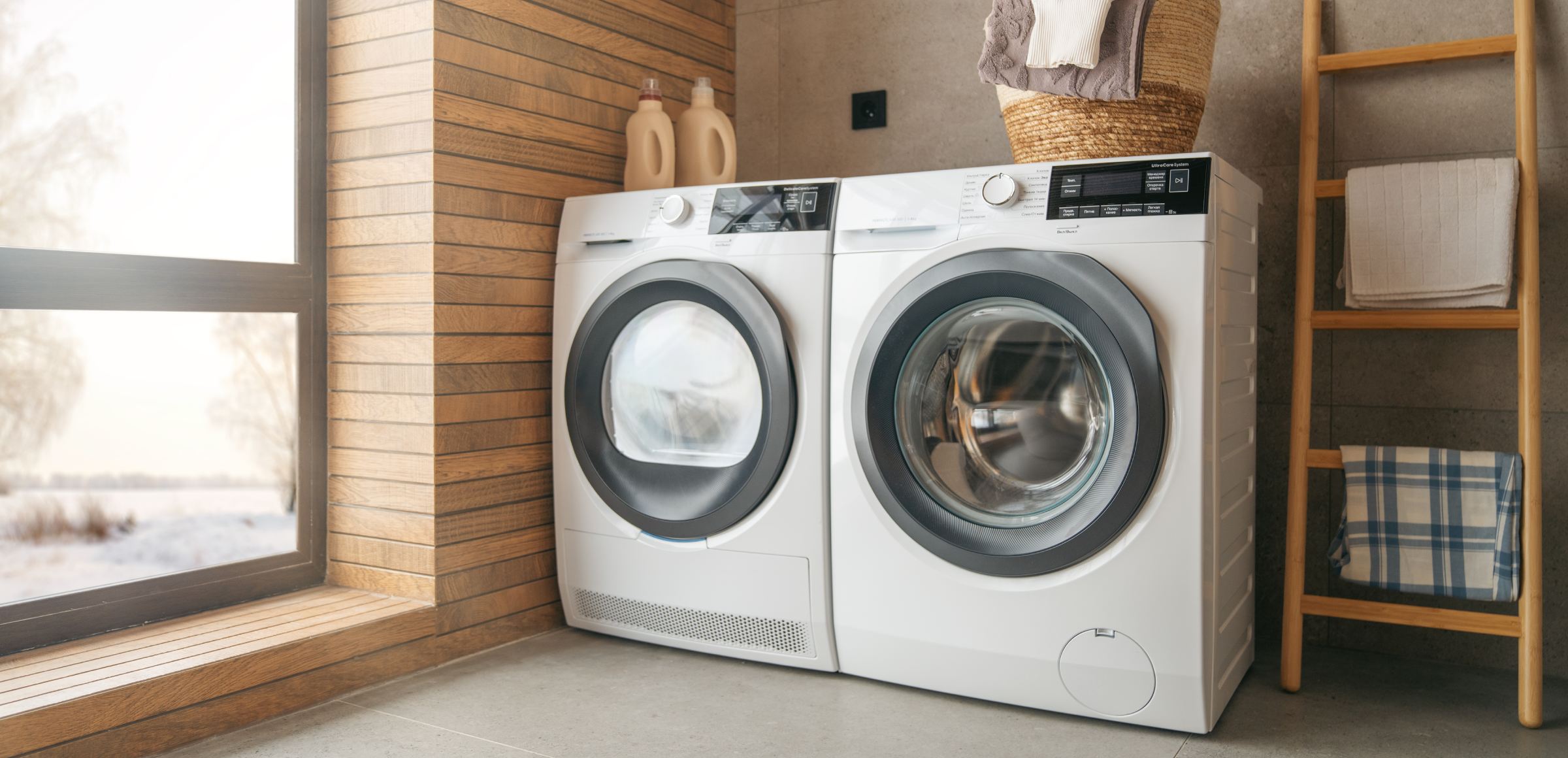
Even so, to work out the actual running cost, we need to take a few more details into account. Many people only look at the maximum power rating, expressed in watts, on the technical data sheet. However, the type of tumble dryer and how heat is reused inside the machine also affect how much electricity it uses during each cycle.
How much energy a tumble dryer uses per cycle and how to read its energy label
A tumble dryer's energy consumption depends on several factors, but the energy label provides a useful benchmark for checking how much it uses and comparing models.
How to read energy consumption on the new energy label
To understand a tumble dryer's consumption in kWh, the first thing to look at is the EU energy label. A few years ago, the EU phased out the old rating classes (such as A+, A++ and A+++) because they were confusing and overwhelming for consumers, replacing them with a new A-to-G scale backed by much stricter efficiency requirements. Since July 2025, tumble dryer energy labels have complied with these new rules. On the label, you will see a series of coloured bars where the letter A stands for the highest energy efficiency and G represents the highest energy consumption. Directly beneath this scale, the key figure to look for is the energy consumption expressed in kWh/100 cycles.
The label also features a QR code that you can scan to access the European Product Registry for Energy Labelling (EPREL) and check detailed information on programme duration, noise levels in decibels and condensation efficiency.
How to convert kWh/100 cycles into consumption per drying cycle
To turn the figure on the label into a number you can use in everyday life, the method is very straightforward. The label shows the total energy used over 100 cycles. The calculation therefore simply involves dividing the figure shown by 100. For example, if the label states 150 kWh/100 cycles, each reference cycle uses 1.5 kWh. If the model is highly efficient and states 80 kWh/100 cycles, it will use 0.8 kWh per cycle.
With your tumble dryer's specific figure to hand, you have the baseline you need to know its energy consumption every time you open the drum door.
Does your tumble dryer use the exact amount shown on the label?
Not always. The figure shown on the official energy label serves as a standard benchmark for comparing models, but actual consumption at home depends directly on how you use your appliance, among other factors.
Laboratory tests are carried out under very specific conditions. In everyday household use, however, factors such as mixing garments made of different fabrics, loading the drum unevenly or putting laundry in without a thorough spin cycle beforehand will cause the moisture sensor to lengthen or shorten the cycle, increasing or decreasing the kWh used compared with the theoretical figure.
Can you calculate energy consumption by looking at the wattage?
Trying to work out how much electricity a tumble dryer uses simply by looking at its maximum power rating, expressed in watts (W), is a common mistake, as a model may state a power rating of 2,000 W, for example. However, that does not mean it will use 2 kWh for every hour it runs: the wattage reflects the maximum power the tumble dryer can draw during brief peak moments. Over the course of a full cycle, the machine does not run continuously at 100% capacity. Instead, its thermostats and motors modulate energy use according to the temperature inside the drum. For this reason, the only reliable way to know how much energy it uses is to check the kWh per cycle rather than the power rating in watts.
How much does it cost to run a tumble dryer? Per cycle, per month and per year
The cost of running a tumble dryer depends not only on the energy required for each cycle, but also on how often you use it and the price of your electricity.
How much does it cost to run a tumble dryer once?
The cost per cycle of a tumble dryer depends on the technology it uses and the price per kWh on your electricity tariff. To estimate how much it costs to run the tumble dryer, multiply the kWh used in that cycle by the price of electricity (€/kWh).
Taking data from several manufacturers and the price under Endesa's Luz 24h Online tariff for October 2026 (€0.166990/kWh) as a benchmark:
- Heat pump tumble dryer (1.5 kWh/cycle): 1.5 × 0.166990 = €0.25 per cycle.
- Traditional condenser tumble dryer (3.8 kWh/cycle): 3.8 × 0.166990 = €0.63 per cycle.
- Older vented tumble dryer (4.8 kWh/cycle): 4.8 × 0.166990 = €0.80 per cycle.
How much energy does a tumble dryer use per month?
To calculate your tumble dryer's monthly consumption, you first need to establish an average usage frequency. The European Commission sets an annual average of 107 loads per year. That works out at around 9 loads a month. Using the same figures as in the previous calculation, we can estimate the following:
- Heat pump: 9 cycles x €0.25 = €2.25 per month.
- Condenser: 9 cycles x €0.63 = €5.71 per month.
- Vented: 9 cycles x €0.80 = €7.21 per month.
How much energy does a tumble dryer use per year?
Once again, we will use the same consumption and price figures to project the estimated running cost over 12 months (107 loads per year):
- Heat pump: 107 cycles x €0.25 = €26.75 per year.
- Condenser: 107 cycles x €0.63 = €67.41 per year.
- Vented: 107 cycles x €0.80 = €85.60 per year.
Usage frequency can matter just as much as efficiency
The overall financial impact on your household comes down to a combination of two variables: the efficiency of the machine and how often you run it. A household that uses an inefficient tumble dryer just once a fortnight will spend less over the year than a large family that runs an A-rated tumble dryer every day. Optimising your habits and waiting until you have a full load is therefore just as important as choosing an energy-efficient appliance.
Calculate how much it costs to run your tumble dryer
You can work out your own exact cost in under a minute using this simple formula:
Cost per cycle (€) = kWh per cycle x Price per kWh on your bill (€)
Monthly cost (€) = Cost per cycle (€) x Number of drying cycles per month
To find out the exact price you pay for electricity, check the 'energy charge' (término de energía) section on your latest electricity bill or check your energy supplier's mobile app.
Where to find your tumble dryer's exact energy consumption
If you want to check whether your tumble dryer is using too much electricity or running within normal factory parameters, there are two main ways to do so:
- The technical data sheet: you can find the theoretical consumption per cycle in the instruction manual or by looking up your exact model on the rating plate inside the door frame.
- Home energy monitors: Plugging a power meter (wattmeter) between the wall socket and the tumble dryer lets you monitor the real-time consumption in kWh and cost in euros of a specific cycle at home.
- InfoEnergía: If you are an Endesa customer, this tool helps you break down the approximate energy use of your household appliances based on your habits.
Which type of tumble dryer uses the least energy and how much can you save by upgrading?
Not all tumble dryers use the same technology or require the same amount of energy to dry your laundry. Read on to learn the differences between the main types of tumble dryer before buying a new one.
Why are almost all new tumble dryers heat pump models?
If you visit an appliance store today, you will notice that the vast majority of models on display are heat pump tumble dryers. This is no coincidence. Traditional tumble dryers (vented and condenser models) use high-consumption electric heating elements to heat air from scratch and either vent or condense the moisture.
Heat pump tumble dryers, by contrast, use a closed-loop system very similar to that of an air conditioner or refrigerator. Instead of generating heat using heating elements, they use the phase changes of a refrigerant fluid to absorb moisture from the clothes and reuse the heat generated over and over again. They also operate at lower temperatures than conventional dryers, minimising energy consumption and taking gentler care of delicate garments.
How much does energy consumption vary between an old tumble dryer and a modern one?
The difference in energy consumption between technologies is striking. An older tumble dryer uses a lot of electricity because its electric heating elements draw high wattage to raise the temperature. When comparing heat pump vs. condenser tumble dryers, for example, a heat pump system uses two to three times less electricity per drying cycle.
Is an old A+++ rating equivalent to a current A rating?
No. This is one of the questions that confuses consumers the most. When the new European energy labelling system came into force, the scale became much tougher. Consumption thresholds were tightened so much that a model previously awarded the top rating under the old system (A+++) was reclassified as class C or B on the new label. Class A on the new label was initially left empty to give manufacturers room for technological improvement. As a result, a current A-rated tumble dryer represents a higher level of efficiency than an A+++ model from a few years ago.
Does a washer-dryer use the same amount of energy?
Not necessarily. A washer-dryer combines both functions in a single appliance, so it is important to distinguish between the energy consumption of a wash cycle and that of a complete wash-and-dry cycle. The latter requires energy both to wash and to dry the laundry. Furthermore, electricity and water consumption during the drying phase depends on the technology used and the specifications of each model. Some washer-dryers use water during the drying phase, whereas others use different systems. Therefore, to compare them fairly with a standalone heat pump tumble dryer, the best approach is to check the energy labels and compare the consumption of equivalent cycles.
How much would you save with a more efficient tumble dryer?
If you replace a high-consumption older condenser tumble dryer (around 4 kWh per cycle) with a more efficient modern heat pump tumble dryer (around 1.5 kWh per cycle), your direct energy savings could be around 60% per cycle. To put this into perspective, based on an average of 107 loads per year, your annual running cost would drop from around €67.41/year to just €26.75/year – an estimated direct saving of €40.66 a year on your electricity bill.
How to work out whether replacing your tumble dryer is worth it
To assess whether it is worth retiring your old machine even if it still works, apply what we call the 'payback period calculation':
1. Calculate your annual savings: subtract the estimated annual running cost of the new efficient tumble dryer from the annual running cost of your current dryer.
Annual savings = Estimated cost of your current tumble dryer – Estimated cost of the new tumble dryer
2. Calculate the payback period: divide the purchase price of the new tumble dryer by the annual savings achieved.
Payback period (years) = Price of the new tumble dryer (€) / Annual bill savings (€)
So, if a mid-range heat pump tumble dryer costs €500 and saves you €70 a year on electricity, it will pay for itself in just over 7 years. Given that the average lifespan of these appliances is between 11 and 12 years according to the Spanish consumers' organisation (OCU), replacing it makes financial sense.
What factors affect a tumble dryer's actual energy consumption?
A tumble dryer's energy use does not depend solely on its technical specifications. The size of the load, how damp the clothes are when they go into the drum and the programme selected also play a part, among other factors:
- How damp the laundry is: the more thoroughly your clothes are spun in the washing machine, the less time and energy the tumble dryer will need to dry them.
- Tumble dryer capacity: a 9 kg model may use slightly more energy per cycle at full load, but it dries more laundry in one go and avoids extra cycles. A half load will not use half the energy of a full load, as the tumble dryer still needs a baseline amount of energy to run regardless of how much laundry is inside.
- The Eco programme: this is designed to reduce energy consumption, usually by using lower temperatures and longer cycles.
- Quick programmes: these do not necessarily use less energy just because they are shorter. Their efficiency depends on the load size, the technology and the programme settings.
- Dryness level: moisture sensors detect when the laundry has reached the selected dryness level and stop the cycle automatically to prevent unnecessary running time. The 'iron dry' setting usually uses less energy than 'cupboard dry', while 'extra dry' can require more time and energy.
How to reduce tumble dryer energy consumption through proper use and maintenance
How you use and maintain your tumble dryer can make a big difference to how much energy it needs to dry your clothes. Paying attention to load size, choosing the right programme and keeping its components clean are all key to avoiding unnecessary energy consumption.
A dirty filter can increase energy consumption
The lint filter traps loose fibres shed by clothes as the drum tumbles. If it is not cleaned regularly, the layer of lint restricts the flow of warm air, forcing the fan and motor to work harder against greater resistance. A blocked filter can noticeably increase electricity consumption and make the cycle take longer than necessary. Experts recommend cleaning the door lint filter after every drying cycle.
Why does maintaining the condensation system matter?
In condenser and heat pump tumble dryers, moisture extracted from the laundry turns into water and collects in a removable tank or drains away through a hose. Keeping the condenser or heat exchanger clean is vital to maintaining as-new efficiency. Many modern heat pump tumble dryers feature self-cleaning systems that rinse the internal filters automatically. If your model does not have this feature, you should remove and rinse the condenser under the tap at least once a month.
Can you save money by using the delay timer on your tumble dryer?
Yes, provided you are on a time-of-use electricity tariff. Using the delay start function so the dryer runs during off-peak hours (usually overnight and at weekends) or during the cheapest periods on your tariff will lower the final cost in euros, even though the machine uses the exact same number of kWh.
How much do you save by air-drying your clothes?
Hanging your washing out in the sun – or sun-drying – delivers a 100% saving, as it costs you nothing at all. Skipping the tumble dryer altogether during the spring and summer months can make a noticeable difference to your household budget. What is more, on hot days, hanging washing indoors can help cool rooms slightly through the endothermic evaporation of water, reducing the need to switch on the air conditioning at the same time. During colder months or in areas where clothes take days to dry, however, drying laundry indoors creates damp in the home. In these cases, using an energy-efficient heat pump tumble dryer is far more advisable.
How to find out how much energy your tumble dryer actually uses at home
If you want to check with maximum accuracy how much energy your tumble dryer uses under real-life conditions in your home, the most reliable method is to use a plug-in energy monitor. These small devices plug directly into the wall socket before your tumble dryer's plug, showing you the real-time wattage, the cumulative kWh at the end of the cycle and the cost in euros.
If you are an Endesa customer and do not want to buy an extra device, you can use our monitoring tools via the Customer Area or the Endesa Clientes app, which lets you view your hourly consumption graph on the days you run the tumble dryer. By comparing consumption during an hour when the appliance was running against an hour when it was off, you can see how much energy it was using.
Other ways to get the most out of your appliances and avoid surprises at the end of the month include making sure you have the contracted capacity you actually need at home and choosing a tariff that suits your routine. If you tend to save up your laundry for the weekend, signing up for a time-of-use tariff could be ideal for you. If, on the other hand, you cannot stick to specific time bands, a tariff with no time-based pricing will guarantee that you always pay the lowest possible price for every load of laundry.
Frequently asked questions about tumble dryer energy consumption
How many kWh does a tumble dryer use per cycle?
A modern heat pump tumble dryer uses around 1.5 kWh per cycle. Traditional condenser or vented models use between 3.5 and 4.8 kWh per cycle.
How much does it cost to run a tumble dryer?
Running a tumble dryer costs between €0.25 and €0.80 per cycle, depending on the type of appliance. Based on a reference electricity price of €0.166990/kWh, a heat pump tumble dryer costs around €0.25 per cycle, compared with €0.63 for a traditional condenser dryer and €0.80 for an older vented dryer. These are indicative estimates that may vary depending on the actual consumption of your appliance and the rate on your electricity tariff.
How much does it cost per month?
Based on around 9 loads a month – in line with the European Commission's annual average of 107 cycles – the estimated cost is €2.25 per month for a heat pump tumble dryer, €5.71 for a condenser model and €7.21 for a vented model. Again, these are indicative figures that may vary depending on your appliance's consumption and the price you pay for electricity.
Does a heat pump tumble dryer use less energy?
Yes, heat pump tumble dryers use less electricity than conventional dryers because they reuse heat in a closed-loop circuit instead of generating heat through high-consumption electric heating elements.
Condenser or heat pump?
A heat pump tumble dryer is far superior in terms of energy efficiency, garment care and long-term savings. Traditional condenser models are only worth considering if your upfront budget is very tight or if the dryer will only be used very occasionally.
What does 80 kWh/100 cycles mean?
It indicates the weighted energy consumption of the appliance set by the EU for 100 cycles on the standard programme. To work out the energy used in a single cycle, divide the figure by 100: in this case, 0.8 kWh per cycle.
Is an old A+++ rating equivalent to an A rating?
No. Under the new A-to-G energy label, the requirements are much stricter. A tumble dryer previously rated A+++ usually corresponds to class C or B on the current label.
Does a half load use half the energy?
Not necessarily. Although moisture sensors shorten the cycle duration, the tumble dryer still has to heat the entire drum volume and turn the motor, meaning a half load uses proportionally more energy per kilogram of laundry than a full load.
Does a quick programme use less energy?
No, quick programmes often use more energy per minute because they force the system to reach high temperatures in less time in order to evaporate moisture as quickly as possible.
Does the Eco programme use less energy?
Yes, Eco programmes reduce electricity consumption by operating at more moderate temperatures and extending the drying time gradually to save energy.
Does a faster spin cycle help?
Enormously. A powerful spin cycle extracts most of the water mechanically, cutting the subsequent drying time and saving energy in the tumble dryer.
Do you need to clean the filter?
Yes, it is essential to clean the lint filter after every cycle. A dirty or clogged filter restricts airflow, lengthens drying times and increases electricity consumption.
Does it use less energy at night?
The appliance uses the exact same number of kWh regardless of the time of day. However, if you are on a time-of-use tariff, running it during off-peak hours (at night) will cost you less in euros.
Does a washer-dryer use the same amount of energy?
No, combined washer-dryers generally use more energy and water during the drying phase than a standalone heat pump tumble dryer.
Take a minute to find the product that best suits you:
{{firstStep.title}}
Take a minute to find the product that best suits you:
{{title}}
{{content.phone.title}}
{{content.phone.text}}
{{content.phone.phoneText}}
{{content.form.title}}
{{content.form.text}}
{{content.form.success.title}}
You don't need to adapt to Endesa's tariffs because they adapt to you. If you go to our catalogue you can compare the different tariffs for yourself. Or if you prefer, you can answer a few questions and we will take care of comparing all the different electricity and gas tariffs and then make a customised recommendation.
Comparison of Electricity and Gas Tariffs
You don't need to adapt to Endesa's tariffs because they adapt to you. If you go to our catalogue you can compare the different tariffs for yourself. Or if you prefer, you can answer a few questions and we will take care of comparing all the different electricity and gas tariffs and then make a customised recommendation.
Do you want to see all our offers?
Spend a minute to find the product which best adapts to you:
{{firstStep.title}}
Spend a minute to find the product which best adapts to you:
{{title}}
{{content.phone.title}}
{{content.phone.text}}
{{content.phone.phoneText}}
{{content.form.title}}
{{content.form.text}}
{{content.form.success.title}}
Spend a minute to find the product which best adapts to you:
{{title}}
{{content.phone.title}}
{{content.phone.text}}
{{content.phone.phoneText}}
{{content.form.title}}
{{content.form.text}}