If you prefer to always view the website in English, please click here.
Main differences between electric motors and internal combustion engines
This post was written by Alicia Sornosa @aliciasornosa, journalist and writer, who became the first Spanish woman to travel around the world on a motorcycle in 2011.
{{content.phone.title}}
{{content.phone.text}}
{{content.phone.phoneText}}
{{content.form.title}}
{{content.form.text}}
{{content.form.success.title}}
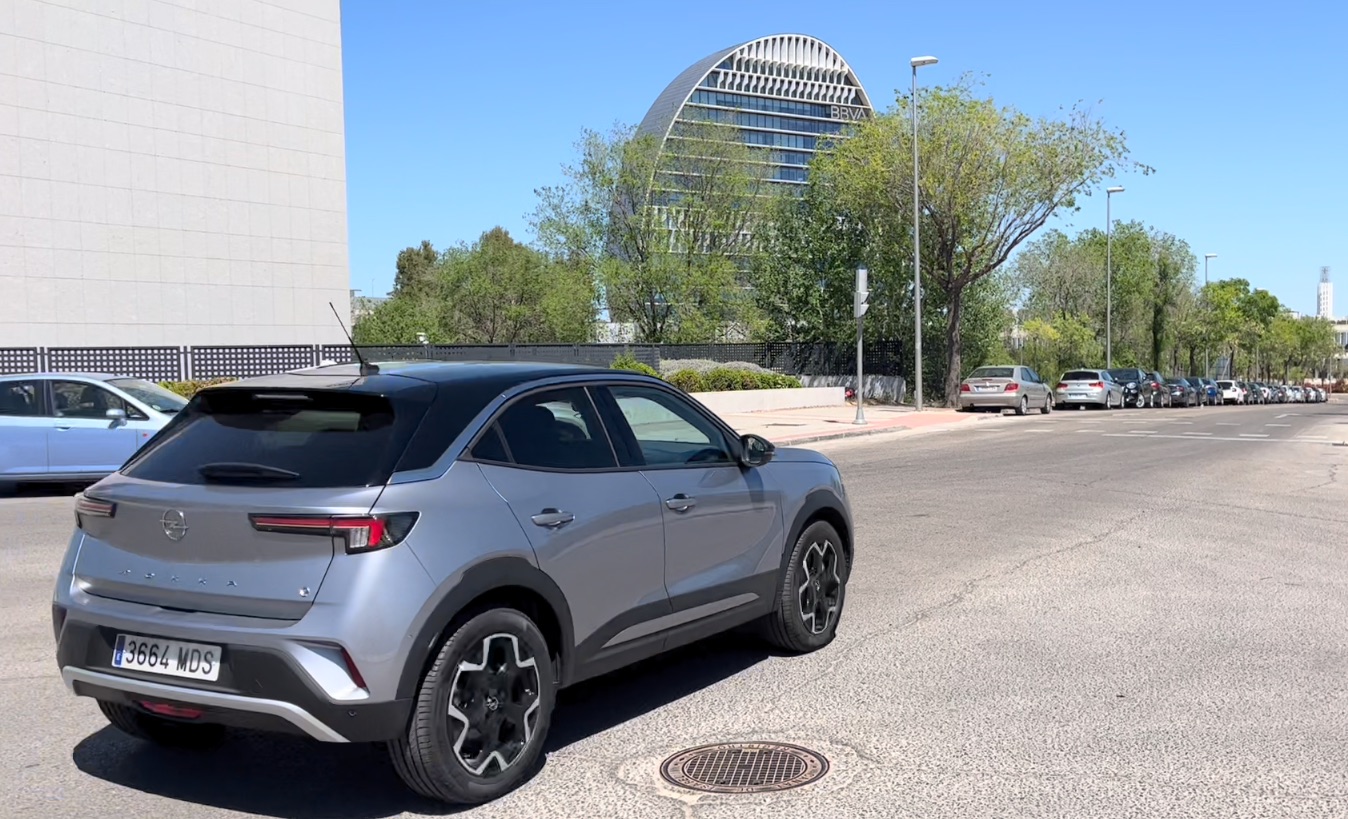
In this post, I would like to clarify a few concepts and encourage you to use electric vehicles in a more efficient way. All of the matters discussed in this post are the same for electric cars and motorcycles, since the concept is the same.
Differences between electric motors and internal combustion engines
The main difference between internal combustion and electric vehicles lies in the source of energy they use. Conventional combustion vehicles use engines that burn fossil fuels, such as petrol or diesel oil. In turn, electric vehicles use motors powered by rechargeable batteries or other sources of electricity, such as grid power or renewable charging systems.
Exterior and interior
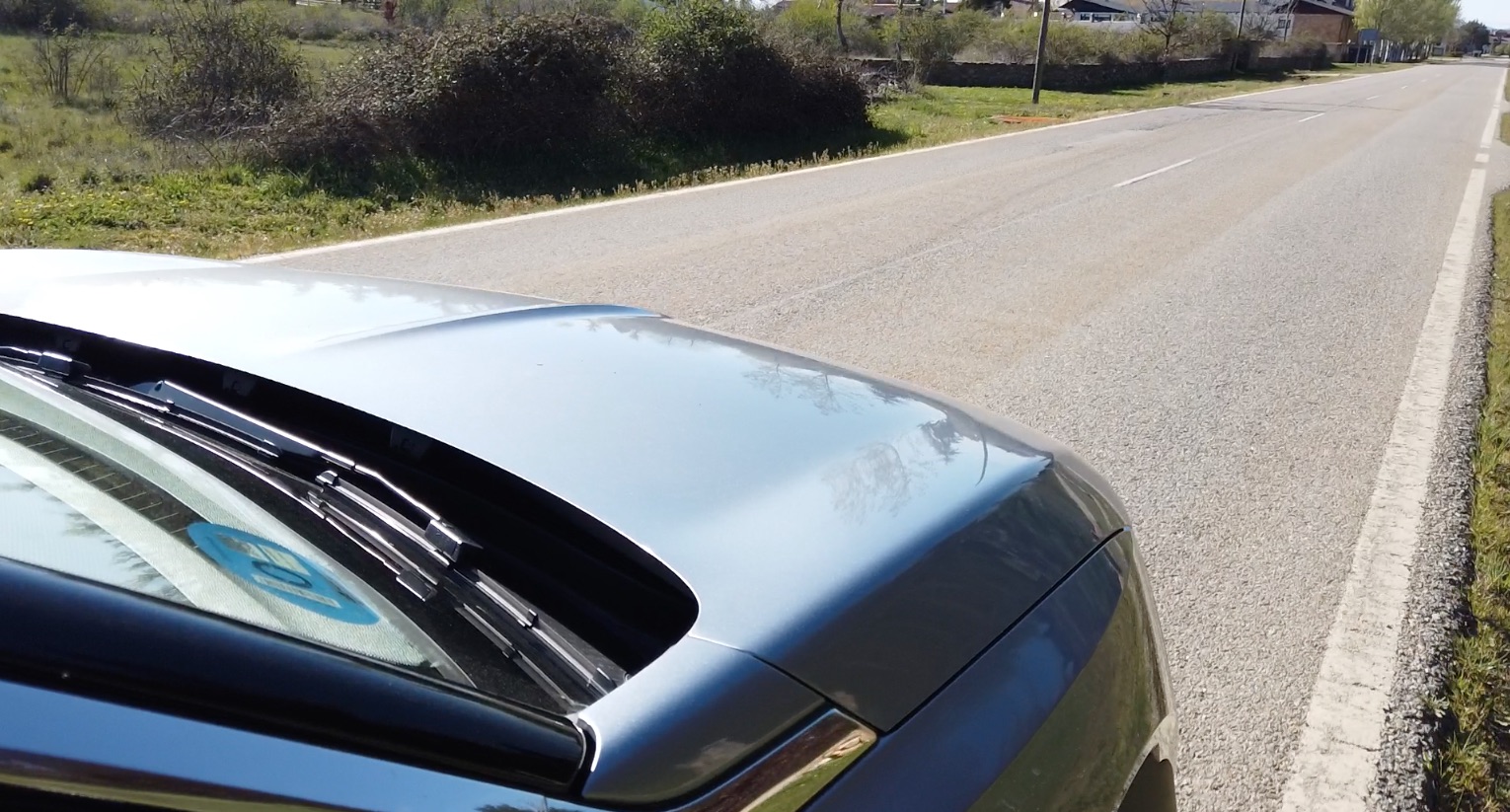
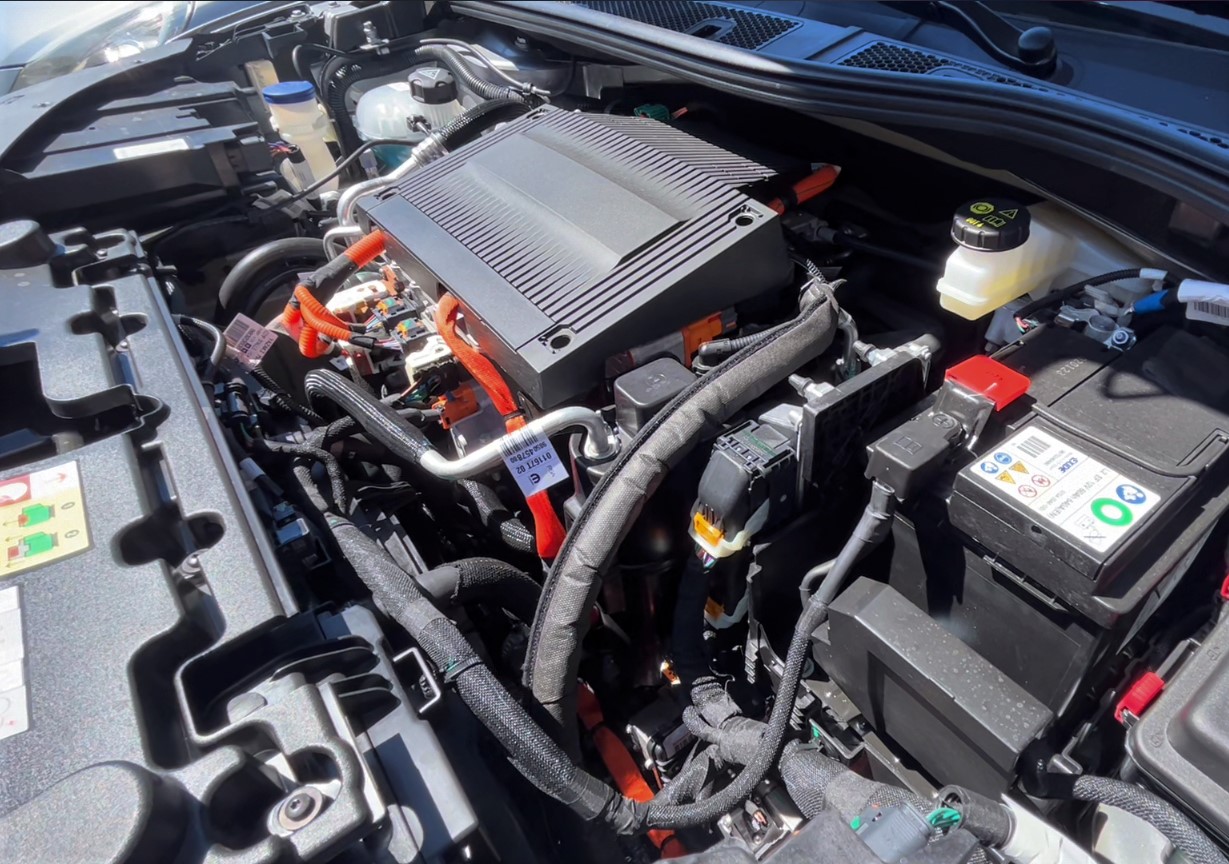
Basically, they differ because of one thing: electric vehicles do not have an exhaust system, although other elements and systems may be found inside. First, there is no conventional engine under the bonnet. Some models of electric cars have a small storage space under the bonnet to carry charging cables, luggage or small items.
Many have less capacity inside the trunk, but they usually feature a small storage space under the false floor to store charging cables.
Another difference is the weight of the vehicle, which is usually much higher in the case of electric vehicles, since the batteries are much heavier than a traditional internal combustion engine.
Mechanical parts
Broadly speaking, internal combustion engines are housed under the bonnet next to a fossil fuel tank, which transforms mechanical energy when the vehicle is started, and which emits polluting gases and particles.
In electric cars, the batteries are mounted on the car's underside. They accumulate electricity that they convert directly into mechanical power, so they do not emit any type of gases or particles, reducing the carbon footprint.
Electrical vehicles usually require less repairs, since the number of parts they use is much less when compared to an internal combustion engine.
Efficiency
An internal combustion vehicle has a greater range for long trips. However, electric vehicles are more efficient, except in rural areas (due to the shortage of chargers). We tend to use our vehicle to travel no more than 40/60 km a day in urban environments, so electric vehicles are the best option for these environments.
In addition, they reduce the noise emissions and vibration levels, so life onboard and outside is much more comfortable. These environments are the ones in which internal combustion engines use up fuel the most and, therefore, the ones in which they contaminate the most.
Driving
- Acceleration: Electric vehicles tend to accelerate faster and more smoothly, due to the higher torque of electric motors.
- Gear changes: Electric vehicles do not require gear changes like internal combustion vehicles.
- Maintenance: Electric vehicles will tend to require less maintenance, but batteries will eventually have to be replaced.
- Power sources: Electric vehicles are powered by batteries, while internal combustion vehicles use fuel, such as petrol or diesel oil.
However, despite this information, we all think the use of these vehicles will soon come to an end.
Recycling
Electric vehicle batteries contain valuable metals, such as lithium, cobalt, and nickel. These materials can be recovered and reused by recycling the batteries, which will prevent the extraction of new raw materials. Batteries are disassembled and broken down into components, and the materials are then recycled, so they can be used to manufacture new batteries or other products.
In turn, in the case of internal combustion vehicles, the focus is more on the recovery of metals, such as steel, aluminium and copper, present in the engine. And bodywork materials and electronic components are recycled in both.
Used up electric car batteries can have a second useful life when they are replaced. Even though the energy storage capacity drops, these can still be used for other applications.
Giving electric car batteries a second life
There are two procedures:
- Stationary energy storage: Batteries can be used to store power generated from renewable sources, such as solar panels or wind turbines, for later use. This helps stabilise the power grid and provide power at peak demand times or when no electricity is being used from renewable sources.
- Household energy storage: Used up batteries can be reused to store energy in homes or buildings. These batteries can be integrated into household energy storage systems, allowing homeowners to use this stored energy during peak hours or power outages.
Where are electric vehicles charged?
Clearly, there is a big difference if you park your car inside a garage or on the street. According to the 2018 figures of the European Statistics Office (Eurostat), 64.9% of Spaniards live in a flat. In fact, Spain is the second country in the EU where the highest percentage of its population lives in flats, following Latvia, with 66.2% of its population living in flats. Therefore, charging an electric vehicle for Spaniards can be complicated. But there are options available:
- Public charging stations: These stations are usually located in strategic places across the city, such as public car parks, shopping centres, petrol stations or tourist areas. You can use an app to find charging stations near you or check online. Some public charging stations are free, while others may require payment of a fee for charging your vehicle. Different cities are already implementing new and practical solutions, such as connected kerb chargers or even streetlights that allow charging batteries.
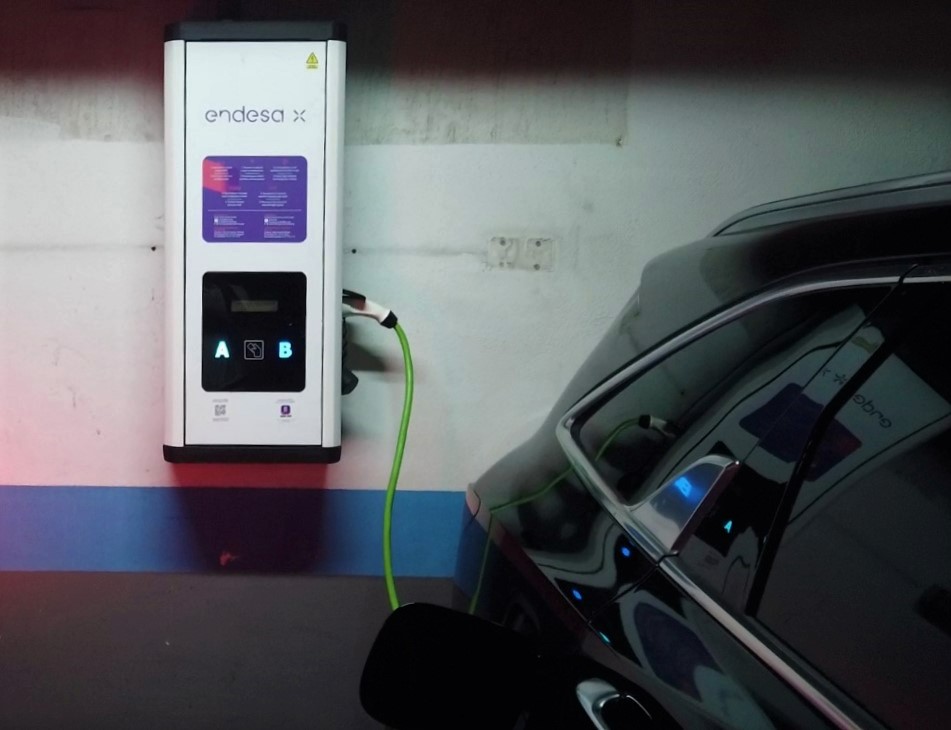
- Charging at home: A convenient way to charge your electric vehicle is at home. To do so, you will need to install a charging point (specific wall charger) in a garage or parking space. These chargers connect to an electrical power source and guarantee a slow or fast charging rate, according to your needs and the charger's capacity. Installing a charger costs around €1,000 and you only need to inform your community of owners that you wish to install the system. The perfect time to charge is at night. In addition, there are applications with which you can monitor the entire process from your smartphone: from checking the charging progress, the power rating at which the battery is being charged, and even programming when your car's heating system or lights will switch on.
- Charging your vehicle at the office: Many companies have parking spaces with an electric charger. If you have an electric vehicle, even if you park your car on the street, you can travel between your home and office easily by charging your vehicle at work.
- At home: If you own a nano-car or moped/scooter, you can remove its battery and charge it at night at home by connecting it directly to an AC outlet. These batteries weigh less than 10 kg (or can be moved thanks to their built-in trolley system) and they can be charged at night. If you travel 40-60 km a day on average, you will need to charge your vehicle every 4 or so days (depending on your driving style).
The future lies in the electrical solution
In short, there is still a long way to go in the path of electric vehicles, mainly regarding the need to improve and expand charging areas in cities, or facilitate charging systems/stations to users who live in flats and park their vehicles on the street. These issues will be resolved before the widespread use of electric vehicles, mainly with regard to charging capacity and battery maintenance.
Clearly, using an electric vehicle in cities saves money. Charging an electric vehicle can be up to four times cheaper than filling a vehicle with petrol and you also have the added comfort while driving, in addition to reducing the noise levels on our streets and the levels of air pollution.
Would you like to give your opinion or tell us about your experience? Are you considering switching to the electric car, but you still have doubts? You can chat to us on our social media profiles and we can talk about how we can move towards a more sustainable future.


Comparison of Electricity and Gas Tariffs
You don't need to adapt to Endesa's tariffs because they adapt to you. If you go to our catalogue you can compare the different tariffs for yourself. Or if you prefer, you can answer a few questions and we will take care of comparing all the different electricity and gas tariffs and then make a customised recommendation.
Do you want to see all our offers?
Spend a minute to find the product which best adapts to you:
Discover the rate that best suits your consumption profile with our smart recommender
Spend a minute to find the product which best adapts to you:
Discover the rate that best suits your consumption profile with our smart recommender
{{content.phone.title}}
{{content.phone.text}}
{{content.phone.phoneText}}
{{content.form.title}}
{{content.form.text}}


