If you prefer to view the website always in english, click here.
{{content.phone.title}}
{{content.phone.text}}
{{content.phone.phoneText}}
{{content.form.title}}
{{content.form.text}}
{{content.form.success.title}}
How to tell if a solar panel installation is of high quality
Were your solar panels properly installed? Are they generating the energy you were promised? Do you have enough panels to save on your consumption? Checking whether you have a high-quality solar PV installation is not always straightforward. However, by following a few simple guidelines, you can enjoy energy from the sun with greater assurance when it comes to performance, safety and savings.
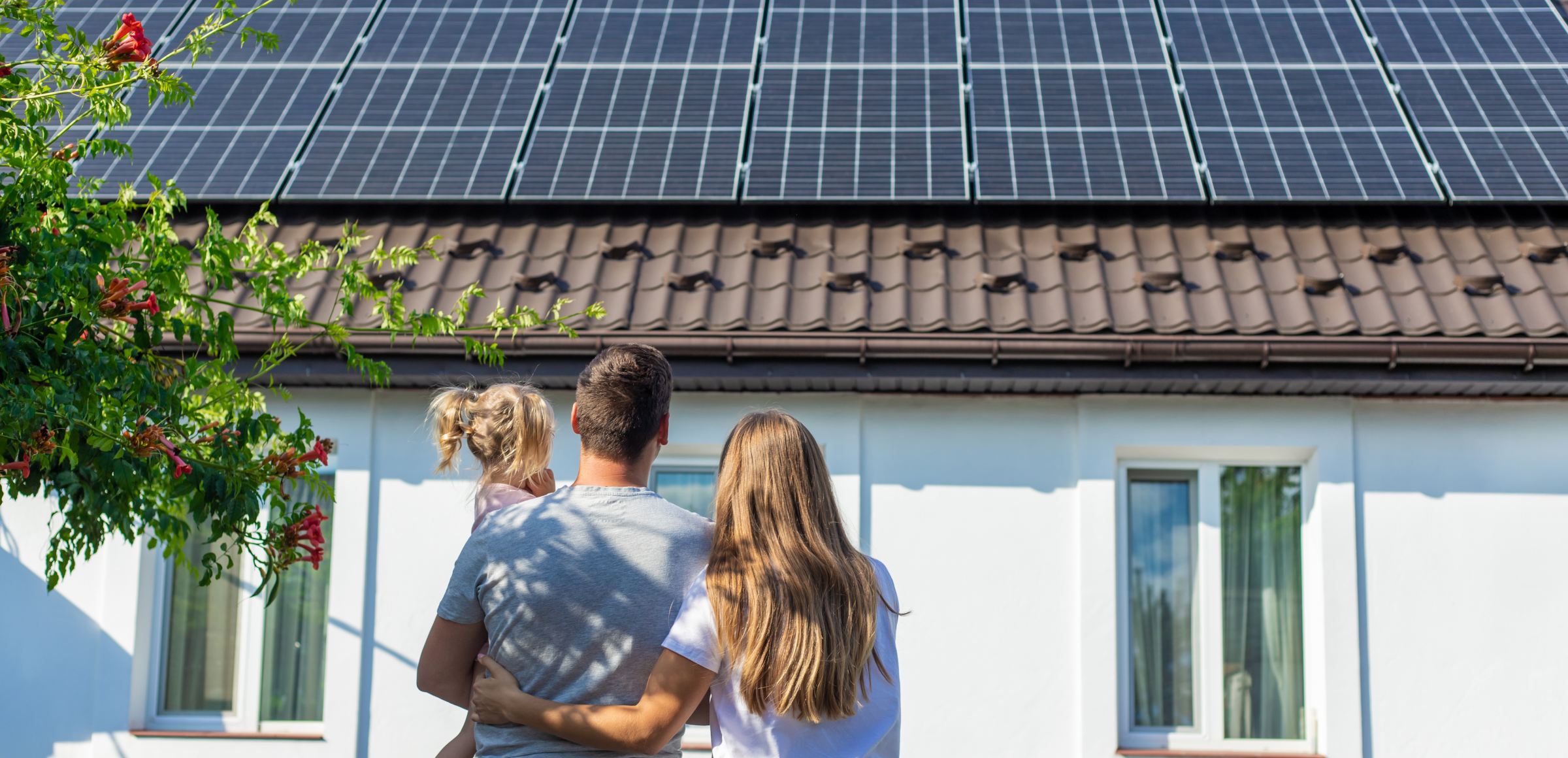
The 8 rules of a well-executed solar panel installation
To ensure your solar panels are properly planned and installed, there are eight principles you can apply, from the initial decision-making stage right through to monitoring your system over time:
- Make sure the system design matches your home's energy consumption.
- Make sure the panels are positioned in the right place, both in terms of surface area and orientation.
- Make sure the mounting structure and fixings meet all safety requirements.
- Make sure all system components have their respective certifications, technical datasheets and warranties.
- Make sure the wiring and electrical protection devices are properly installed.
- Make sure commissioning and performance tests are successfully carried out.
- Make sure the official registration process is completed and all documentation is handed over in accordance with regulations.
- Make sure energy production can be monitored and that you have access to technical after-sales support.
What to calculate when planning your solar PV system
The performance of a solar PV installation begins long before the solar panels are fitted. Working out how much electricity you will need to generate, understanding how the local climate affects your panels, knowing what to look for in a quote and assessing what your property can accommodate is a great formula for getting it right from the start.
Preliminary assessment of your electricity consumption
Your home's electricity consumption determines how many panels you will need to install, depending on the power output of the panels you choose.
Although the size of your property can serve as a rough guide, the best indicator is always your total consumption. And for a more accurate assessment, you should also factor in the times of day when you use that electricity.
As a general guide, bearing in mind that your climate zone will affect the result, the number of panels required according to annual consumption is typically as follows:
|
Annual household consumption: |
Number of solar panels: |
|---|---|
|
2.500 W |
3 to 5 |
|
3.500 W |
5 to 7 |
|
5.000 W |
7 to 10 |
|
7.000 W |
10 to 14 |
Orientation, tilt angle and shading
Making the most of the conditions in your climate zone is a decisive factor when planning your solar PV installation. Getting the right orientation relative to the sun, mounting the panels at the optimum tilt angle and assessing any potential shading across the array can boost the performance of the entire system – sometimes to a surprising degree.
Roof condition and suitability
Solar panels are most commonly installed on the roof. However, the roof is also one of the main elements protecting and insulating your home. That is why it is so important to know what can and cannot be done on it, depending on its condition and structural characteristics, so that the chosen solar PV system meets two essential criteria: physical safety and mounting versatility.
Detailed quotes and completion timeframes
Finally, before signing up for a solar panel installation, it is highly advisable to rely on qualified professionals who can guarantee a responsible, technically sound process.
Having a detailed quote broken down by stage – including materials, labour, permits and other specifics – is a good sign that everything will be kept under control. Furthermore, knowing the completion timeframes and agreed milestones will help you make a well-informed decision.
How to assess the quality of the panels and inverter
The panels and the inverter are the core components of any solar PV installation. The panels capture solar radiation and convert it into direct current (DC). The inverter then converts that direct current into alternating current (AC), which is the electricity used to power your household appliances.
Consequently, choosing the best quality for both is a logical way to bring that same quality to your solar self-consumption system. How do you go about it?
Compare panel power rating, efficiency and lifespan
There is no single rule for deciding what power output each solar panel on your home should have. For example, if roof space is limited, you will probably want each individual panel to be as powerful as possible. However, a fault in one panel will have a much greater impact on the system as a whole.
At the other end of the scale, installing a larger number of lower-output panels may increase your upfront investment and mean more maintenance work. On the other hand, the system will be less reliant on any single panel, making overall performance more stable.
What matters most is that the combined output is sufficient to generate the energy you need at home – and that it generates that energy efficiently, making the best possible use of every ray of sunlight.
Alongside this, you need to consider the lifespan of the panels. Both the internal silicon cells and the protective layer of tempered glass are exposed to the weather day after day. In this respect, high-quality materials can make a decisive difference to the long-term savings delivered by your installation.
Check product warranties and certifications
Type approval and certification of the panels provide assurance of a given level of strength, durability and efficiency. When purchasing your panels and the other system components, it is advisable to review and compare these manufacturer warranties. And given that your investment is meant to translate into cumulative savings over the years, it is well worth choosing options with a proven track record of performance and quality.
Check the inverter specifications
The inverter is every bit as important as the panels themselves. Minimising energy losses when converting direct current into alternating current, ensuring compatibility with your home's electrical system and matching the power output generated by the panels are some of the key factors that determine the quality of the unit.
In addition, it is very useful for the inverter to feature a control panel – including remote monitoring functionality – allowing you to track and manage the electricity generated and check the status of your system at all times.
Is your solar PV system properly installed? Initial checklist
Fixings, mounting structure, wiring, connectors, circuit protection, weatherproofing, access to equipment and apps, ease of maintenance… Once the installation is complete, it is good practice to run through all the components that make up the system, as well as any parts of the property that were worked on during the process.
The table below gives you a quick overview of what to check, what quality evidence proves everything is in order and when to verify each point:
|
What to check: |
Evidence of quality: |
When to verify: |
|---|---|---|
|
Design and sizing |
Household consumption assessment and professional technical proposal |
Before signing up |
|
Equipment quality |
Brands, models, technical datasheets and warranties |
Before signing up |
|
System installation |
Installation records and technical checks |
At handover and completion |
|
Electrical safety |
Certifications and testing of each component |
At commissioning |
|
Regulatory compliance |
Supporting documents, paperwork and applicable electrical certificates |
At commissioning |
|
Generation capacity |
Production monitoring and annual yield estimates |
At commissioning |
|
After-sales support |
Warranty terms and fault reporting channels |
Before and after installation |
What documents and warranties must your solar panel installer give you?
Proof that a solar PV installation has been carried out properly from start to finish is set out in the documentation that your certified professional installer must hand over to you:
- The Electrical Installation Certificate (CIE) and the technical project documentation.
- The documents proving that your self-consumption system has been officially registered.
- The warranties for all the panels, the inverter and the installation itself. If your system includes a battery or other components, they must also give you the documentation for those items.
- Instruction manuals, access to the monitoring apps and contact details for after-sales support.
5 common mistakes in solar panel installations
Sometimes, making easily avoidable mistakes can eat into the savings and energy independence that solar self-consumption provides. Here are some of the most common pitfalls and their consequences:
Mistake 1: installing too few or too many panels
With fewer panels than you need, you may fall short of the amount of electricity you planned to generate, reducing your potential savings. With too many panels, your investment may take many more years to pay for itself. The number of panels and their power rating must therefore be properly matched to your projected self-consumption.
Mistake 2: overlooking shading and panel orientation
A panel that is poorly oriented towards the sun can see its electricity output drop by up to 30%. And the ideal orientation depends on each individual property, based both on its geographical location and on how it faces the sun.
Positioning and tilt angle are therefore technical decisions that need to be carefully analysed before installation. Whenever possible, the best approach is to align peak solar radiation with your home's peak consumption hours, so that you generate the maximum amount of free energy right when you need it most.
Mistake 3: choosing incompatible or unsuitable components
An inverter that is not matched to the power output of the panels, cabling that is not certified for outdoor solar use, or roof fixings that are not suited to the tilt angle of the panels or the structural strength of the roof can lead to costly faults and even accidents in the short, medium and long term.
Mistake 4: failing to verify system registration or monitoring
Domestic solar PV installations must be carried out in accordance with regulations and backed by the relevant certifications. An unregistered installation runs the risk of a removal order as well as potential fines, at significant cost to the homeowner.
Similarly, failing to check that the system is operating properly via its monitoring tools can mask system faults, prevent accurate measurement of the energy generated and make it harder to rectify any defects or breakdowns that arise over time.
Mistake 5: not having technical after-sales support
Solar panels and the system they feed are solutions that need to be installed, tested and looked after by expert professionals. Having technical after-sales support is therefore your guarantee that you will receive the help you need if any issue arises, and that routine maintenance can be carried out with complete peace of mind.
How to tell if your installation is still producing the expected energy
Over time, checking that everything is still working as well as it did on day one is essential for correcting, improving and maintaining your installation's performance. Here are a few ways to check its condition:
- Check the production figures on the inverter display.
- Compare actual output against the estimated yield in your original project proposal.
- Assess whether seasonal weather changes are affecting performance.
- Look out for other indicators, such as the self-consumption percentage on your bill, changes in your surplus energy or a drop in the savings generated.
Why is maintenance so important for a solar PV system?
The great thing about solar energy is that it is clean, free and has been running non-stop for millions of years. The catch is that, unlike the sun, your installation does require a little maintenance so you can carry on enjoying all that energy. Fortunately, as well as being straightforward, it is a job you can leave in the hands of specialist professionals.
When and how should you service the components of your system?
Cleaning the solar panels
A solar PV system is an external feature of your home and, as such, builds up dirt over time. Leaves, organic debris and dust deposits should be cleared away at least once or twice a year. This task must always be carried out using the necessary safety equipment and in full compliance with all mandatory requirements for working at height.
Monitoring and early fault rectification
A thorough, comprehensive annual inspection of all system components helps identify potential hazards and minor faults so they can be resolved straight away to maintain efficiency.
This expert maintenance should cover:
- Any micro-cracks that may have appeared on the outer surface of the panels.
- Checking the weatherproof seals on the panels.
- Thoroughly cleaning the modules.
- Checking the condition of the electrical connections.
- Verifying that the monitoring system is working properly.
- Inspecting the roof fixings, circuit protection and safety devices.
Tracking production
Finally, regularly checking your system indicators – alongside the monthly generation, consumption and savings report provided by your energy supplier – will help you monitor the system and identify any additional maintenance your installation may need.
Frequently asked questions about the quality of solar installations
How can I tell if my solar panels are working properly?
Check the actual data from your power inverter and compare it against the efficiency promised when your system was installed. You can also track how generation is performing through the monthly reports from your energy supplier and on your electricity bill.
What certificates must a solar PV installation have?
An Electrical Installation Certificate (CIE) or boletín eléctrico, a Technical Design Report (MTD) for installations under 10 kW, a Completion of Works Certificate following installation, and the type-approval certificates for each component in the system.
How can I tell if solar panels are of good quality?
Check their technical datasheet to confirm they are certified in accordance with current standards, and review their power output rating, warranties and compatibility.
What warranty does a solar panel installation have?
The installation workmanship must carry a mandatory minimum warranty of 3 years. Component warranties vary between manufacturers, ranging from 5 years for some inverters to 30 years or more for the solar panels themselves.
How much should my solar panels produce per day?
It depends on the number of panels, their power rating and the level of solar radiation. In general, an average household can save up to 60% on its electricity bill thanks to solar panels, although every property requires its own technical assessment.
What should I do if my solar panels produce less than expected?
Contact a technical support service to carry out a full inspection of the system so they can identify the cause of the drop in production and take the appropriate corrective action.
How can I check that my solar PV installation is officially registered?
You will receive all the official documentation once the installation and commissioning have been completed. You can also contact your electricity company to confirm that everything is in order and/or check its status in your regional government's registry.
How often should a solar PV installation be serviced?
It is advisable to have a full technical inspection of the system and its components carried out once a year, and to clean the panels at least once or twice a year to remove leaves and other debris from their surface.
Comparison of Electricity and Gas Tariffs
You don't need to adapt to Endesa's tariffs because they adapt to you. If you go to our catalogue you can compare the different tariffs for yourself. Or if you prefer, you can answer a few questions and we will take care of comparing all the different electricity and gas tariffs and then make a customised recommendation.
Do you want to see all our offers?
Spend a minute to find the product which best adapts to you:
Discover the rate that best suits your consumption profile with our smart recommender
Spend a minute to find the product which best adapts to you:
Discover the rate that best suits your consumption profile with our smart recommender
{{content.phone.title}}
{{content.phone.text}}
{{content.phone.phoneText}}
{{content.form.title}}
{{content.form.text}}