


If you prefer to always view the website in English, please click here.
Ageing at home: how energy makes your home safer, more comfortable, and resilient
A home that is ready for ageing in place needs to meet at least four essential conditions: a stable temperature, good lighting, controlled energy consumption, and the ability to respond to unexpected electrical issues. In other words, it needs energy to be well managed.
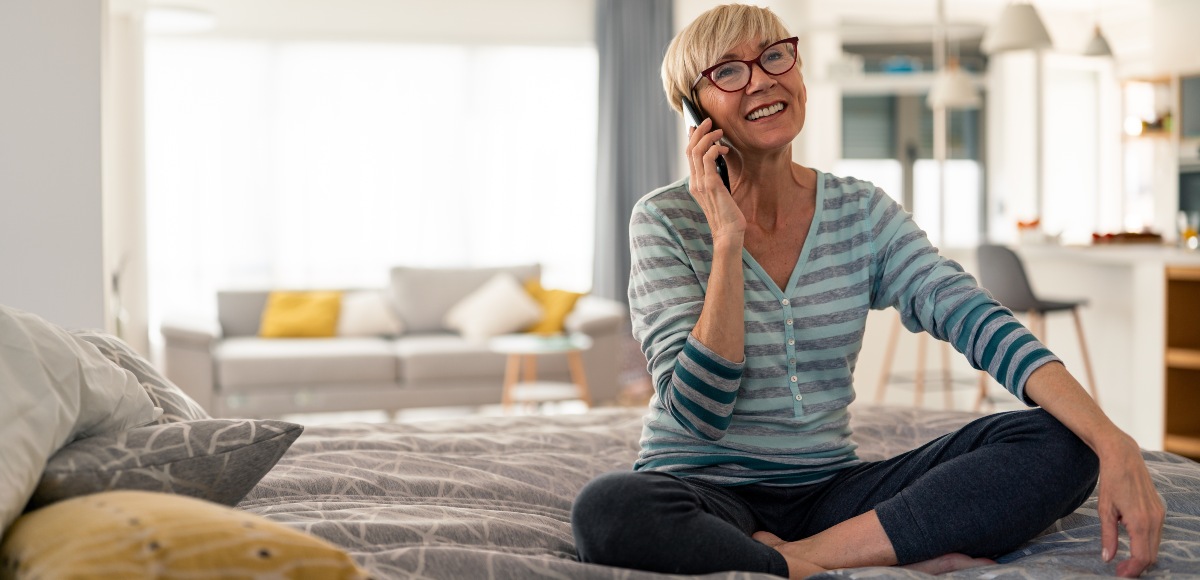
The good news is that achieving this does not require a major renovation, but it does require understanding how energy works within your home. Every small detail (a poorly placed light, an improperly used thermostat, or an appliance left on standby) can end up having a cumulative impact not only on costs, but also on everyday care and comfort.
A home prepared for ageing in place should do more than save: it should care
Preparing a home for ageing in place is not just about reducing energy consumption, but also about creating an environment that cares for people in their day-to-day lives. That involves thinking about how your contracted energy affects comfort, safety, and peace of mind within the home.
What ‘ageing in place’ really means
Ageing in place means being able to continue living in your own home with independence, safety, and comfort. It's not about staying in the same place at any cost, but rather ensuring that your home continues to meet your needs over time.
The Spanish Institute for the Elderly and Social Services (Imserso) also stresses that adapting one's home is key to maintaining independence in later life. And when we talk about adapting one’s home, we are also talking about energy. For example, a house that is cold in winter, too hot in summer, or poorly lit creates insecurity, discomfort, and dependence.
Why energy connects comfort, safety, cost, and resilience
Energy affects everything that happens in a home: thermal comfort depends on how you heat and cool it, safety depends on how you light it and power your devices, cost depends on how you consume energy, and resilience depends on how well you respond to outages.
Spain's Institute for Energy Diversification and Saving (IDAE) explains that improving energy efficiency not only reduces consumption, but also increases well-being and habitability. It is not just about saving money, but about designing a home that works better with the future in mind.
The goal is not just to spend less: it is to live better and with fewer risks
Lowering your energy bill matters, but when it comes to ageing in place, the main goal is to live with fewer risks, less effort, and greater stability. To achieve that, let’s look at the four pillars on which to build a home.
The 4 energy pillars of a home designed for ageing in place
A home that supports ageing with quality of life is built on four interconnected pillars.
Stable thermal comfort: fewer temperature extremes, better rest
Thermal comfort is one of the most important factors for ageing well at home. As we age, the body’s ability to adapt decreases, which means sudden temperature changes have a stronger impact.
Maintaining a stable indoor temperature does not mean spending more energy but rather using it more efficiently. For example, you can follow the IDAE's recommendations regarding home temperature to improve your rest and reduce health risks.
Safety: lighting, fewer electrical hazards, and less reliance on makeshift solutions
Safety is closely linked to lighting, since a well-lit home allows you to move around with confidence and significantly reduces the risk of falls, especially at night.
In addition, your home should have a well-organised electrical setup to avoid issues such as loose cables you could trip over or overloaded extension leads that pose electrical hazards.
Predictable bills: more control over spending, fewer financial shocks
Uncertainty about energy bills can be a real concern for many households. Not knowing how much you will pay creates stress and makes it harder to plan ahead effectively. To address this, it is important to understand your electricity bill and adjust your consumption so that it remains stable.
Resilience: what happens if the power goes out or a key appliance fails
The goal is not to avoid problems altogether, but to reduce their impact on your home. Knowing what to do is essential in case of a power outage while older people are at home. For example, having emergency lighting, avoiding unnecessary movement, keeping essential devices charged... Let’s take a closer look at the features of your home, room by room, with our checklist.
Room-by-room energy checklist
This practical walkthrough will help you identify the adjustments needed in each area of your home.
Entrance and hallways: seeing and moving around safely
The entrance and hallways are transit areas. Here, the priority is to see clearly and move around without difficulty. Some measures you may want to consider include:
- Motion sensors that automatically switch on the lights.
- Even lighting without dark spots.
- Low-intensity night lights.
- Easily accessible power outlets.
- Keeping the floor free of cables and obstacles.
These solutions are simple changes mainly aimed at preventing falls.
Living room: daily comfort and less vampire power
The living room is one of the areas where we spend the most time and where the highest number of devices tend to be concentrated. To improve comfort and efficiency, some possible solutions include:
- Using a clear, easy-to-read thermostat.
- Establishing routines with stable temperatures.
- Grouping devices into switched extension leads and keeping in mind the vampire power of appliances left on standby.
Kitchen: safety and efficiency without complications
The kitchen is a space of constant activity where many energy uses coexist. The key is to simplify:
- Ensuring adequate ventilation, especially if gas is used.
- Using appliances with an auto-off function.
- Prioritising eco programmes.
Bathroom: hot water without the nasty shocks
The bathroom is one of the most sensitive areas of the home. Key measures include:
- Adjusting the temperature of domestic hot water (DHW) helps prevent burns and improves energy efficiency.
- Controlling humidity and ventilating helps prevent respiratory problems.
Bedroom: a sleep-friendly temperature
Sleeping well does not depend on the mattress alone. The bedroom is the space where thermal comfort has the greatest impact:
- Maintaining a steady temperature helps avoid excessive heat or cold.
- Creating a simple night-time routine (lowering blinds, switching off lights, and adjusting the temperature) can improve rest without increasing energy consumption.
Heating and cooling play a decisive role in a home strategy designed to care for older adults.
Heating and cooling: the key piece of a home designed for care
Heating and cooling are among the elements that most influence well-being at home. They affect not only thermal comfort, but also energy consumption and the condition of your equipment.
- Keep filters clean and avoid overworking your systems: poorly maintained equipment uses more energy and performs less effectively. Something as simple as cleaning your air conditioning filters yourself can improve performance and help prevent breakdowns.
- Heat the person and the room, not the whole house: it is not always necessary to heat the whole home. Adjusting use by zone can save energy and improve comfort. You can also programme the most efficient air conditioning modes.
- Adopt simple usage routines that reduce wear and costs: everyday habits make a real difference. Activating the ECO mode on your heating system helps maintain a stable temperature without spikes in consumption.
Heating and cooling, like other household services, require equipment to function. Being prepared for outages or equipment failure is essential.
Energy resilience: What happens if there is a power outage or a device fails?
Beyond day-to-day use, your home should also be prepared for unforeseen situations. Energy resilience is about how your home responds when something goes wrong, such as a power outage or equipment failure:
- Rechargeable emergency lights: a simple solution that provides immediate safety. They allow you to move around safely during a blackout.
- Which devices should be identified as critical: not all devices are equally important. It is advisable to identify essential equipment in advance (lighting, mobile phones, etc.).
- A simple household plan for breakdowns or power outages: having a plan does not mean complicating things, but rather anticipating them. Knowing where your torches are, keeping mobile phones charged, and avoiding moving around in the dark can make all the difference in an emergency.
Another unforeseen event you can manage is the cost of your energy bill.
A home that ages well also needs predictable bills
Energy costs are an important part of well-being at home. It is not just about spending less, but about avoiding uncertainty and being able to anticipate your monthly expenses:
- Review your contracted power and usage habits: having more power than necessary means paying extra every month.
- Identify vampire power in household appliances: many devices consume electricity even when they are not in active use. Spotting them helps reduce costs with little effort.
- Use consumption tracking tools to make better decisions: small changes can have a real impact on your bill. Tracking your energy expenditure helps you make informed decisions and maintain stability.
Reviewing your contracted power or tracking expenses are just some of the small improvements within your reach.
Which improvements have the most impact, no major renovations required
Adapting a home does not require major renovations, as simple improvements can make a significant difference. Small day-to-day adjustments can improve safety, comfort, and efficiency without the need for complex renovations or major investment.
Better lighting: the lowest-cost improvement with the biggest impact
Changing the lighting can transform a home, and one of the most effective steps is
switching to LED bulbs. They improve visibility, reduce energy consumption, and increase safety.
Check outlets and extension leads
Organising electrical connections reduces risks and makes everyday use easier. It is a simple change, but one with a major impact.
Install sensors or guide lights
Motion sensors are particularly useful in hallways and transit areas. They improve safety effortlessly, especially at night.
Adjust domestic hot water (DHW) and heating and cooling for safer use
Avoiding extreme temperatures improves comfort and reduces risks. Adjusting these systems properly is key to improving home energy efficiency for older adults.
Simplify routines with basic smart home tools
There is no need for complex technology. Simple solutions are enough, such as those covered in this article on basic smart home systems, where you can learn how to automate small tasks that reduce effort and make daily life easier.
FAQ
What does a home need to be safe for ageing in place?
It needs four pillars: stable thermal comfort, good lighting, controlled energy consumption, and energy resilience. Together, these make it possible to live more independently and with fewer risks.
Why is energy so important in a home for older adults?
Because it directly affects everyday well-being. It influences indoor temperature, safety when moving around, monthly costs, and the ability to respond to unforeseen events.
How can you prevent heat or cold stress at home?
By maintaining stable temperatures, avoiding sudden changes, and using heating and cooling systems properly. The World Health Organisation warns that extreme temperatures especially affect vulnerable people.
What kind of lighting helps prevent falls?
Even lighting, motion sensors, and night lights in transit areas are the most effective solutions.
How can you make your energy bill more predictable?
By reviewing your contracted power and checking your bill. You can also eliminate vampire power and monitor your consumption. This helps avoid unpleasant surprises.
What should you do if the power goes out and there are vulnerable people at home?
Have emergency lighting available, avoid moving around unnecessarily, and have a simple household plan in place.
Which room should you check first?
The entrance and hallways, because they have a higher risk of falls and are key to daily mobility.
A home that ages well is not the one with the most technology, but the one that responds best to real daily needs. And in that balance between comfort, safety, cost, and resilience, energy is what connects everything.
Take a minute to find the product that best suits you:
{{firstStep.title}}
Take a minute to find the product that best suits you:
{{title}}
{{content.phone.title}}
{{content.phone.text}}
{{content.phone.phoneText}}
{{content.form.title}}
{{content.form.text}}
{{content.form.success.title}}
You don't need to adapt to Endesa's tariffs because they adapt to you. If you go to our catalogue you can compare the different tariffs for yourself. Or if you prefer, you can answer a few questions and we will take care of comparing all the different electricity and gas tariffs and then make a customised recommendation.
Take a minute to find the product that best suits you:
{{title}}
{{content.phone.title}}
{{content.phone.text}}
{{content.phone.phoneText}}
{{content.form.title}}
{{content.form.text}}
{{content.form.success.title}}
You don't need to adapt to Endesa's tariffs because they adapt to you. If you go to our catalogue you can compare the different tariffs for yourself. Or if you prefer, you can answer a few questions and we will take care of comparing all the different electricity and gas tariffs and then make a customised recommendation.
Comparison of Electricity and Gas Tariffs
You don't need to adapt to Endesa's tariffs because they adapt to you. If you go to our catalogue you can compare the different tariffs for yourself. Or if you prefer, you can answer a few questions and we will take care of comparing all the different electricity and gas tariffs and then make a customised recommendation.
Do you want to see all our offers?
Spend a minute to find the product which best adapts to you:
{{firstStep.title}}
Spend a minute to find the product which best adapts to you:
{{title}}
{{content.phone.title}}
{{content.phone.text}}
{{content.phone.phoneText}}
{{content.form.title}}
{{content.form.text}}
{{content.form.success.title}}
Spend a minute to find the product which best adapts to you:
{{title}}
{{content.phone.title}}
{{content.phone.text}}
{{content.phone.phoneText}}
{{content.form.title}}
{{content.form.text}}