If you prefer to view the website always in english, click here.
{{content.phone.title}}
{{content.phone.text}}
{{content.phone.phoneText}}
{{content.form.title}}
{{content.form.text}}
{{content.form.success.title}}
Types of butane cylinders: which one do you need for your home?
Choosing a butane cylinder depends on how you plan to use it, your household's gas consumption and the specifications of the appliance you want to connect. The traditional 12.5 kg cylinder is one of the best-known formats, but lightweight and smaller-capacity cylinders are also available.
Before deciding, it is worth comparing the size, the refill price and how easy it is to replace. It is also important to check that the chosen format is compatible with your installation, as not all cylinders are suitable for all appliances.
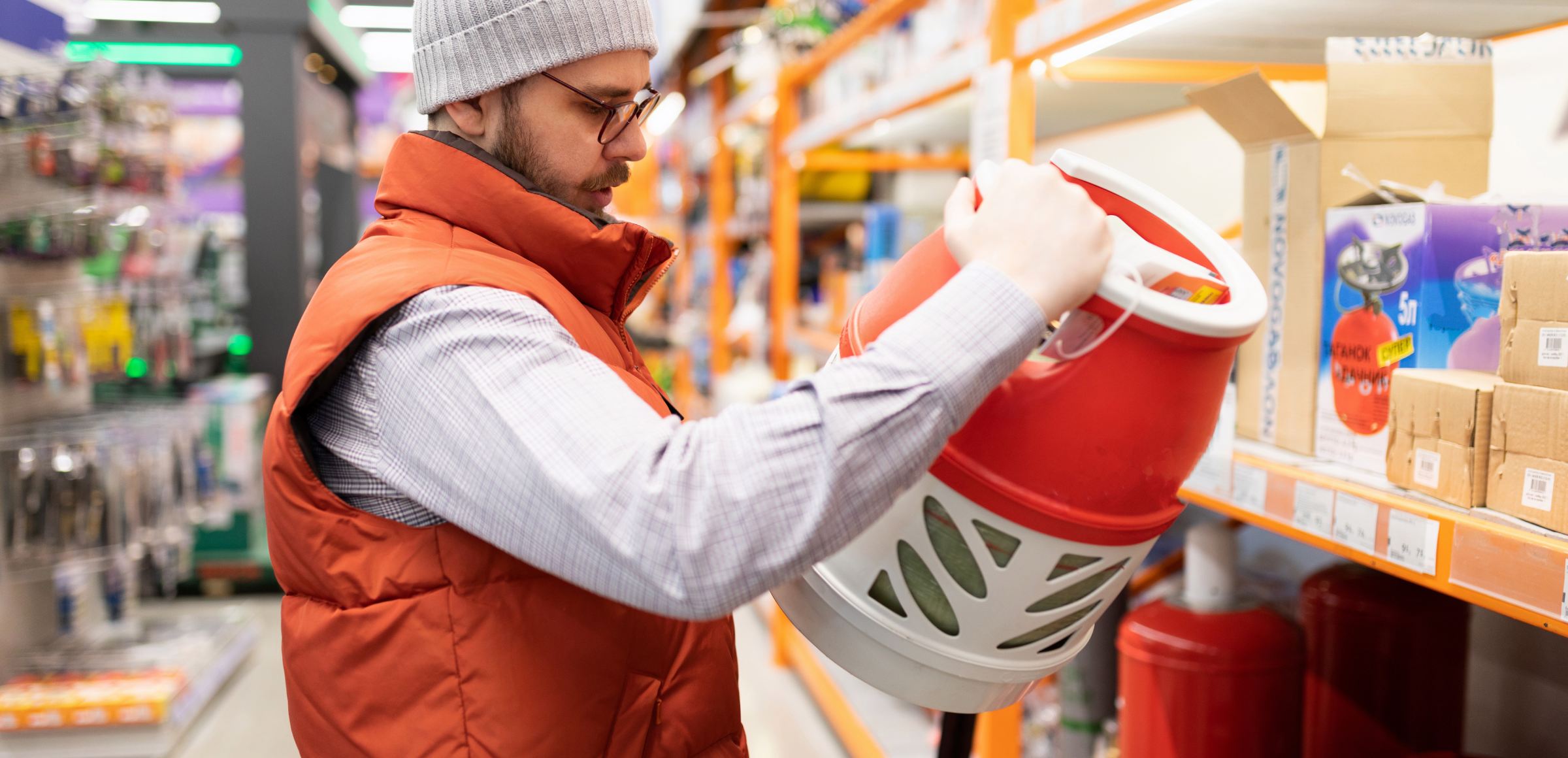
What types of butane cylinders are there?
The differences between the types of butane cylinders mainly relate to their capacity, design and weight. The traditional 12.5 kg cylinder is a standard format, while lightweight and small cylinders can offer other options depending on the manufacturer and supplier.
|
Cylinder type |
Gas capacity |
Indicative use |
Key feature |
|---|---|---|---|
|
Traditional |
12,5 kg |
Cooking, hot water and other compatible domestic uses |
Classic format |
|
Lightweight |
12 kg |
Frequent domestic use and compatible appliances |
Cylinder designed for easier handling |
|
Small |
6 kg |
Occasional and compatible portable uses |
Smaller capacity and size |
The availability of each format may vary depending on the supplier and the area. Furthermore, not all cylinders are suitable for all appliances: before buying one, check the manufacturer's instructions and the type of connection required.
Traditional 12.5 kg butane cylinder
The 12.5 kg butane cylinder is the classic format for domestic uses such as cooking or heating water, provided the appliance is designed to run on this gas.
Its capacity can be convenient if you use gas frequently, as it allows you to go longer between replacements compared with a smaller cylinder. On the downside, the full cylinder weighs more than the 12.5 kg of gas it contains, which is worth bearing in mind when transporting it.
On the Spanish Peninsula, this format has a regulated temporary maximum price. You can check the price and conditions in the pricing section.
Lightweight 12 kg butane cylinder
Lightweight cylinders are designed to make transport and handling easier. Their capacity may be similar to that of the traditional format, although the weight of the cylinder and its specifications depend on the model.
Before choosing one, check that it is sold in your area and that it is compatible with your appliance and its connection system. It is also worth comparing the refill price: the fact that a cylinder is easier to handle does not necessarily mean it works out cheaper.
Small 6 kg butane cylinder
A smaller-capacity cylinder may suit certain occasional uses, provided it is available and compatible with the appliance.
Because it holds less gas, you will have to replace it more frequently if you maintain the same consumption as with a 12.5 kg cylinder. Therefore, before choosing it, weigh up both the amount of gas you need and how easy it is to get a refill.
Which butane cylinder do I need depending on the use?
To choose the right format, think about how much gas you use, how many hours you run your appliances and how often you are willing to change the cylinder. Capacity gives an indication of how long it will last, but compatibility with your equipment is essential.
For everyday cooking
If you cook with gas every day, a 12.5 kg cylinder can be a practical option thanks to its capacity. A lightweight model may also suit you if you want easier handling and it is compatible with your cooker.
By contrast, a small cylinder may require more frequent replacements. To decide, take into account your cooker's consumption and the rate at which you use gas.
For heating water
If you use a butane water heater, consumption will depend on the specifications of the appliance and the amount of hot water you need.
A larger-capacity cylinder can help you go longer between replacements when used frequently. Before buying one, check the water heater's instructions to confirm which gas it accepts and what type of cylinder you can use.
For gas heating
If you have a portable gas heater, check which fuel it accepts and which cylinder the manufacturer recommends. Not all appliances work with every format, regulator or type of gas.
If you use the heater for many hours, a larger-capacity cylinder can reduce how often you need to change it. Your choice must also take into account the installation requirements and the safety instructions for the appliance.
For a second home or occasional use
In a second home, a small cylinder may be sufficient for certain occasional uses. If you also use gas for cooking and heating water, a larger-capacity format may prove more practical.
The key is to work out which appliances you are going to use and how often. If you want to keep a spare cylinder, first check the storage requirements applicable to your installation.
How long does a butane cylinder last?
How long a cylinder lasts depends on the appliance's consumption and how long you use it for. For that reason, there is no single figure in hours or days that applies to every household.
To make an estimate, you can divide the kilograms of gas in the cylinder by the appliance's hourly consumption. For example, if the consumption stated by the manufacturer were 0.25 kg/h, a 12.5 kg cylinder would last for around 50 hours of operation and a 6 kg cylinder for around 24 hours.
These are indicative calculations: the actual duration will depend on real consumption and how you use the appliance.
How long a 12.5 kg cylinder lasts
If the appliance uses 0.25 kg of gas per hour, a 12.5 kg cylinder would last for around 50 hours of operation.
At four hours of use per day, that would equate to around 12 and a half days. If you use it for one hour a day, the calculation would be around 50 days.
These figures serve as a mathematical guide, not a guaranteed duration. The result will change if the appliance's consumption differs or if the hours of use vary.
How long a 6 kg cylinder lasts
At the same consumption rate of 0.25 kg per hour, a 6 kg cylinder would provide around 24 hours of theoretical operation.
If you used the appliance for four hours a day, the estimate would be six days. For the same level of consumption, a 12.5 kg cylinder holds slightly more than twice as much gas, allowing a longer period of use before replacing it.
Factors that make a cylinder last longer or run out sooner
Four factors have a particular impact on how long a cylinder lasts:
- Appliance consumption: check the technical data sheet to find out how much gas it uses.
- Operating hours: the longer it is switched on, the more gas it will use.
- Power setting: if it is adjustable, consumption may vary depending on the setting.
- Type of appliance: a cooker, a heater and a water heater have different requirements.
To compare cylinders, use the manufacturer's consumption figure and calculate the estimated operating hours. That way, you can assess which capacity best suits your habits.
How much do the different types of butane cylinders cost?
The price depends on the capacity of the cylinder, the applicable pricing regime and the terms of sale. On the Peninsula, the maximum price of a 12.5 kg butane cylinder is capped at €19.55 until 30 June 2027. This temporary cap should not be confused with a single price across all formats.
Price of the traditional cylinder
The traditional 12.5 kg cylinder has a maximum price of €19.55 on the Spanish Peninsula during the period indicated. This is a legal cap, meaning the supplier may sell it for a lower amount, but cannot exceed it under the conditions to which the measure applies.
If you want to find out more details about its cost and price trends, check our article on the price of a butane cylinder.
Price of lightweight and small cylinders
The regulated maximum price generally applies to commercial butane packaged in cylinders with a gas weight of 8 kg or more and under 20 kg, and a tare weight of 9 kg or more, with some exceptions. The temporary cap of €19.55, however, is set specifically for 12.5 kg cylinders on the Peninsula.
This means that the same price cannot automatically be applied to a 12 kg lightweight cylinder or a 6 kg small cylinder. To find out how much each model costs, you need to check whether it is subject to a regulated maximum price or whether its price is deregulated, also taking into account the exceptions applicable to certain home deliveries. Check the up-to-date price with the supplier before buying it.
Which cylinder works out cheapest depending on consumption?
To compare formats, look at the price per kilogram of gas, as well as the amount you pay per purchase and how often you need to replace the cylinder.
A larger-capacity cylinder may prove more practical if you use butane regularly, as you will have to change it less often. Conversely, a small cylinder may be a better fit if you use gas occasionally.
The most cost-effective option depends on the price applicable to each model, the amount of gas you use and the supply terms.
What is the difference between a butane cylinder and a propane cylinder?
Butane and propane are liquefied petroleum gases, but they behave differently at low temperatures. That difference affects the uses for which each one is suitable.
Differences in use and performance at low temperatures
One of the main differences is that propane vaporises at lower temperatures than butane. For that reason, it can be an alternative for certain uses in cold conditions.
Both gases are used in domestic applications, but your choice must take into account the temperature, the specifications of the appliance and the installation requirements.
Which gas is best in cold areas
If the cylinder is going to be used in a place with low temperatures, propane can offer advantages due to how it performs in those conditions. Butane may struggle to vaporise when it is very cold.
However, it is not enough just to look at the climate: check which gas your appliance accepts and what installation conditions the manufacturer sets out.
Compatibility of cylinders and appliances
Do not swap a butane cylinder for a propane cylinder without first checking that both the appliance and the installation are compatible. The regulator and other components must also be suitable for the gas used.
Check the manufacturer's instructions and, if in doubt, consult a qualified professional. Do not make modifications yourself.
For a broader comparison of supply alternatives, you can check our article on the differences between butane and natural gas.
Safety tips for using butane cylinders
Using a butane cylinder safely means positioning it correctly, checking that the connections are in good condition and knowing what to do if you detect a leak. Always follow the manufacturer's and supplier's instructions.
Where to position and store a cylinder
Keep the cylinder upright, in a ventilated place and away from heat sources. Do not place it in basements or semi-basements, and avoid exposing it to high temperatures.
If you have a spare cylinder, store it in a ventilated place, away from heaters and other heat sources. The location of the connected cylinder must comply with the safety requirements applicable to the installation and the appliance manufacturer's instructions.
What to check before using it
Before using a butane cylinder, check the following points:
- Regulator and connections: make sure they are suitable for the cylinder and properly attached.
- Flexible hose: check its condition and expiry date, if it has one. Replace it when due and use one suitable for butane.
- Ventilation: keep the room where the gas appliance is operating ventilated.
- Appliance operation: a steady blue flame usually indicates proper combustion. If you notice a yellowish or unsteady flame, stop using it and request a technical inspection.
If you are installing a cylinder for the first time or modifying the installation, use an authorised gas installation company where necessary. When you finish using the appliance, turn off the gas supply.
What to do if you smell gas
If you smell gas, act with caution and follow these steps:
- Do not light any flames or switch lights or electrical appliances on or off.
- If you can do so without putting yourself at risk, turn off the cylinder regulator.
- Ventilate the room by opening doors and windows, provided you can do so safely.
- Leave the premises if the smell persists or you suspect there is a leak. Call for assistance from outside and do not use the installation again until it has been checked and confirmed safe.
In the event of a major leak or dangerous situation, move away and call the emergency services.
Is it better to use butane cylinders or take out natural gas?
The choice depends on your household's consumption, the characteristics of the property and whether you have access to the natural gas grid. A cylinder requires arranging a replacement when it runs out; natural gas is supplied through a piped network where the property has a connection.
There is no single option that always works out cheaper. To compare, take into account your expected consumption and the costs associated with each alternative.
Differences in convenience, supply and maintenance
With cylinders, you have to keep track of how much gas is left and arrange a replacement when it runs out. How often you need to change it will depend on your consumption and the capacity of the cylinder.
With natural gas, you do not need to change cylinders, but the property must have access to the grid and a suitable installation. Inspection and maintenance requirements depend on the type of installation and the equipment used.
When it may be worth switching from butane to natural gas
Switching may be worth considering if you use gas frequently, want to avoid replacing cylinders and your property has access to the grid. If your consumption is occasional or you do not have a grid connection, butane may remain a viable alternative.
Before deciding, compare your expected consumption, the cost of a potential installation and the tariff terms. You can find more information in our article on the differences between butane and natural gas.
Natural gas alternatives for your home
If you are considering taking out natural gas, review the available options and check which ones fit your household's needs.
At Endesa, you can check our gas tariffs and review their terms and conditions before choosing. To compare, take into account the supply price, potential installation costs and your expected consumption.
Frequently asked questions about butane cylinders
What is the difference between an orange cylinder and a lightweight cylinder?
The orange cylinder is usually associated with the traditional format, whereas lightweight cylinders are designed for easier handling. Check the capacity and specifications of the specific model before choosing.
Which cylinder do I need for a portable gas heater?
It depends on the heater model and the gas it is designed to use. Check the manufacturer's instructions to see which fuel it accepts and which regulator it requires.
How much does a full cylinder weigh?
A traditional 12.5 kg cylinder weighs approximately 21 kg when full, while a 6 kg K6 cylinder weighs around 11 kg. The total weight includes both the gas and the cylinder itself, so it may vary depending on the model.
How long does a cylinder last if I only use it for cooking?
It depends on the cooker's consumption and how long you use it each day. Check the consumption stated by the manufacturer and compare it against the cylinder's capacity to get an estimate.
Which cylinder is best for a holiday home?
It depends on the appliances you plan to use and how often you use them. A small cylinder may suit certain occasional uses, while a larger-capacity cylinder can reduce how often you need to replace it. Check which formats are available and which ones your installation accepts.
Can I swap a butane cylinder for a propane cylinder?
Only if the appliance and the installation are compatible with propane. Check the manufacturer's instructions and consult a qualified professional if you have any doubts before changing the type of gas.
Comparison of Electricity and Gas Tariffs
You don't need to adapt to Endesa's tariffs because they adapt to you. If you go to our catalogue you can compare the different tariffs for yourself. Or if you prefer, you can answer a few questions and we will take care of comparing all the different electricity and gas tariffs and then make a customised recommendation.
Do you want to see all our offers?
Spend a minute to find the product which best adapts to you:
Discover the rate that best suits your consumption profile with our smart recommender
Spend a minute to find the product which best adapts to you:
Discover the rate that best suits your consumption profile with our smart recommender
{{content.phone.title}}
{{content.phone.text}}
{{content.phone.phoneText}}
{{content.form.title}}
{{content.form.text}}


