


If you prefer to always view the website in English, please click here.
{{content.phone.title}}
{{content.phone.text}}
{{content.phone.phoneText}}
{{content.form.title}}
{{content.form.text}}
{{content.form.success.title}}
Can you be fined for occupying a charging point with an electric car?
As our cities allocate more and more designated parking spaces for electric vehicle charging, a very common question arises: does owning an electric car give you the right to park in these zones under any circumstances?
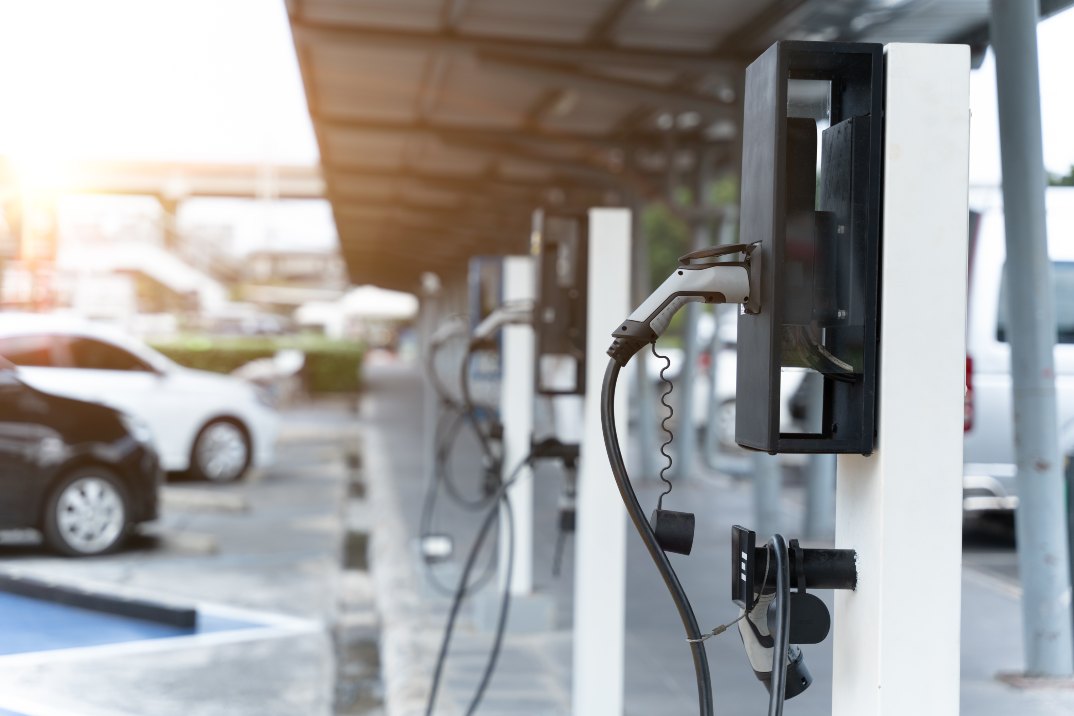
Many people simply see charging spaces as VIP parking for electrified vehicles. However, this assumption could lead to certain consequences if you occupy a space incorrectly or without actually charging your vehicle.
When can you be fined for occupying a charging point?
In Spain, spaces with public chargers are not considered free parking zones for low-emission vehicles, but rather energy supply points exclusively designated for charging batteries. With this in mind, let's look at some different scenarios in the table below:
|
Situation |
Could it be considered improper use? |
Explanation |
|---|---|---|
|
EV plugged in and charging within the permitted time limit |
No |
It fulfils the purpose of the reserved space within the time limits. |
|
EV parked but not plugged in |
Yes |
The space is designated for active charging, not parking. |
|
EV plugged in but charging has finished |
It could be. |
If the charging process has finished, the vehicle is no longer fulfilling the purpose of the space. |
|
EV exceeding the designated charging time limit |
Yes |
It violates the specific restrictions for the space. |
|
Combustion engine vehicle |
Yes |
The space is reserved for charging vehicles. |
|
Non-plug-in hybrid |
Yes |
The space is reserved for charging vehicles. |
|
Plug-in hybrid actively charging |
No (authorised by signage). |
It fulfils the purpose of the designated space within the time limits. |
|
Private charging point in a shopping centre |
Yes (according to the rules). |
In addition to the law, the establishment's own terms and tariffs apply. |
In short, an electric car that is plugged in and charging within the permitted time limit is using the space correctly. However, if you use this space simply to park your vehicle, it will be considered a traffic offence: the law dictates that you are obstructing other users' access to essential public infrastructure. It can also be considered improper use to leave an EV plugged in when charging has finished or when the maximum time limit has been exceeded.
If the battery is fully charged, can you leave your car in the space?
This is a very common question among drivers of zero-emission vehicles. The answer is that once the battery has finished charging, you are no longer fulfilling the conditions for reserving that space. Therefore, if you stay in the space, you will be occupying the charger improperly.
Furthermore, there is no set grace period that applies to all charging points. You will need to check the available signage.
How long can you leave your car at a charging point?
There is no common national standard for all chargers. The time limit depends on the signage at each point or the local parking regulations. Therefore, our advice remains the same: always check the signs.
How much is the fine for improperly occupying a charging point?
As is often the case, the specific penalty will depend on the rule broken and the assessment of the officers. Therefore, claiming that the DGT directly issues a set fine across the entire country for parking next to a charger could be misleading.
The Law on Traffic, Motor Vehicle Circulation and Road Safety gives municipalities the authority to regulate the use of urban roads, parking restrictions and the corresponding penalties. However, the DGT's national legal framework classifies the improper occupation of such service spaces as a serious offence, which could carry a baseline fine of €200.
A fine and a penalty for leaving a car plugged in are not the same thing
While an administrative fine is a financial penalty imposed by a public authority for breaking a traffic rule or mobility by-law, a penalty is a commercial surcharge set by the charging point operator in their terms of service.
In other words, the first involves an official penalty procedure, while the second is simply a penalty issued by the service operator.
Not all car parks and not all improper occupations are the same
Parking without plugging in the cable in a space reserved for electric charging can be considered a serious offence. Staying parked once charging has finished can also lead to a fine. And when it comes to charging points within private establishments, the operator's rules also apply.
- Charging points on public roads: On the streets of any town or city, parking spaces are directly subject to traffic rules, local council by-laws and mandatory road signs. Here, the authority to issue fines and order the removal of the vehicle lies directly with the police and traffic wardens.
- Charging points in a car park, hotel or shopping centre: When the charging point is located in a private area intended for public use, the rules become contractual. In these cases, the car park's internal access rules, commercial parking tariffs and the charging operator's conditions apply.
Can a tow truck remove a car that is improperly occupying a charging point?
Yes, the law allows this; but it is important to note that a fine and removal by a tow truck are separate concepts and do not happen automatically or simultaneously in every case.
Under Article 105 of the Traffic Law, municipal authorities have the power to order the vehicle to be towed and take the vehicle to the car pound when it is parked incorrectly. However, whether the tow truck is called or not will depend on what the officers deem necessary in each case.
The charging point sign is the first thing you should look at
To avoid nasty surprises, your first habit before plugging in should be to carefully read the sign governing the designated space. This signage will detail four key aspects:
- Which cars can use it: the sign will indicate whether the space is reserved for fully electric or extended-range vehicles. It also outlines whether a plug-in hybrid can park there and under what conditions.
- Whether it requires the vehicle to be charging: it must specify whether it is for the exclusive use of 'vehicles in the process of charging' or those with 'active charging', prohibiting parking under any other circumstances.
- Maximum stay time: the signs often include an attached plate limiting the maximum stay, for example, 'Maximum 1 hour'.
- Usage times: in some cases, the designated charging space is only active during certain time slots of the day or on specific days of the week.
Having a ZERO emissions sticker does not give you the right to park at any charging point
Enjoying free or discounted parking in your city's regulated parking zones (SER) because you have a ZERO emissions sticker does not grant you the right to use charging spaces for parking.
In Madrid, for example, these vehicles can park for free in standard blue or green spaces, but if they park in a charging space, they must be actively charging and respect the time limits set out by the signs.
Best practices to avoid blocking a charging point
To foster good relations and avoid fines, simply apply common sense and follow a few simple guidelines:
- Turn on 'charge complete' notifications. Use the platform's tools to monitor the session remotely and receive a notification when the battery is fully charged.
- Check the maximum time limit. Before walking away from your vehicle, check the traffic signs governing that specific designated space.
- Move your vehicle when the session ends. As soon as the charging finishes, it's time to leave.
- Do not use the charger as a parking space. By this point in the article, you know that designated charging spots are not parking spaces for EVs.
What can you do if another car is blocking a charging point?
If you find yourself in this situation and are wondering what to do if a charger is being occupied improperly, your options will depend on the location:
- If it is on a public road: the first step is to check the road signs. If the vehicle is being used improperly, you can call the police to report a car occupying the charger, providing the relevant details.
- If it is in a private car park: In private car parks at shopping centres, hotels or paid garages, you should speak to the car park staff to report the issue.
FAQs about fines and charging points
Can I be fined for parking an EV at a charging point?
Yes. You must be actively charging to use the spaces designated for this purpose.
Can I park there if I'm not going to charge?
No. The use of the space is strictly limited to vehicles in the process of actively charging their batteries.
Can I leave my car there after it has finished charging?
Generally, no. In municipalities like Madrid, the by-law states that you can stay in the space as long as the charging process is active. Once the battery is full, you must move the car.
How much is the fine for occupying a charging point?
There is no set national fine in Spain. However, the Traffic Law and DGT regulations consider this occupation to be a serious offence with a baseline fine of €200.
Can a plug-in hybrid charge there?
Yes, provided the road signs do not state otherwise and the car is actively charging.
Does the ZERO emissions sticker allow me to park without charging?
No. The ZERO sticker does not exempt you from the obligation to be actively charging if you occupy a charging point.
How long can I stay in a charging space?
The maximum parking limit will depend on what is set out by the charging point's vertical traffic signs or the local mobility by-law.
Take a minute to find the product that best suits you:
{{firstStep.title}}
Take a minute to find the product that best suits you:
{{title}}
{{content.phone.title}}
{{content.phone.text}}
{{content.phone.phoneText}}
{{content.form.title}}
{{content.form.text}}
{{content.form.success.title}}
You don't need to adapt to Endesa's tariffs because they adapt to you. If you go to our catalogue you can compare the different tariffs for yourself. Or if you prefer, you can answer a few questions and we will take care of comparing all the different electricity and gas tariffs and then make a customised recommendation.
Take a minute to find the product that best suits you:
{{title}}
{{content.phone.title}}
{{content.phone.text}}
{{content.phone.phoneText}}
{{content.form.title}}
{{content.form.text}}
{{content.form.success.title}}
You don't need to adapt to Endesa's tariffs because they adapt to you. If you go to our catalogue you can compare the different tariffs for yourself. Or if you prefer, you can answer a few questions and we will take care of comparing all the different electricity and gas tariffs and then make a customised recommendation.
Comparison of Electricity and Gas Tariffs
You don't need to adapt to Endesa's tariffs because they adapt to you. If you go to our catalogue you can compare the different tariffs for yourself. Or if you prefer, you can answer a few questions and we will take care of comparing all the different electricity and gas tariffs and then make a customised recommendation.
Do you want to see all our offers?
Spend a minute to find the product which best adapts to you:
{{firstStep.title}}
Spend a minute to find the product which best adapts to you:
{{title}}
{{content.phone.title}}
{{content.phone.text}}
{{content.phone.phoneText}}
{{content.form.title}}
{{content.form.text}}
{{content.form.success.title}}
Spend a minute to find the product which best adapts to you:
{{title}}
{{content.phone.title}}
{{content.phone.text}}
{{content.phone.phoneText}}
{{content.form.title}}
{{content.form.text}}